Retention of seized property survives where recorded reasons support proceeds of crime, while stayed investigation periods are excluded from limitatio...
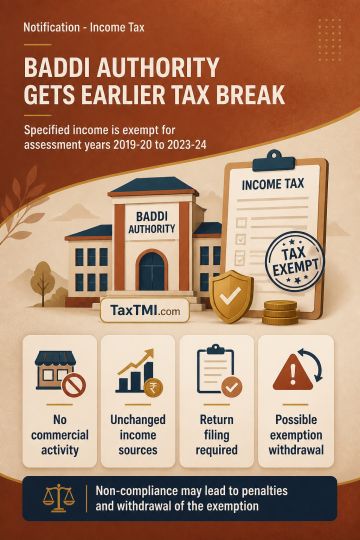
Specified income of Baddi Barotiwala Nalagarh Development Authority receives conditional tax exemption, retrospectively covering its designated assess...
Specified development authority income receives retrospective tax exemption, subject to non-commercial activity, unchanged income sources, and return-...
Unified Brand India framework introduces voluntary Trust Mark certification and funding support for export branding, packaging and global promotional ...
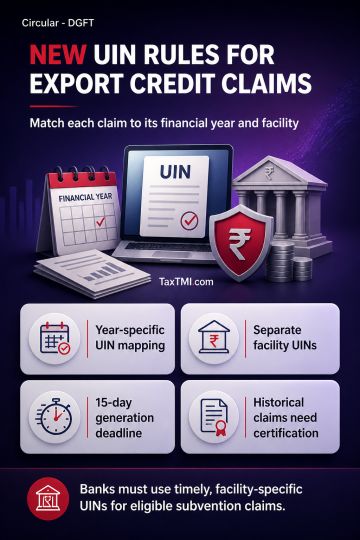
Origin Declaration authentication governs preferential tariff claims under India-UK CETA, requiring a validated reference number before import clearan...
Separate assessment orders for different years remain valid when distinct notices and hearing opportunities prevent prejudice from combined proceeding...
This case deals with the levy of deficit stamp duty and penalty in a court-conducted auction sale. The key points are: In a court-supervised auction sale, the stamp authorities cannot determine the true market value of the property sold and levy stamp duty based on that valuation. Once the bid is accepted by the court-appointed committee and the sale is confirmed at the bid price, which is above the reserve price, that price is considered the market value. The Supreme Court has conclusively held that in a court auction, the registering authority cannot question the market price determined by the court's sale process, as it would amount to sitting in appeal over the court's decision. The transparent court auction process is considered one of the best methods to determine market value. The High Court allowed the petition based on the Supreme Court's ruling in ASL Vyapar Pvt Ltd and its own decision in Spectrum Constructions.
This case deals with the levy of deficit stamp duty and penalty in a court-conducted auction sale. The key points are: In a court-supervised auction sale, the stamp authorities cannot determine the true market value of the property sold and levy stamp duty based on that valuation. Once the bid is accepted by the court-appointed committee and the sale is confirmed at the bid price, which is above the reserve price, that price is considered the market value. The Supreme Court has conclusively held that in a court auction, the registering authority cannot question the market price determined by the court's sale process, as it would amount to sitting in appeal over the court's decision. The transparent court auction process is considered one of the best methods to determine market value. The High Court allowed the petition based on the Supreme Court's ruling in ASL Vyapar Pvt Ltd and its own decision in Spectrum Constructions.
Note: It is a system-generated summary and is for quick reference only.
 TaxTMI
 of 4801
















 Join Channel


 TaxTMI

