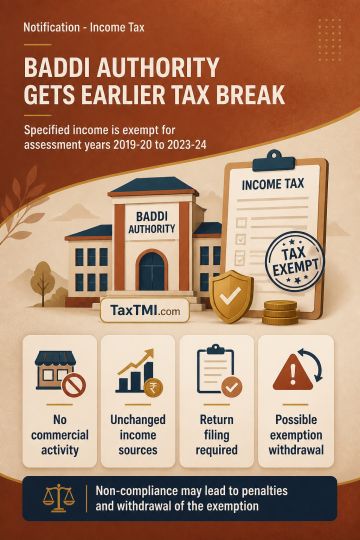
Specified development authority income receives retrospective tax exemption, subject to non-commercial activity, unchanged income sources, and return-...
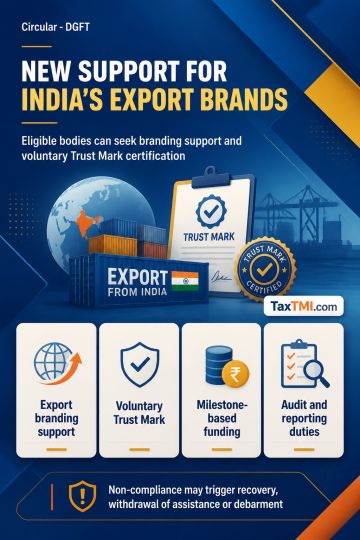
Unified Brand India framework introduces voluntary Trust Mark certification and funding support for export branding, packaging and global promotional ...
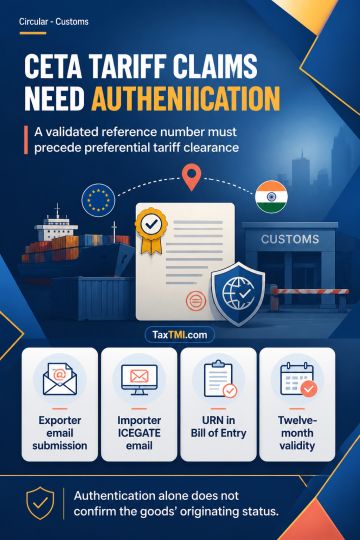
Origin Declaration authentication governs preferential tariff claims under India-UK CETA, requiring a validated reference number before import clearan...
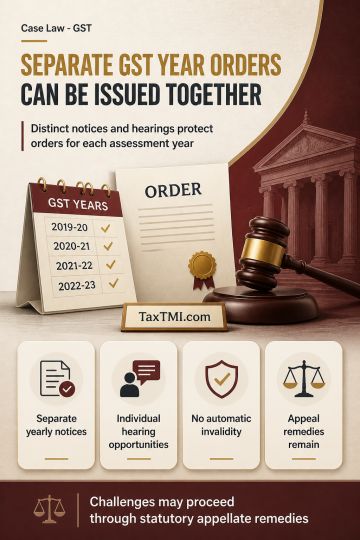
Separate assessment orders for different years remain valid when distinct notices and hearing opportunities prevent prejudice from combined proceeding...
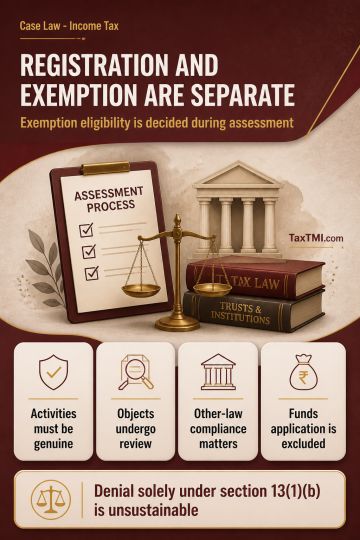
Defined public benefit can retain charitable character; registration renewal requires examining genuine activities and legal compliance, not surplus a...
Capital reduction is distinct from share buy-back, preventing buy-back tax; restructuring interest and related business deductions also survive scruti...
The High Court addressed the issue of cancellation of GST registration due to non-filing of returns and the rejection of an appeal on the ground of time limitation. The respondent claimed that the statute prescribes a specific limitation period of 90 days to file an appeal, and the petitioner's appeal was time-barred. The Court held that no useful purpose would be served by keeping the petitioners out of the Goods and Service Tax regime, as they would continue their businesses and supply goods and services. The Court acknowledged that most small-scale entrepreneurs are uneducated and unaccustomed to handling emails and advanced technologies, despite providing email IDs during registration. The Court emphasized that the object of any government should be to promote trade, not curtail it. The method adopted by the department is likened to strangulating the neck of small-scale entrepreneurs, as cancellation of registration amounts to capital punishment for traders. The Court expects the GST department to amend relevant provisions, considering the consequences on traders, and to find modalities for conveying show cause notices via SMS and regional languages.
The High Court addressed the issue of cancellation of GST registration due to non-filing of returns and the rejection of an appeal on the ground of time limitation. The respondent claimed that the statute prescribes a specific limitation period of 90 days to file an appeal, and the petitioner's appeal was time-barred. The Court held that no useful purpose would be served by keeping the petitioners out of the Goods and Service Tax regime, as they would continue their businesses and supply goods and services. The Court acknowledged that most small-scale entrepreneurs are uneducated and unaccustomed to handling emails and advanced technologies, despite providing email IDs during registration. The Court emphasized that the object of any government should be to promote trade, not curtail it. The method adopted by the department is likened to strangulating the neck of small-scale entrepreneurs, as cancellation of registration amounts to capital punishment for traders. The Court expects the GST department to amend relevant provisions, considering the consequences on traders, and to find modalities for conveying show cause notices via SMS and regional languages.
Note: It is a system-generated summary and is for quick reference only.
 TaxTMI
 of 4805










 Join Channel


 TaxTMI
