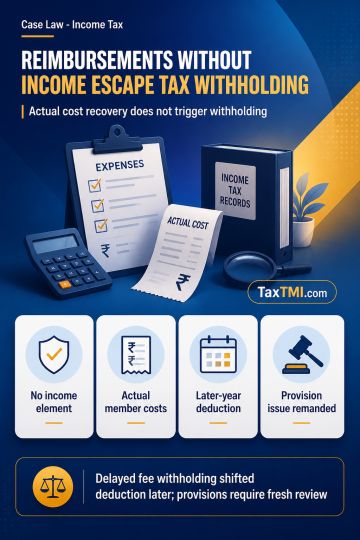
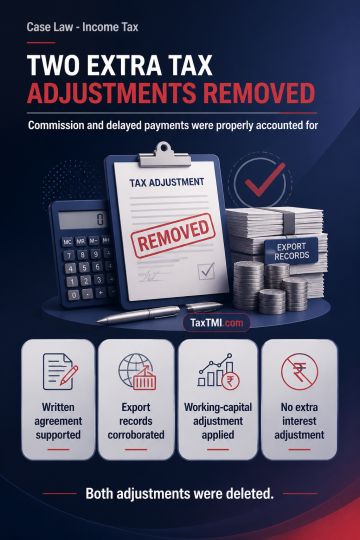
Pure reimbursement without income element escapes tax withholding, while delayed withholding and unsupported provisions face deferred or renewed scrut...
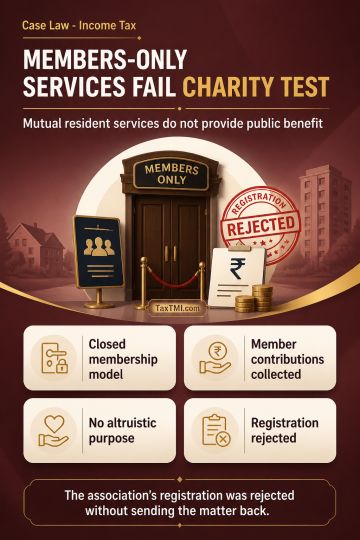
Public benefit requirement defeats charitable registration where residents' association services are reciprocal, member-only facilities governed by mu...
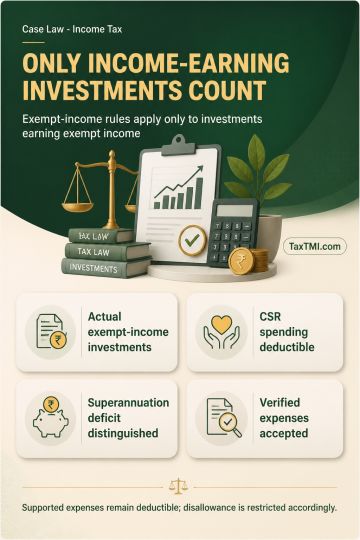
Exempt-income expenditure disallowance is confined to investments that actually generated exempt income, while supported business expenses remain dedu...
Objective characteristics and principal use govern mining-tyre classification, while fresh advance ruling applications may rely on additional technica...
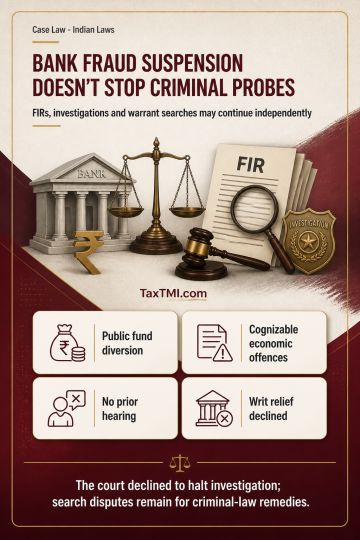
Administrative fraud classification suspension does not halt independent criminal investigation or warrant-based searches into alleged economic offenc...
Page of 4803
Press 'Enter' after typing page number.
761 to 780 of 96046 Results
❮
❯
❯❯
0 / 200
Expand Note
Add to Folder
No Folders have been created
+
Are you sure you want to delete "My most important" ?
The High Court addressed the issue of cancellation of GST registration due to non-filing of returns and the rejection of an appeal on the ground of time limitation. The respondent claimed that the statute prescribes a specific limitation period of 90 days to file an appeal, and the petitioner's appeal was time-barred. The Court held that no useful purpose would be served by keeping the petitioners out of the Goods and Service Tax regime, as they would continue their businesses and supply goods and services. The Court acknowledged that most small-scale entrepreneurs are uneducated and unaccustomed to handling emails and advanced technologies, despite providing email IDs during registration. The Court emphasized that the object of any government should be to promote trade, not curtail it. The method adopted by the department is likened to strangulating the neck of small-scale entrepreneurs, as cancellation of registration amounts to capital punishment for traders. The Court expects the GST department to amend relevant provisions, considering the consequences on traders, and to find modalities for conveying show cause notices via SMS and regional languages.
The High Court addressed the issue of cancellation of GST registration due to non-filing of returns and the rejection of an appeal on the ground of time limitation. The respondent claimed that the statute prescribes a specific limitation period of 90 days to file an appeal, and the petitioner's appeal was time-barred. The Court held that no useful purpose would be served by keeping the petitioners out of the Goods and Service Tax regime, as they would continue their businesses and supply goods and services. The Court acknowledged that most small-scale entrepreneurs are uneducated and unaccustomed to handling emails and advanced technologies, despite providing email IDs during registration. The Court emphasized that the object of any government should be to promote trade, not curtail it. The method adopted by the department is likened to strangulating the neck of small-scale entrepreneurs, as cancellation of registration amounts to capital punishment for traders. The Court expects the GST department to amend relevant provisions, considering the consequences on traders, and to find modalities for conveying show cause notices via SMS and regional languages.
Note: It is a system-generated summary and is for quick reference only.
 TaxTMI
 of 4803





 Join Channel


 TaxTMI