Retention of seized property survives where recorded reasons support proceeds of crime, while stayed investigation periods are excluded from limitatio...
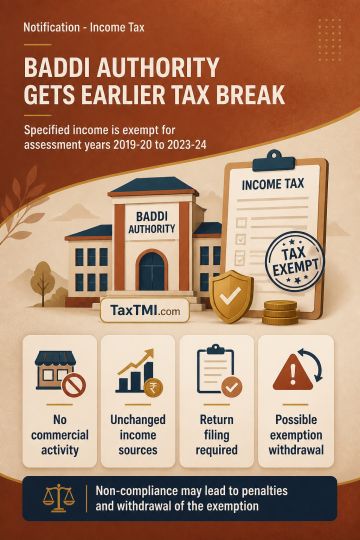
Specified income of Baddi Barotiwala Nalagarh Development Authority receives conditional tax exemption, retrospectively covering its designated assess...
Specified development authority income receives retrospective tax exemption, subject to non-commercial activity, unchanged income sources, and return-...
Unified Brand India framework introduces voluntary Trust Mark certification and funding support for export branding, packaging and global promotional ...
Origin Declaration authentication governs preferential tariff claims under India-UK CETA, requiring a validated reference number before import clearan...
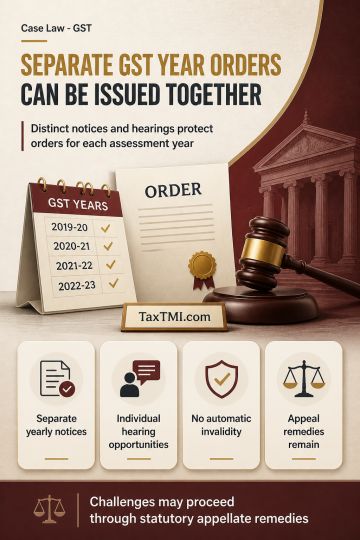
Separate assessment orders for different years remain valid when distinct notices and hearing opportunities prevent prejudice from combined proceeding...
The case pertains to the validity of revision u/s 263 involving a substantial question of law or fact. There were discrepancies between the figures for current assets and current liabilities in the balance sheet and cash flow statement filed before the Assessing Officer for the financial year 2007-08. The CIT(A) dismissed the appeal ex-parte, and the Tribunal restored the issue to the CIT(A)'s file to allow the assessee an opportunity to substantiate its case. However, the Tribunal remarked that the assessee was not interested in reconciling the discrepancies but attempting to use technical reasons to avoid responsibility, showcasing the triviality of the matter. The Supreme Court held that no case for interference was made out under Article 136 of the Constitution and dismissed the Special Leave Petition, condoning the delay. Any pending application was also disposed of.
The case pertains to the validity of revision u/s 263 involving a substantial question of law or fact. There were discrepancies between the figures for current assets and current liabilities in the balance sheet and cash flow statement filed before the Assessing Officer for the financial year 2007-08. The CIT(A) dismissed the appeal ex-parte, and the Tribunal restored the issue to the CIT(A)'s file to allow the assessee an opportunity to substantiate its case. However, the Tribunal remarked that the assessee was not interested in reconciling the discrepancies but attempting to use technical reasons to avoid responsibility, showcasing the triviality of the matter. The Supreme Court held that no case for interference was made out under Article 136 of the Constitution and dismissed the Special Leave Petition, condoning the delay. Any pending application was also disposed of.
Note: It is a system-generated summary and is for quick reference only.
 TaxTMI
 of 4805












 Join Channel


 TaxTMI
