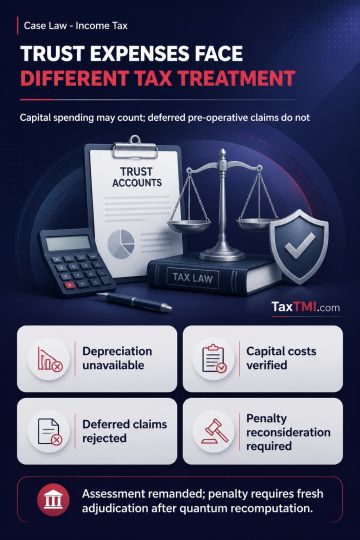
Charitable trust income application permits verified capital expenditure but rejects deferred pre-operative claims and requires reconsideration of con...
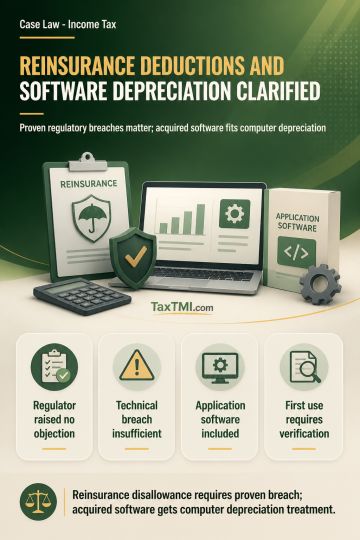
Reinsurance premium deductions require established regulatory breaches, while independently acquired software qualifies within the computer depreciati...
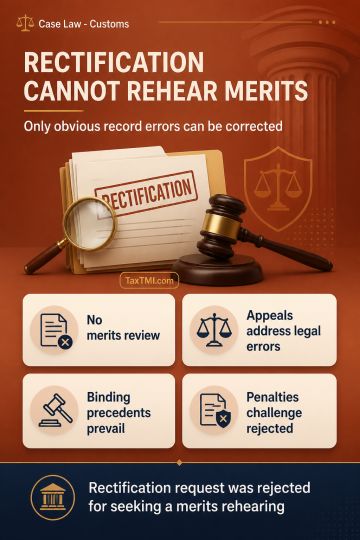
Rectification of mistake remains limited to self-evident record errors, preventing merits review through miscellaneous applications and preserving fin...
Tender creditworthiness conditions may extend to de facto Promoter Directors, with post-participation challenges generally barred absent arbitrariness...
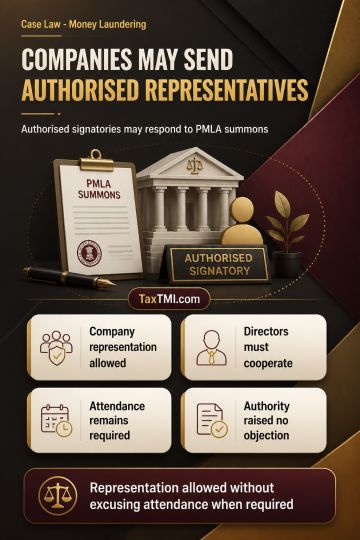
Corporate representation in PMLA summons proceedings permitted through an authorised signatory, subject to directors' continuing cooperation and atten...
The case pertains to the validity of revision u/s 263 involving a substantial question of law or fact. There were discrepancies between the figures for current assets and current liabilities in the balance sheet and cash flow statement filed before the Assessing Officer for the financial year 2007-08. The CIT(A) dismissed the appeal ex-parte, and the Tribunal restored the issue to the CIT(A)'s file to allow the assessee an opportunity to substantiate its case. However, the Tribunal remarked that the assessee was not interested in reconciling the discrepancies but attempting to use technical reasons to avoid responsibility, showcasing the triviality of the matter. The Supreme Court held that no case for interference was made out under Article 136 of the Constitution and dismissed the Special Leave Petition, condoning the delay. Any pending application was also disposed of.
The case pertains to the validity of revision u/s 263 involving a substantial question of law or fact. There were discrepancies between the figures for current assets and current liabilities in the balance sheet and cash flow statement filed before the Assessing Officer for the financial year 2007-08. The CIT(A) dismissed the appeal ex-parte, and the Tribunal restored the issue to the CIT(A)'s file to allow the assessee an opportunity to substantiate its case. However, the Tribunal remarked that the assessee was not interested in reconciling the discrepancies but attempting to use technical reasons to avoid responsibility, showcasing the triviality of the matter. The Supreme Court held that no case for interference was made out under Article 136 of the Constitution and dismissed the Special Leave Petition, condoning the delay. Any pending application was also disposed of.
Note: It is a system-generated summary and is for quick reference only.
 TaxTMI
 of 4805








 Join Channel


 TaxTMI
