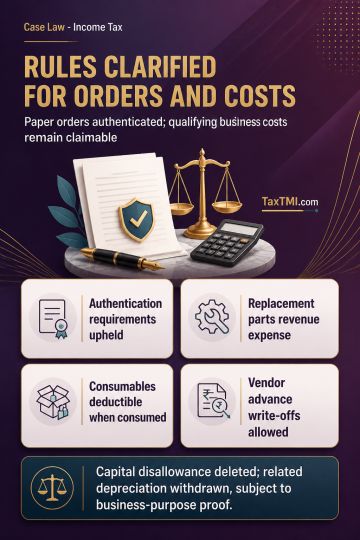
Authentication of paper assessment orders upheld, while qualifying repairs, consumables and vendor advance write-offs remain deductible business claim...
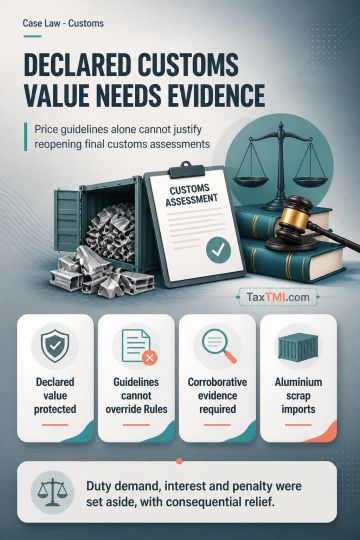
Transaction value cannot be rejected solely on non-statutory valuation guidelines without corroborative evidence supporting reassessment of final cust...
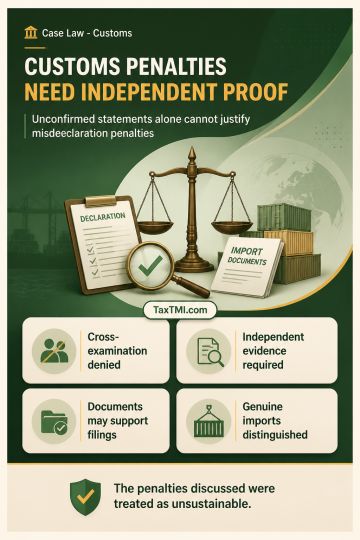
Cross-examination rights and corroborated evidence limit customs penalties for misdeclaration in genuine import transactions involving documented clea...
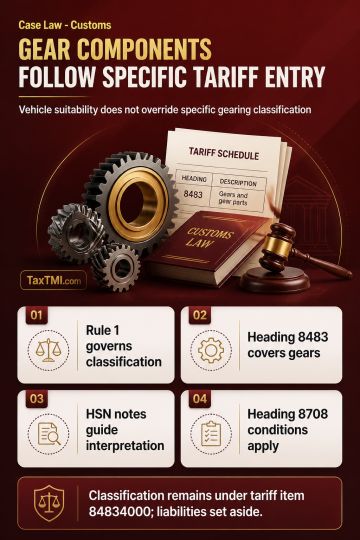
Tariff classification of vehicle gear components follows the specific gearing entry, displacing motor-vehicle parts classification and related liabili...
Page of 4805
Press 'Enter' after typing page number.
761 to 780 of 96092 Results
❮
❯
❯❯
0 / 200
Expand Note
Add to Folder
No Folders have been created
+
Are you sure you want to delete "My most important" ?
The case pertains to the validity of revision u/s 263 involving a substantial question of law or fact. There were discrepancies between the figures for current assets and current liabilities in the balance sheet and cash flow statement filed before the Assessing Officer for the financial year 2007-08. The CIT(A) dismissed the appeal ex-parte, and the Tribunal restored the issue to the CIT(A)'s file to allow the assessee an opportunity to substantiate its case. However, the Tribunal remarked that the assessee was not interested in reconciling the discrepancies but attempting to use technical reasons to avoid responsibility, showcasing the triviality of the matter. The Supreme Court held that no case for interference was made out under Article 136 of the Constitution and dismissed the Special Leave Petition, condoning the delay. Any pending application was also disposed of.
The case pertains to the validity of revision u/s 263 involving a substantial question of law or fact. There were discrepancies between the figures for current assets and current liabilities in the balance sheet and cash flow statement filed before the Assessing Officer for the financial year 2007-08. The CIT(A) dismissed the appeal ex-parte, and the Tribunal restored the issue to the CIT(A)'s file to allow the assessee an opportunity to substantiate its case. However, the Tribunal remarked that the assessee was not interested in reconciling the discrepancies but attempting to use technical reasons to avoid responsibility, showcasing the triviality of the matter. The Supreme Court held that no case for interference was made out under Article 136 of the Constitution and dismissed the Special Leave Petition, condoning the delay. Any pending application was also disposed of.
Note: It is a system-generated summary and is for quick reference only.
 TaxTMI
 of 4805









 Join Channel


 TaxTMI