Transaction value rejection requires reliable corroboration; refundable VAT is excluded and temporary registration does not defeat new-vehicle exempti...
Appellate jurisdiction remains available where a wrist-worn gold ornament cannot conclusively be characterised as imported baggage at the preliminary ...
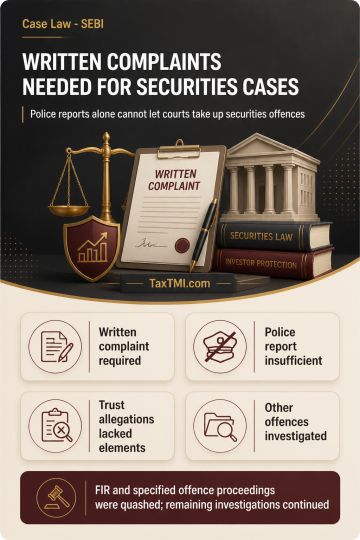
Written complaint requirement bars cognizance on police reports for securities offences, while unsupported breach of trust and cheating allegations fa...
Page of 4801
Press 'Enter' after typing page number.
341 to 360 of 96001 Results
❮
❯
❯❯
0 / 200
Expand Note
Add to Folder
No Folders have been created
+
Are you sure you want to delete "My most important" ?
The case pertains to the validity of revision u/s 263 involving a substantial question of law or fact. There were discrepancies between the figures for current assets and current liabilities in the balance sheet and cash flow statement filed before the Assessing Officer for the financial year 2007-08. The CIT(A) dismissed the appeal ex-parte, and the Tribunal restored the issue to the CIT(A)'s file to allow the assessee an opportunity to substantiate its case. However, the Tribunal remarked that the assessee was not interested in reconciling the discrepancies but attempting to use technical reasons to avoid responsibility, showcasing the triviality of the matter. The Supreme Court held that no case for interference was made out under Article 136 of the Constitution and dismissed the Special Leave Petition, condoning the delay. Any pending application was also disposed of.
The case pertains to the validity of revision u/s 263 involving a substantial question of law or fact. There were discrepancies between the figures for current assets and current liabilities in the balance sheet and cash flow statement filed before the Assessing Officer for the financial year 2007-08. The CIT(A) dismissed the appeal ex-parte, and the Tribunal restored the issue to the CIT(A)'s file to allow the assessee an opportunity to substantiate its case. However, the Tribunal remarked that the assessee was not interested in reconciling the discrepancies but attempting to use technical reasons to avoid responsibility, showcasing the triviality of the matter. The Supreme Court held that no case for interference was made out under Article 136 of the Constitution and dismissed the Special Leave Petition, condoning the delay. Any pending application was also disposed of.
Note: It is a system-generated summary and is for quick reference only.
 TaxTMI
 of 4801









 Join Channel


 TaxTMI