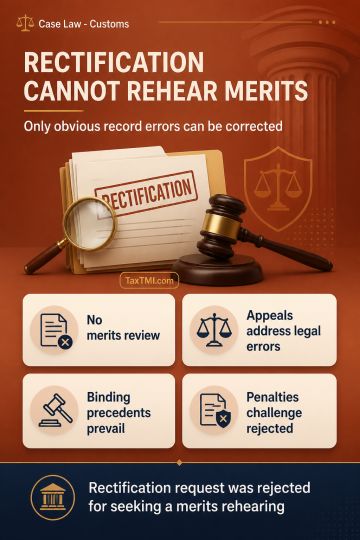
Rectification of mistake remains limited to self-evident record errors, preventing merits review through miscellaneous applications and preserving fin...
Tender creditworthiness conditions may extend to de facto Promoter Directors, with post-participation challenges generally barred absent arbitrariness...
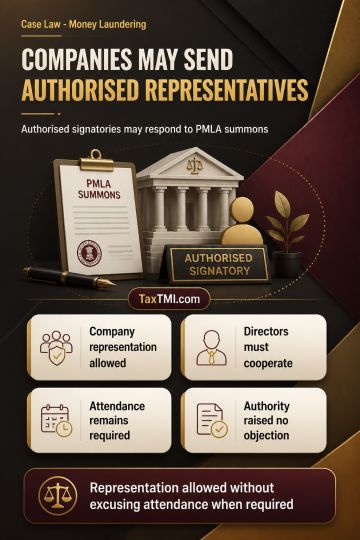
Corporate representation in PMLA summons proceedings permitted through an authorised signatory, subject to directors' continuing cooperation and atten...
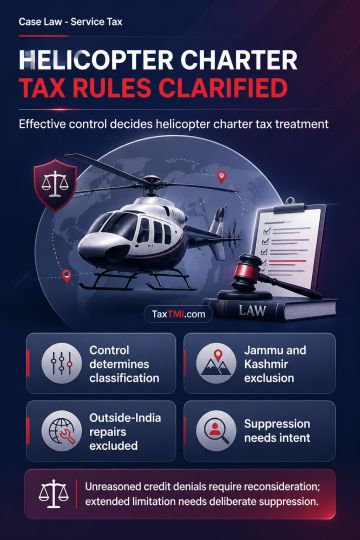
Helicopter charter classification requires effective control analysis, while territorial performance, reasoned credit orders and wilful suppression de...
Specified fund definition expands PAN exemption eligibility for registered alternative investment funds and qualifying International Financial Service...
Page of 4798
Press 'Enter' after typing page number.
821 to 840 of 95955 Results
❮
❯
❯❯
0 / 200
Expand Note
Add to Folder
No Folders have been created
+
Are you sure you want to delete "My most important" ?
The case pertains to the prohibition on import and confiscation of seven drawings by renowned artists under Customs Notification No. 1/1964, deeming them obscene. The court held that the ability to communicate ideas through art is a legitimate human endeavour and cannot be controlled based on acceptability to authorities. Vesting obscenity determination powers in customs authorities risks arbitrary state behaviour imperilling fundamental freedoms. The impugned order ignored relevant considerations like expert opinions, artistic value, contemporary standards, and legal precedents, relying instead on individualized morality standards, personal prejudices, and frivolous grounds. Relegating the petitioner to departmental appeals risked destruction of the valuable artworks. The impugned order was set aside, and the petition was allowed, upholding artistic expression and freedom of speech.
The case pertains to the prohibition on import and confiscation of seven drawings by renowned artists under Customs Notification No. 1/1964, deeming them obscene. The court held that the ability to communicate ideas through art is a legitimate human endeavour and cannot be controlled based on acceptability to authorities. Vesting obscenity determination powers in customs authorities risks arbitrary state behaviour imperilling fundamental freedoms. The impugned order ignored relevant considerations like expert opinions, artistic value, contemporary standards, and legal precedents, relying instead on individualized morality standards, personal prejudices, and frivolous grounds. Relegating the petitioner to departmental appeals risked destruction of the valuable artworks. The impugned order was set aside, and the petition was allowed, upholding artistic expression and freedom of speech.
Note: It is a system-generated summary and is for quick reference only.
 TaxTMI
 of 4798















 Join Channel


 TaxTMI