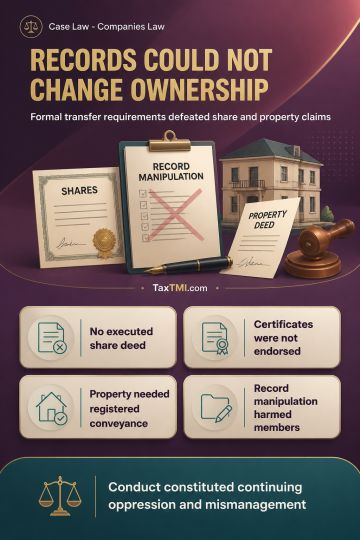
Statutory transfer formalities invalidated alleged share and property transfers, while retrospective record manipulation constituted oppression and mi...
Provisional attachment of laundered funds and equivalent-value property sustained, with statutory protection limited to pension, gratuity and providen...
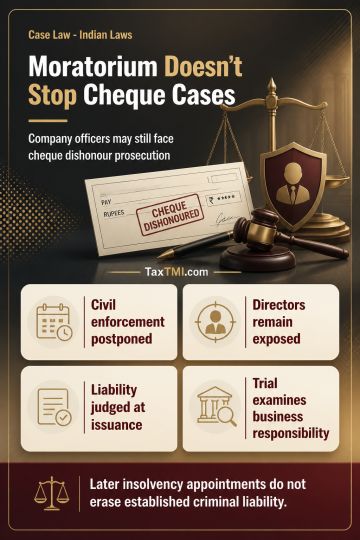
Insolvency moratorium does not shield company officers from cheque dishonour prosecution for liability arising before corporate insolvency proceedings...
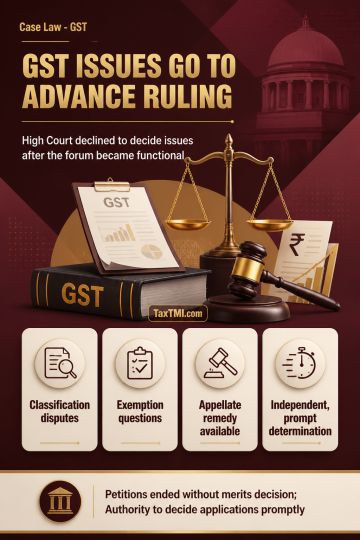
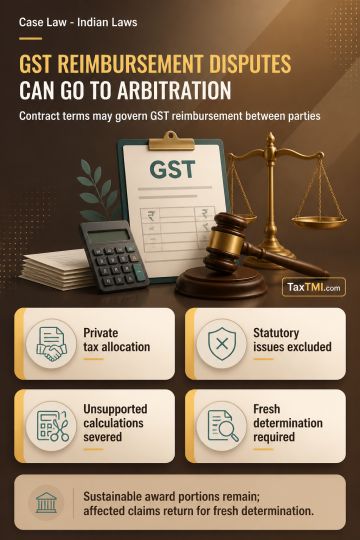
Advance-ruling mechanism governs pending GST classification, exemption and taxability disputes, limiting writ review once the specialised forum functi...
Page of 4805
Press 'Enter' after typing page number.
921 to 940 of 96092 Results
❮
❯
❯❯
0 / 200
Expand Note
Add to Folder
No Folders have been created
+
Are you sure you want to delete "My most important" ?
Denial of CENVAT credit distributed by the Head Office (Input Service Distributor) to a unit during April to June 2012. The denial was based on the ground that the credit was not distributed proportionately among all units based on their respective turnovers, resulting in excess credit distribution to the unit. The key points are: Prior to the amendment effective from 01.04.2016, there was no compulsion on the assessee to distribute the credit proportionately or to all units. Even if the entire credit was distributed to one unit, it cannot be denied. The situation was revenue neutral as the other units paid more duty than the attributed credit. The CESTAT Ahmedabad held that 100% credit availed by the appellant was in order as per the existing CENVAT Credit Rules during the relevant period. Based on judgments, it is settled that even if the credit is distributed to one unit only during the relevant period, it cannot be denied. The impugned order is set aside, and the appeal is allowed.
Denial of CENVAT credit distributed by the Head Office (Input Service Distributor) to a unit during April to June 2012. The denial was based on the ground that the credit was not distributed proportionately among all units based on their respective turnovers, resulting in excess credit distribution to the unit. The key points are: Prior to the amendment effective from 01.04.2016, there was no compulsion on the assessee to distribute the credit proportionately or to all units. Even if the entire credit was distributed to one unit, it cannot be denied. The situation was revenue neutral as the other units paid more duty than the attributed credit. The CESTAT Ahmedabad held that 100% credit availed by the appellant was in order as per the existing CENVAT Credit Rules during the relevant period. Based on judgments, it is settled that even if the credit is distributed to one unit only during the relevant period, it cannot be denied. The impugned order is set aside, and the appeal is allowed.
Note: It is a system-generated summary and is for quick reference only.
 TaxTMI
 of 4805










 Join Channel


 TaxTMI