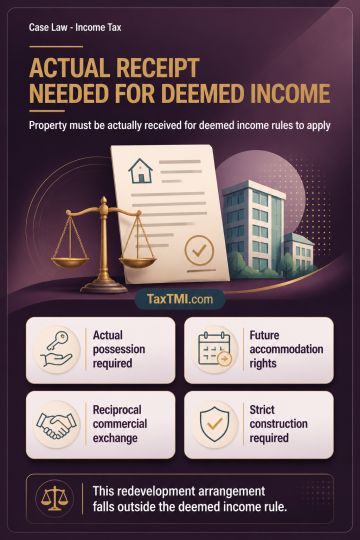
Receipt of immovable property requires actual possession or enjoyment; redevelopment allotments exchanged for tenancy rights fall outside deemed incom...
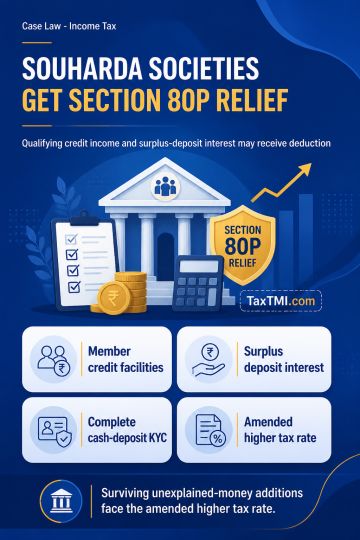
Section 80P deduction covers Souharda credit societies, including qualifying surplus-deposit interest, subject to member KYC verification for cash dep...
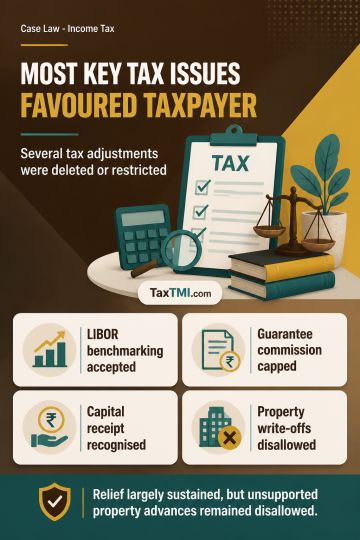
Transfer-pricing benchmarking and capital-receipt principles sustained taxpayer relief, while unsupported property-advance write-offs remained disallo...
The court held that the petitioner was not an intermediary but directly engaged in providing services to an entity outside India. The respondents erroneously classified the petitioner as an intermediary without any material evidence or tripartite agreement. The petitioner's consistent stand was supplying services on a principal-to-principal basis. Merely providing services to a holding company or charging a mark-up over costs does not render the petitioner an intermediary. Consequently, the impugned orders classifying the petitioner as an intermediary were unsustainable and set aside, allowing the refund of unutilized Input Tax Credit (ITC).
The court held that the petitioner was not an intermediary but directly engaged in providing services to an entity outside India. The respondents erroneously classified the petitioner as an intermediary without any material evidence or tripartite agreement. The petitioner's consistent stand was supplying services on a principal-to-principal basis. Merely providing services to a holding company or charging a mark-up over costs does not render the petitioner an intermediary. Consequently, the impugned orders classifying the petitioner as an intermediary were unsustainable and set aside, allowing the refund of unutilized Input Tax Credit (ITC).
Note: It is a system-generated summary and is for quick reference only.
 TaxTMI
 of 4805












 Join Channel


 TaxTMI
