Specialized Investment Fund distribution now requires dedicated certification, while transitional recognition preserves existing qualified distributor...
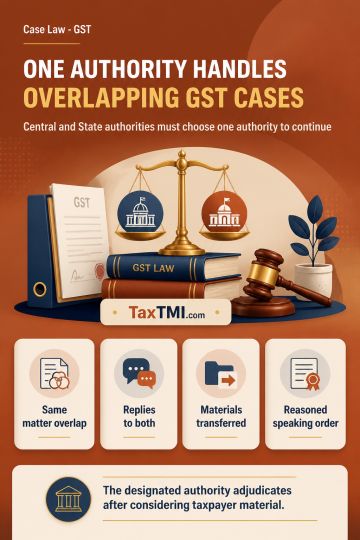
Overlapping GST proceedings require Central and State authorities to designate one competent authority for coordinated adjudication of the same matter...
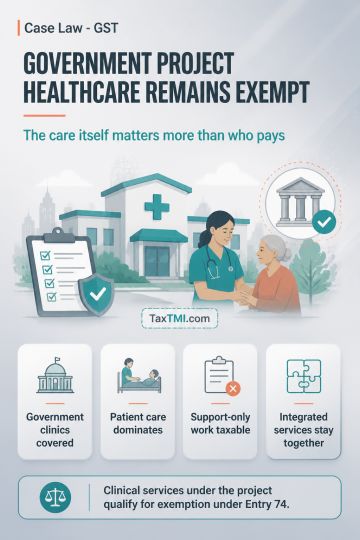
Composite healthcare supplies retain exemption when patient care is the contract's essential character, despite payment through an implementing agency...
The court held that the petitioner was not an intermediary but directly engaged in providing services to an entity outside India. The respondents erroneously classified the petitioner as an intermediary without any material evidence or tripartite agreement. The petitioner's consistent stand was supplying services on a principal-to-principal basis. Merely providing services to a holding company or charging a mark-up over costs does not render the petitioner an intermediary. Consequently, the impugned orders classifying the petitioner as an intermediary were unsustainable and set aside, allowing the refund of unutilized Input Tax Credit (ITC).
The court held that the petitioner was not an intermediary but directly engaged in providing services to an entity outside India. The respondents erroneously classified the petitioner as an intermediary without any material evidence or tripartite agreement. The petitioner's consistent stand was supplying services on a principal-to-principal basis. Merely providing services to a holding company or charging a mark-up over costs does not render the petitioner an intermediary. Consequently, the impugned orders classifying the petitioner as an intermediary were unsustainable and set aside, allowing the refund of unutilized Input Tax Credit (ITC).
Note: It is a system-generated summary and is for quick reference only.
 TaxTMI
 of 4805












 Join Channel


 TaxTMI