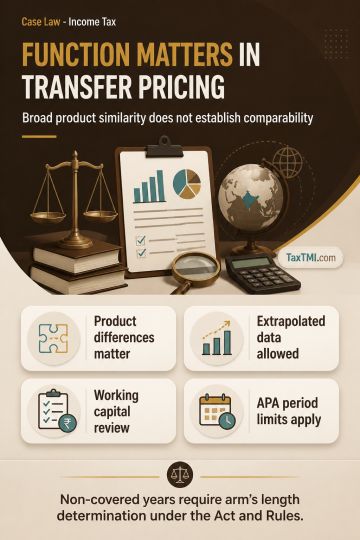
Transfer pricing comparability requires functional alignment and permits working capital adjustment, while APA margins cannot govern non-covered years...
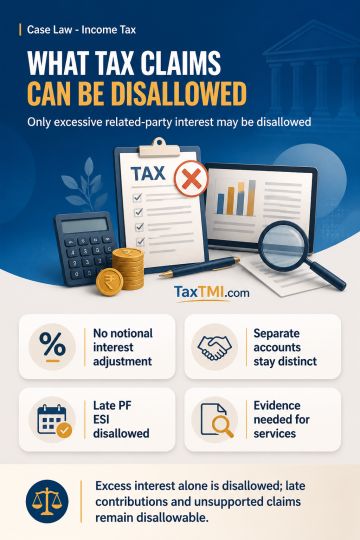
Treaty benefit, goodwill depreciation and hedging costs: export commission disallowed, while key business deductions and depreciation claims succeeded...
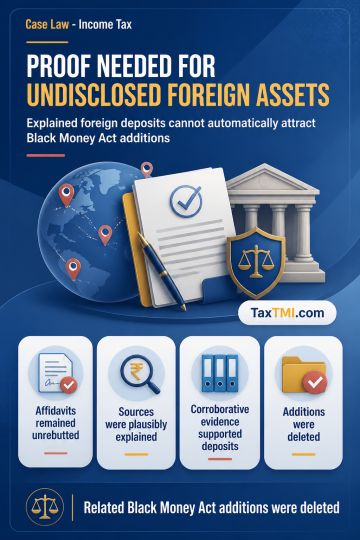
Undisclosed foreign asset classification requires an unexplained source; unrebutted affidavits and corroborative evidence defeated the Black Money Act...
The court held that the petitioner was not an intermediary but directly engaged in providing services to an entity outside India. The respondents erroneously classified the petitioner as an intermediary without any material evidence or tripartite agreement. The petitioner's consistent stand was supplying services on a principal-to-principal basis. Merely providing services to a holding company or charging a mark-up over costs does not render the petitioner an intermediary. Consequently, the impugned orders classifying the petitioner as an intermediary were unsustainable and set aside, allowing the refund of unutilized Input Tax Credit (ITC).
The court held that the petitioner was not an intermediary but directly engaged in providing services to an entity outside India. The respondents erroneously classified the petitioner as an intermediary without any material evidence or tripartite agreement. The petitioner's consistent stand was supplying services on a principal-to-principal basis. Merely providing services to a holding company or charging a mark-up over costs does not render the petitioner an intermediary. Consequently, the impugned orders classifying the petitioner as an intermediary were unsustainable and set aside, allowing the refund of unutilized Input Tax Credit (ITC).
Note: It is a system-generated summary and is for quick reference only.
 TaxTMI
 of 4805


















 Join Channel


 TaxTMI
