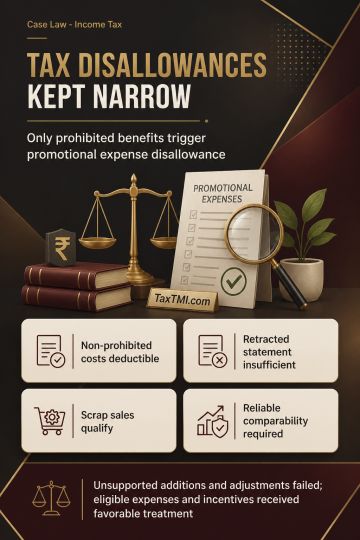
Pharmaceutical promotion and transfer-pricing comparability principles limited disallowances, while uncorroborated search allegations and unsupported ...
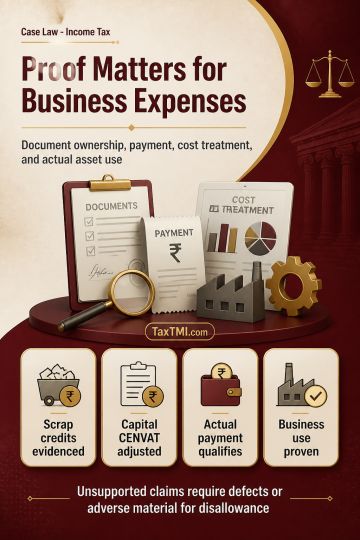
Business expenditure substantiation supports scrap credits, statutory payments and expense claims, while depreciation requires proof of actual busines...
The court held that the petitioner was not an intermediary but directly engaged in providing services to an entity outside India. The respondents erroneously classified the petitioner as an intermediary without any material evidence or tripartite agreement. The petitioner's consistent stand was supplying services on a principal-to-principal basis. Merely providing services to a holding company or charging a mark-up over costs does not render the petitioner an intermediary. Consequently, the impugned orders classifying the petitioner as an intermediary were unsustainable and set aside, allowing the refund of unutilized Input Tax Credit (ITC).
The court held that the petitioner was not an intermediary but directly engaged in providing services to an entity outside India. The respondents erroneously classified the petitioner as an intermediary without any material evidence or tripartite agreement. The petitioner's consistent stand was supplying services on a principal-to-principal basis. Merely providing services to a holding company or charging a mark-up over costs does not render the petitioner an intermediary. Consequently, the impugned orders classifying the petitioner as an intermediary were unsustainable and set aside, allowing the refund of unutilized Input Tax Credit (ITC).
Note: It is a system-generated summary and is for quick reference only.
 TaxTMI
 of 4805




 Join Channel


 TaxTMI
