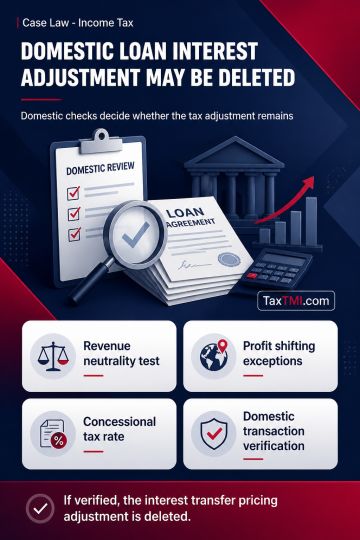
Revenue neutrality in domestic related-party loans can require deletion of interest transfer pricing adjustments after domestic-transaction verificati...
Pre-enactment land-sale agreements escape stamp-duty value substitution where substantial banking-channel consideration was received before Section 43...
The court held that the petitioner was not an intermediary but directly engaged in providing services to an entity outside India. The respondents erroneously classified the petitioner as an intermediary without any material evidence or tripartite agreement. The petitioner's consistent stand was supplying services on a principal-to-principal basis. Merely providing services to a holding company or charging a mark-up over costs does not render the petitioner an intermediary. Consequently, the impugned orders classifying the petitioner as an intermediary were unsustainable and set aside, allowing the refund of unutilized Input Tax Credit (ITC).
The court held that the petitioner was not an intermediary but directly engaged in providing services to an entity outside India. The respondents erroneously classified the petitioner as an intermediary without any material evidence or tripartite agreement. The petitioner's consistent stand was supplying services on a principal-to-principal basis. Merely providing services to a holding company or charging a mark-up over costs does not render the petitioner an intermediary. Consequently, the impugned orders classifying the petitioner as an intermediary were unsustainable and set aside, allowing the refund of unutilized Input Tax Credit (ITC).
Note: It is a system-generated summary and is for quick reference only.
 TaxTMI
 of 4803
















 Join Channel


 TaxTMI