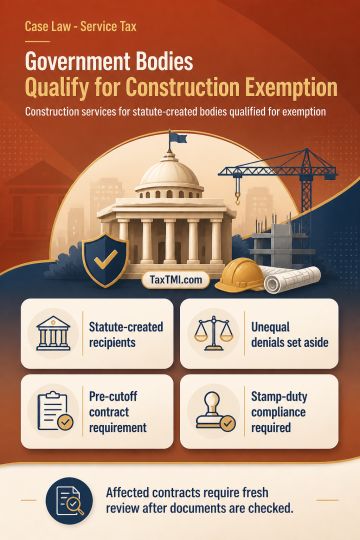
Governmental authority status supports construction-service exemption, while pre-cutoff contract and stamp-duty compliance requires verification on re...
Automated Free Sale and Commerce Certificates enable paperless processing while retaining risk-based manual verification for selected exporter applica...
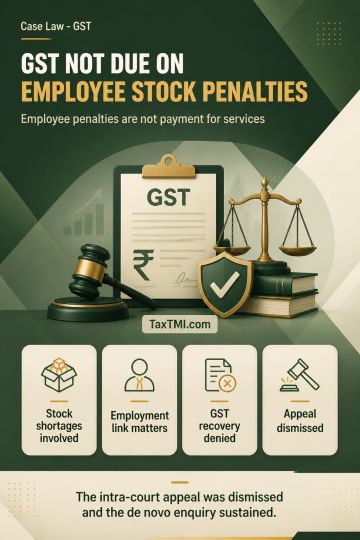
Employee stock-shortage penalties do not constitute consideration for services, preventing GST collection under Schedule II in employment relationship...
The case pertains to an alleged violation of Customs Broker Licensing Regulations (CBLR) 2018, specifically Regulations 10(d), 10(n), and 11 of CBLR 2013, by a Customs Broker. The key points are: The Customs Broker met the IEC holders in person, obtained the required documents under KYC guidelines, and the IEC holders acknowledged the representative's authority. The Regulations do not prohibit such consensual arrangements between IEC holders and the representative. The representative submitted export documents on behalf of the importing firms, and payments were made to the disclosed accounts. The CESTAT concluded that the importers possessed the requisite documents, the appellant did not gain any undue benefit from the arrangement, and the CESTAT order was based on sound reasoning and application of legal principles. Consequently, the High Court dismissed the appeal.
The case pertains to an alleged violation of Customs Broker Licensing Regulations (CBLR) 2018, specifically Regulations 10(d), 10(n), and 11 of CBLR 2013, by a Customs Broker. The key points are: The Customs Broker met the IEC holders in person, obtained the required documents under KYC guidelines, and the IEC holders acknowledged the representative's authority. The Regulations do not prohibit such consensual arrangements between IEC holders and the representative. The representative submitted export documents on behalf of the importing firms, and payments were made to the disclosed accounts. The CESTAT concluded that the importers possessed the requisite documents, the appellant did not gain any undue benefit from the arrangement, and the CESTAT order was based on sound reasoning and application of legal principles. Consequently, the High Court dismissed the appeal.
Note: It is a system-generated summary and is for quick reference only.
 TaxTMI
  TaxTMI
 of 4828









 Join Channel


