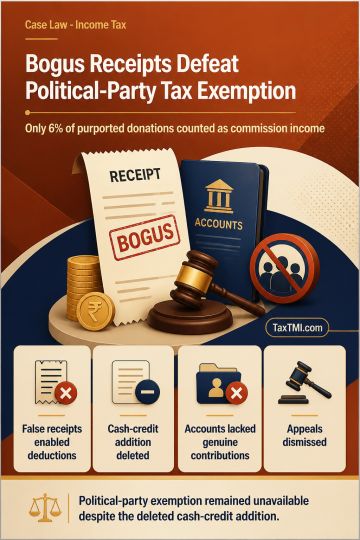
Bogus donation receipts justified commission income assessment and defeated political-party tax exemption for inaccurate accounts and reporting failur...
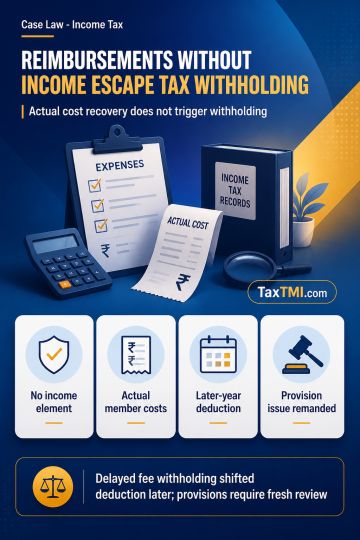
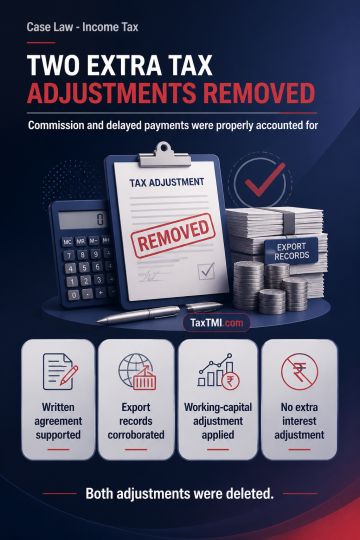
Pure reimbursement without income element escapes tax withholding, while delayed withholding and unsupported provisions face deferred or renewed scrut...
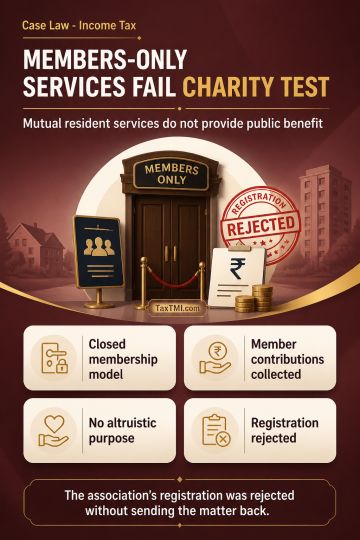
Public benefit requirement defeats charitable registration where residents' association services are reciprocal, member-only facilities governed by mu...
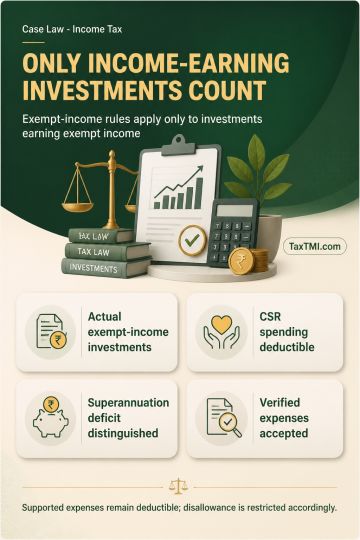
Exempt-income expenditure disallowance is confined to investments that actually generated exempt income, while supported business expenses remain dedu...
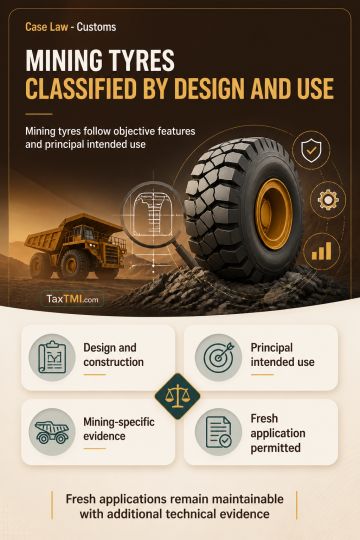
Objective characteristics and principal use govern mining-tyre classification, while fresh advance ruling applications may rely on additional technica...
Page of 4805
Press 'Enter' after typing page number.
801 to 820 of 96092 Results
❮
❯
❯❯
0 / 200
Expand Note
Add to Folder
No Folders have been created
+
Are you sure you want to delete "My most important" ?
The case pertains to the validity of input tax credit (ITC) availed on construction goods for a building leased to an educational institution. The Supreme Court held that each case involving malls or buildings must undergo a fact-finding inquiry to determine if it satisfies the functionality test of being a 'plant' u/s 17(5)(d). If the building qualifies as a plant, ITC can be allowed on goods and services used in setting up the immovable property. The petitioner was required to satisfy the adjudicating authority whether the building qualified as a plant to avail ITC but failed to submit necessary documents and instead approached the court. The final order was passed, which the petitioner did not challenge. The court dismissed the petition, allowing the petitioner to file an appeal and rely on the Supreme Court's decision in the Safari Retreats case.
The case pertains to the validity of input tax credit (ITC) availed on construction goods for a building leased to an educational institution. The Supreme Court held that each case involving malls or buildings must undergo a fact-finding inquiry to determine if it satisfies the functionality test of being a 'plant' u/s 17(5)(d). If the building qualifies as a plant, ITC can be allowed on goods and services used in setting up the immovable property. The petitioner was required to satisfy the adjudicating authority whether the building qualified as a plant to avail ITC but failed to submit necessary documents and instead approached the court. The final order was passed, which the petitioner did not challenge. The court dismissed the petition, allowing the petitioner to file an appeal and rely on the Supreme Court's decision in the Safari Retreats case.
Note: It is a system-generated summary and is for quick reference only.
 TaxTMI
 of 4805



 Join Channel


 TaxTMI