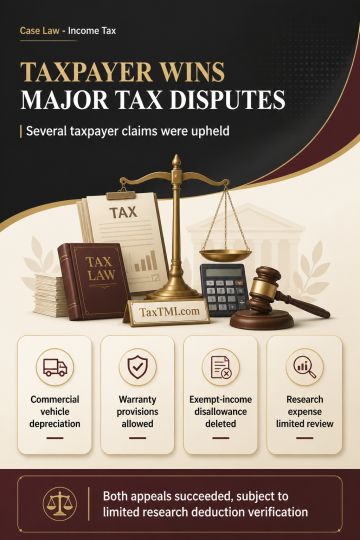
Commercial vehicle depreciation, scientifically determined warranty provisions and exempt-income disallowances were resolved in favour of the taxpayer...
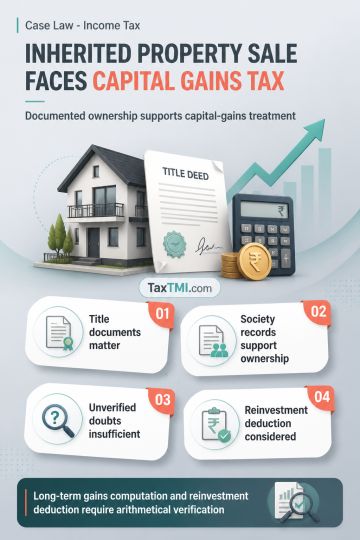
Inherited property sale proceeds require capital-gains treatment where ownership is supported by evidence, not suspicion or unverified signature doubt...
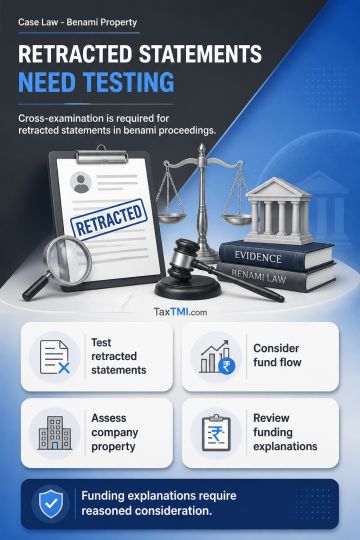
Cross-examination of retracted statements is essential where foundational evidence supports a benami allegation and documented funding explanations re...
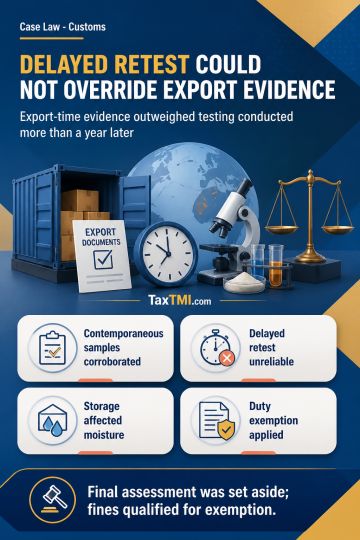
Capital-goods exemption covers plant-modernisation accessories, while the import restriction applies only to earlier capital-goods components and spar...
The case pertains to the denial of exemption u/s 11 due to excessive payments made on account of salary and rent to persons specified u/s 13(3). The Assessing Officer (AO) had disallowed the payments made to specified persons. However, upon examination, it was found that the rent paid by the assessee was lower than the prevailing market rates in the same area paid by unrelated parties. The AO had relied on an agreement for a different premise in the same locality, leading to an appreciation of wrong facts. Consequently, the Appellate Tribunal (ITAT) held that the impugned payments were not excessive or unreasonable, deciding the case in favor of the assessee.
The case pertains to the denial of exemption u/s 11 due to excessive payments made on account of salary and rent to persons specified u/s 13(3). The Assessing Officer (AO) had disallowed the payments made to specified persons. However, upon examination, it was found that the rent paid by the assessee was lower than the prevailing market rates in the same area paid by unrelated parties. The AO had relied on an agreement for a different premise in the same locality, leading to an appreciation of wrong facts. Consequently, the Appellate Tribunal (ITAT) held that the impugned payments were not excessive or unreasonable, deciding the case in favor of the assessee.
Note: It is a system-generated summary and is for quick reference only.
 TaxTMI
  TaxTMI
 of 4824








 Join Channel