Intermediary service classification fails where overseas admission facilitation is supplied independently, preserving export treatment and small-provi...
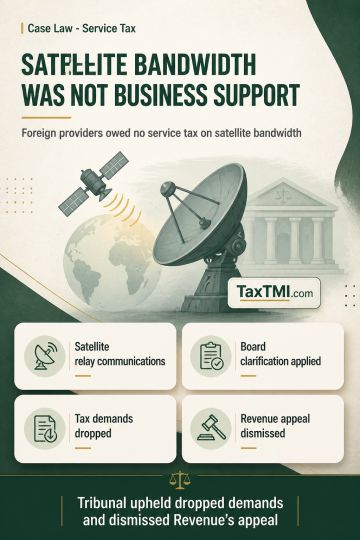
Satellite transponder bandwidth is telecommunication, not Business Support Service; foreign non-telegraph providers triggered no service tax liability...
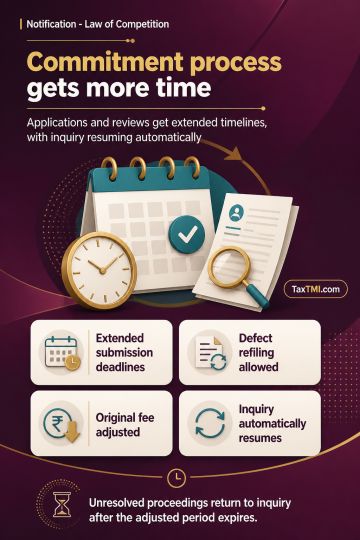
Commitment proceedings gain extended timelines, structured defect refiling, and automatic resumption of inquiry after the adjusted completion period e...
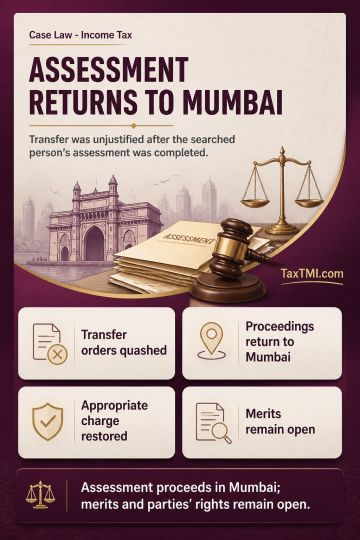
Centralised assessment transfer becomes unwarranted once the searched person's assessment is complete, requiring restoration to the appropriate charge...
The case pertains to the denial of exemption u/s 11 due to excessive payments made on account of salary and rent to persons specified u/s 13(3). The Assessing Officer (AO) had disallowed the payments made to specified persons. However, upon examination, it was found that the rent paid by the assessee was lower than the prevailing market rates in the same area paid by unrelated parties. The AO had relied on an agreement for a different premise in the same locality, leading to an appreciation of wrong facts. Consequently, the Appellate Tribunal (ITAT) held that the impugned payments were not excessive or unreasonable, deciding the case in favor of the assessee.
The case pertains to the denial of exemption u/s 11 due to excessive payments made on account of salary and rent to persons specified u/s 13(3). The Assessing Officer (AO) had disallowed the payments made to specified persons. However, upon examination, it was found that the rent paid by the assessee was lower than the prevailing market rates in the same area paid by unrelated parties. The AO had relied on an agreement for a different premise in the same locality, leading to an appreciation of wrong facts. Consequently, the Appellate Tribunal (ITAT) held that the impugned payments were not excessive or unreasonable, deciding the case in favor of the assessee.
Note: It is a system-generated summary and is for quick reference only.
 TaxTMI
  TaxTMI
 of 4819











 Join Channel


