Charitable registration renewal cannot become an assessment of receipts, profitability or annual exemption compliance, requiring renewal and donation ...
AMP expenditure for own business is not an international transaction without an associated-enterprise arrangement, eliminating transfer pricing adjust...
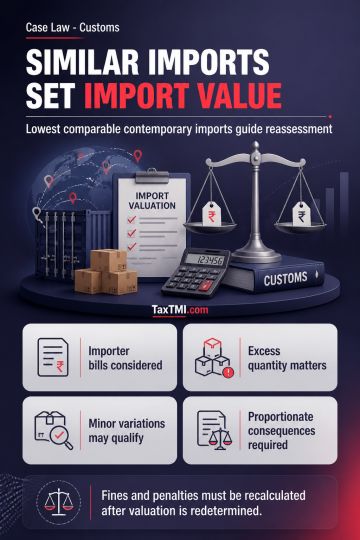
Customs valuation must use comparable contemporary imports, while confiscation fines and penalties require proportionate recalculation on reassessed v...
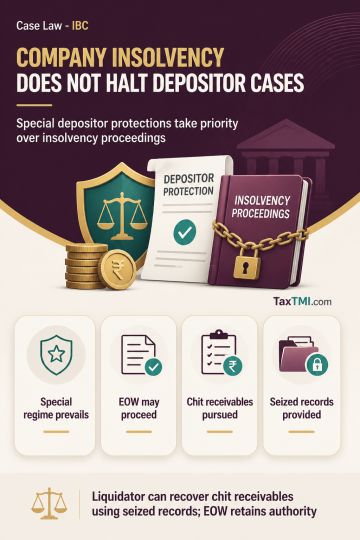
Depositor-protection proceedings prevail over corporate insolvency, while liquidators may recover chit receivables using copies of seized company reco...
The case pertains to the denial of exemption u/s 11 due to excessive payments made on account of salary and rent to persons specified u/s 13(3). The Assessing Officer (AO) had disallowed the payments made to specified persons. However, upon examination, it was found that the rent paid by the assessee was lower than the prevailing market rates in the same area paid by unrelated parties. The AO had relied on an agreement for a different premise in the same locality, leading to an appreciation of wrong facts. Consequently, the Appellate Tribunal (ITAT) held that the impugned payments were not excessive or unreasonable, deciding the case in favor of the assessee.
The case pertains to the denial of exemption u/s 11 due to excessive payments made on account of salary and rent to persons specified u/s 13(3). The Assessing Officer (AO) had disallowed the payments made to specified persons. However, upon examination, it was found that the rent paid by the assessee was lower than the prevailing market rates in the same area paid by unrelated parties. The AO had relied on an agreement for a different premise in the same locality, leading to an appreciation of wrong facts. Consequently, the Appellate Tribunal (ITAT) held that the impugned payments were not excessive or unreasonable, deciding the case in favor of the assessee.
Note: It is a system-generated summary and is for quick reference only.
 TaxTMI
  TaxTMI
 of 4819









 Join Channel


