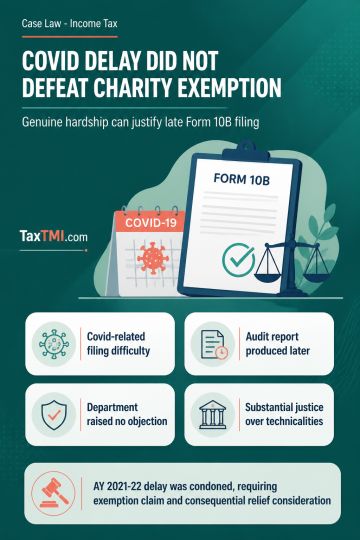
Belated Form 10B filing during Covid-19 cannot defeat charitable exemption where genuine hardship warrants condonation and substantial justice prevail...
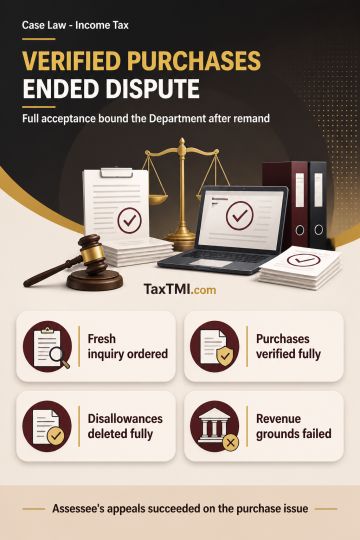
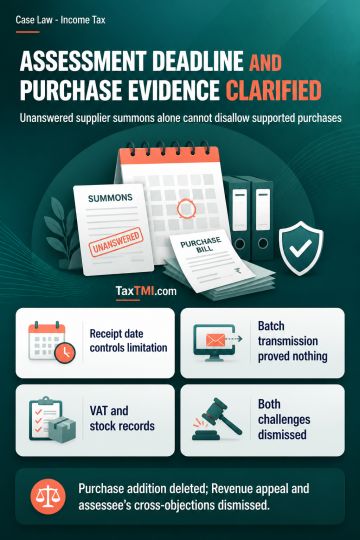
Limitation for consequential assessments runs from prescribed authority receipt, while verified purchases cannot be disallowed merely for unanswered s...
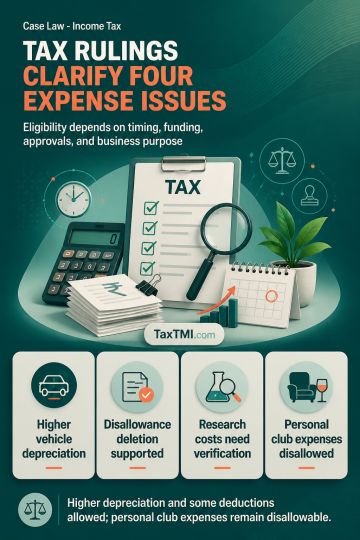
Higher depreciation for qualifying commercial vehicles, exempt-income disallowance, research deduction verification, and club-expense treatment clarif...
The case pertains to the denial of exemption u/s 11 due to excessive payments made on account of salary and rent to persons specified u/s 13(3). The Assessing Officer (AO) had disallowed the payments made to specified persons. However, upon examination, it was found that the rent paid by the assessee was lower than the prevailing market rates in the same area paid by unrelated parties. The AO had relied on an agreement for a different premise in the same locality, leading to an appreciation of wrong facts. Consequently, the Appellate Tribunal (ITAT) held that the impugned payments were not excessive or unreasonable, deciding the case in favor of the assessee.
The case pertains to the denial of exemption u/s 11 due to excessive payments made on account of salary and rent to persons specified u/s 13(3). The Assessing Officer (AO) had disallowed the payments made to specified persons. However, upon examination, it was found that the rent paid by the assessee was lower than the prevailing market rates in the same area paid by unrelated parties. The AO had relied on an agreement for a different premise in the same locality, leading to an appreciation of wrong facts. Consequently, the Appellate Tribunal (ITAT) held that the impugned payments were not excessive or unreasonable, deciding the case in favor of the assessee.
Note: It is a system-generated summary and is for quick reference only.
 TaxTMI
  TaxTMI
 of 4819






 Join Channel


