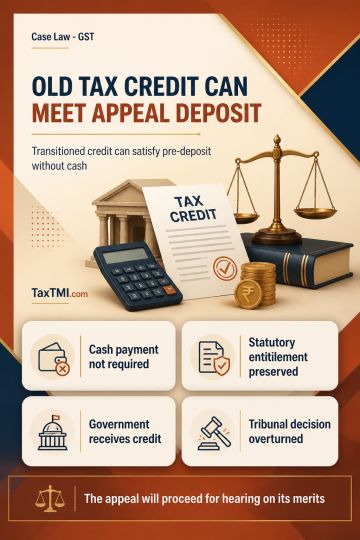
Transitioned CENVAT credit may validly satisfy mandatory pre-deposit requirements for legacy service tax appeals through Electronic Credit Ledger debi...
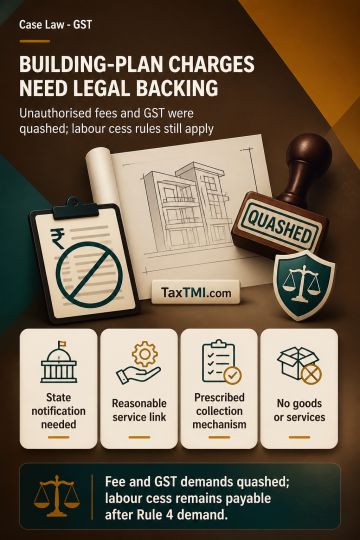
Building-plan sanction charges require statutory authority; unauthorised fees and GST were quashed, while labour cess must follow prescribed collectio...
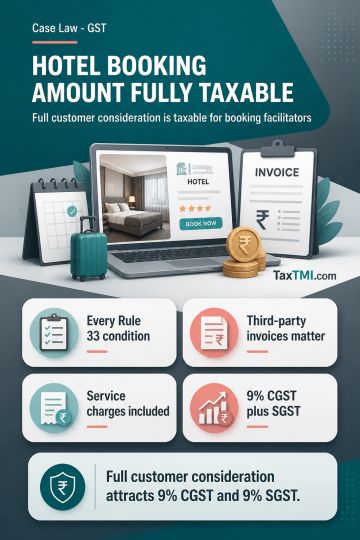
Pure-agent exclusion fails where hotel booking facilitators receive third-party services themselves, making entire customer consideration taxable as r...
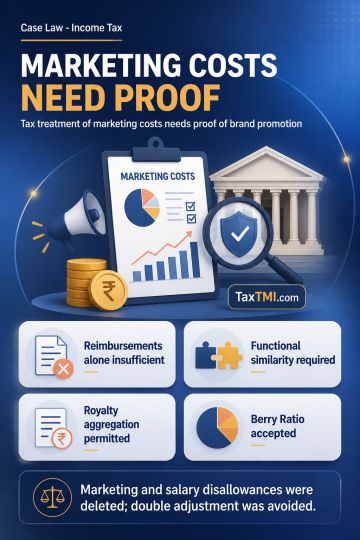
Transfer pricing requires evidence for AMP transactions, functionally reliable comparables, and appropriate aggregation or Berry Ratio benchmarking me...
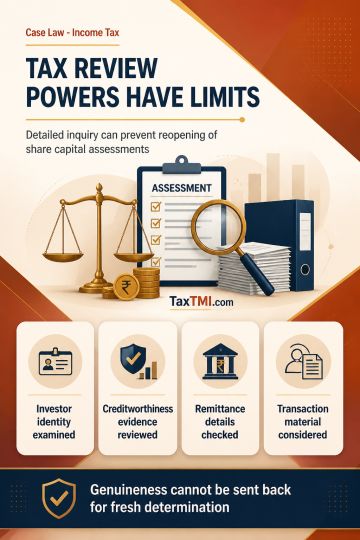
Revisionary jurisdiction cannot reopen share capital assessments where adequate inquiry supports a permissible view and no independent error is establ...
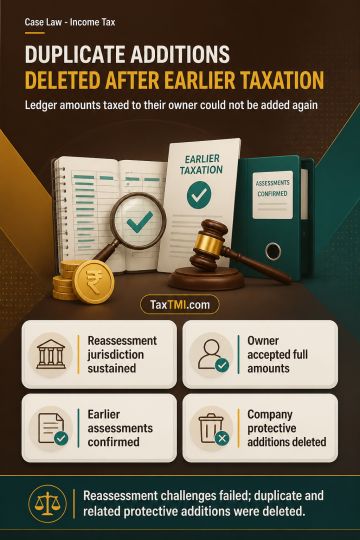
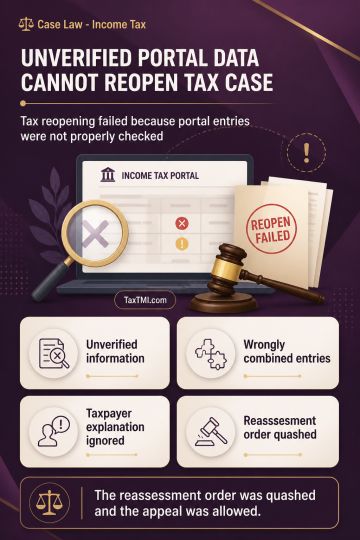
Reassessment jurisdiction fails where unverified portal information is aggregated without examining the taxpayer's explanation or relevance of entries...
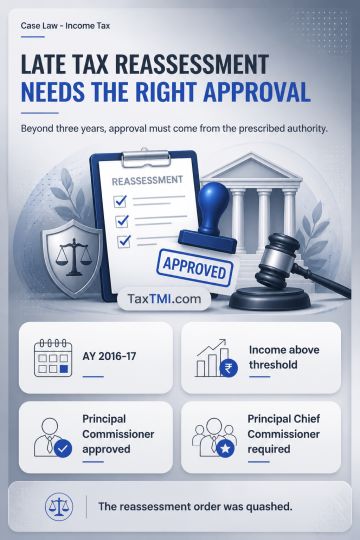
Statutory sanction for delayed reassessment requires approval from the prescribed authority; approval by an inferior authority invalidates jurisdictio...
This case involves a challenge to a public notice issued by customs authorities, specifically Clause 3(ii), which requires importers to provide an explanation for identical FOB (Free on Board) values mentioned in the FTA-COO (Free Trade Agreement Certificate of Origin) and the third-country invoice when submitting the self-assessed bill of entry. The court held that Clause 3(ii) does not infringe upon the importer's rights or entitlements under preferential trade agreements. The requirement to provide an explanation is only to enable the proper officer to assess and verify compliance with the relevant rules and regulations. The court clarified that this clause applies only in cases of identical FOB values and not in all cases. The petitioner cannot seek a direction to grant benefits under the Customs notification without providing the required explanation. Each transaction must be considered on its own merits based on the facts disclosed and compliance reported. The petition was dismissed, and the petitioner's entitlement to preferential trade agreement benefits must be determined in accordance with the applicable laws, notifications, and rules.
This case involves a challenge to a public notice issued by customs authorities, specifically Clause 3(ii), which requires importers to provide an explanation for identical FOB (Free on Board) values mentioned in the FTA-COO (Free Trade Agreement Certificate of Origin) and the third-country invoice when submitting the self-assessed bill of entry. The court held that Clause 3(ii) does not infringe upon the importer's rights or entitlements under preferential trade agreements. The requirement to provide an explanation is only to enable the proper officer to assess and verify compliance with the relevant rules and regulations. The court clarified that this clause applies only in cases of identical FOB values and not in all cases. The petitioner cannot seek a direction to grant benefits under the Customs notification without providing the required explanation. Each transaction must be considered on its own merits based on the facts disclosed and compliance reported. The petition was dismissed, and the petitioner's entitlement to preferential trade agreement benefits must be determined in accordance with the applicable laws, notifications, and rules.
Note: It is a system-generated summary and is for quick reference only.
 TaxTMI
  TaxTMI
 of 4821








 Join Channel


