Service of notice and contractual debt acknowledgment preserved insolvency admission against a corporate guarantor despite limitation and natural just...
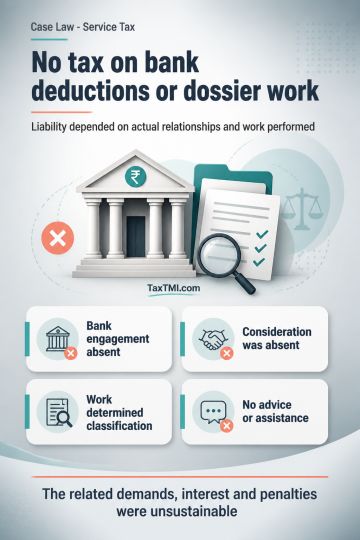
Original works exemption excludes standalone boulder transportation, leaving subcontracted railway-project transport services subject to service tax l...
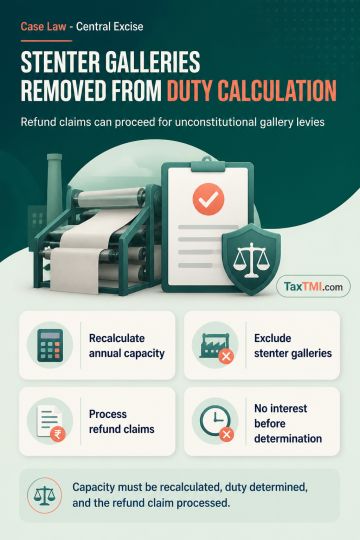
Annual production capacity determinations excluding stenter galleries support refunds for unconstitutional excise levies without an unjust-enrichment ...
Vicarious liability for cheque dishonour requires specific allegations of responsibility and cheque signatory; generic director allegations cannot sus...
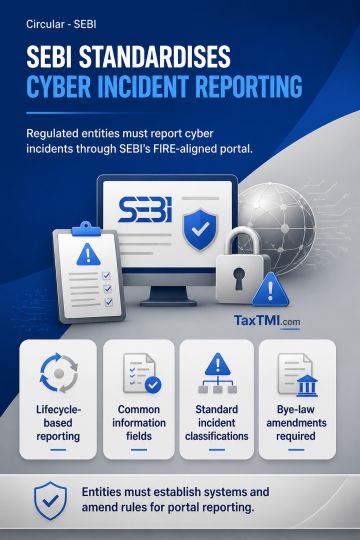
IT Resilience Index requires market infrastructure institutions to automate resilience scoring, early warnings, and continuous service-delivery monito...
This case deals with the applicability of customs duty exemption under Notification No. 12/2012-Cus for imports made before and after its amendment by Notification No. 06/2017-Cus, and the applicability of depreciation provisions under Clause (e) of Condition 40A post-amendment. The key points are: Prior to the amendment, the exemption was available without any depreciation clause, as per the CLOUGH ENGINEERING LTD. case. After the amendment, duty became payable on leftover goods with prescribed depreciation rates. The confiscation demand and penalties were set aside, as the notification itself foresaw the possibility of leftovers and disposal. The case was remanded for fresh adjudication considering the depreciation provisions for post-amendment imports.
This case deals with the applicability of customs duty exemption under Notification No. 12/2012-Cus for imports made before and after its amendment by Notification No. 06/2017-Cus, and the applicability of depreciation provisions under Clause (e) of Condition 40A post-amendment. The key points are: Prior to the amendment, the exemption was available without any depreciation clause, as per the CLOUGH ENGINEERING LTD. case. After the amendment, duty became payable on leftover goods with prescribed depreciation rates. The confiscation demand and penalties were set aside, as the notification itself foresaw the possibility of leftovers and disposal. The case was remanded for fresh adjudication considering the depreciation provisions for post-amendment imports.
Note: It is a system-generated summary and is for quick reference only.
 TaxTMI
  TaxTMI
 of 4817


















 Join Channel