Judicial review of settlement orders cannot reopen settled customs notices, while statutory interest remains subject to verification and quantificatio...
Customs Broker licence lending for consideration justified revocation where exporter authorisation and client verification obligations were also breac...
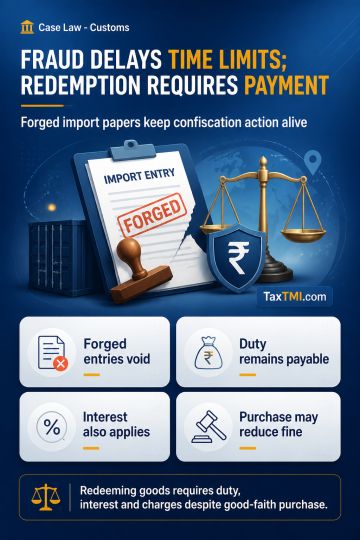
Fraudulent import documents suspend limitation protection, while redemption of confiscated goods requires duty and interest despite bona fide purchase...
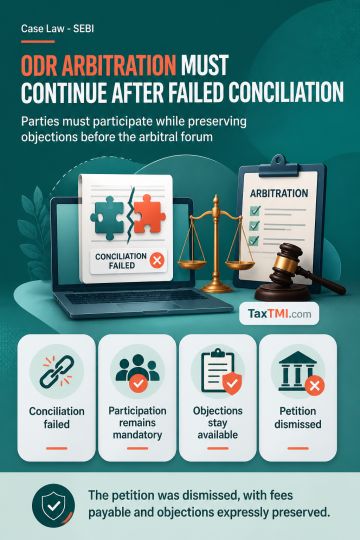
ODR arbitration participation remains mandatory after failed conciliation, while jurisdictional and maintainability objections stay available before t...
Transparency in technical bid evaluation requires disclosed standards and recorded reasons; opaque scoring invalidated tender awards and required fres...
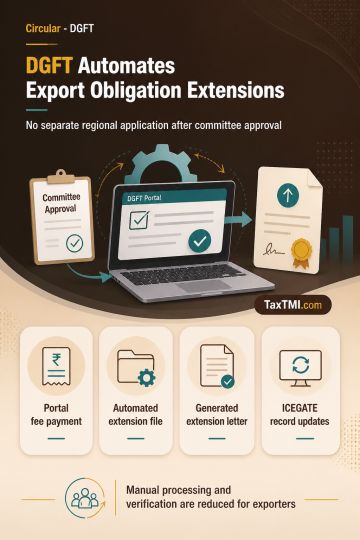
Automated export obligation extensions remove separate regional applications after committee approval for Advance Authorisation and EPCG authorisation...
International cargo transhipment through Indian ports continues with Customs-controlled storage, re-export safeguards, and coordinated multi-station m...
The NCLAT erred in invoking its inherent powers u/r 11 of the NCLAT Rules 2016 to approve a settlement between the second respondent and the Corporate Debtor, circumventing the prescribed procedure for withdrawal of CIRP u/s 12A and Regulation 30A. The inherent powers cannot override specific legal provisions exhaustively providing a procedure. The NCLAT failed to provide reasons for deviating from the withdrawal procedure or the urgency necessitating approval without following due process. Once CIRP commenced, it became a collective proceeding involving all creditors as stakeholders. The NCLAT inadequately addressed the appellant's objections regarding the ongoing ED investigation against the respondents and attempts by the Corporate Debtor to dissipate assets. Despite the appellant not being a party to the settlement, it has locus standi as an aggrieved person u/ss 61 and 62 of the IBC to challenge the NCLAT order before the Supreme Court. The impugned NCLAT judgment is set aside.
The NCLAT erred in invoking its inherent powers u/r 11 of the NCLAT Rules 2016 to approve a settlement between the second respondent and the Corporate Debtor, circumventing the prescribed procedure for withdrawal of CIRP u/s 12A and Regulation 30A. The inherent powers cannot override specific legal provisions exhaustively providing a procedure. The NCLAT failed to provide reasons for deviating from the withdrawal procedure or the urgency necessitating approval without following due process. Once CIRP commenced, it became a collective proceeding involving all creditors as stakeholders. The NCLAT inadequately addressed the appellant's objections regarding the ongoing ED investigation against the respondents and attempts by the Corporate Debtor to dissipate assets. Despite the appellant not being a party to the settlement, it has locus standi as an aggrieved person u/ss 61 and 62 of the IBC to challenge the NCLAT order before the Supreme Court. The impugned NCLAT judgment is set aside.
Note: It is a system-generated summary and is for quick reference only.
 TaxTMI
  TaxTMI
 of 4817

















 Join Channel