Transaction value cannot be rejected solely on non-statutory valuation guidelines without corroborative evidence supporting reassessment of final cust...
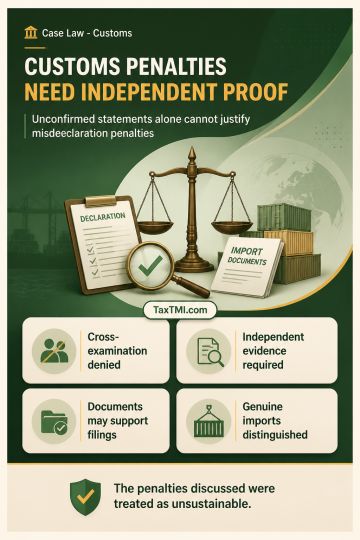
Cross-examination rights and corroborated evidence limit customs penalties for misdeclaration in genuine import transactions involving documented clea...
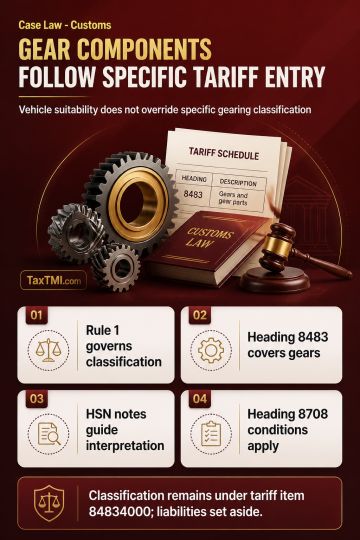
Tariff classification of vehicle gear components follows the specific gearing entry, displacing motor-vehicle parts classification and related liabili...
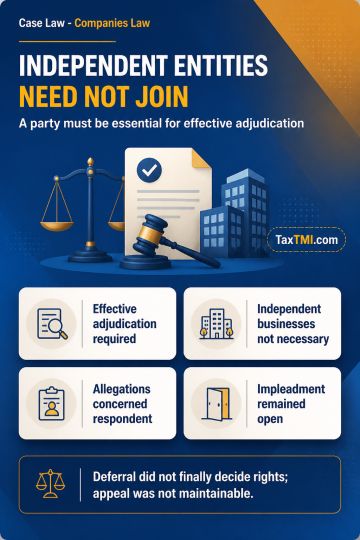
Necessary-party requirements limit impleadment of independent entities, while deferred consideration does not create an appealable adverse determinati...
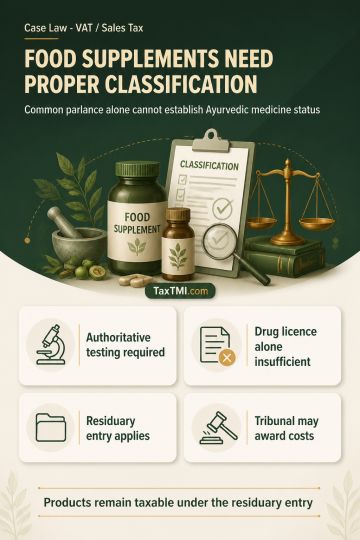
Food supplement classification requires common parlance and authoritative tests, preventing treatment as proprietary Ayurvedic medicines without suppo...
An existing trust had previously been granted approval u/ss 12AA and 80G of the Income Tax Act. However, instead of applying under clause (i) of the proviso to Section 80G, which is applicable for existing trusts, it incorrectly applied under clause (iii) as a new trust. Clause (i) does not require any provisional approval, and the Principal Commissioner or Commissioner would have granted approval for five years upon written application. The controversy arose due to the incorrect mention of clause (iv) instead of clause (i) in Form No. 10AC, which the assessee admitted was an error. Since Form No. 10AC was filed on time, the incorrect clause mention is considered a curable defect. The order of the Commissioner of Income Tax (Exemption) is set aside, and they are required to consider the application as filed under clause (i) of the first proviso to Section 80G(5) and grant approval accordingly. The assessee's appeal is allowed for statistical purposes.
An existing trust had previously been granted approval u/ss 12AA and 80G of the Income Tax Act. However, instead of applying under clause (i) of the proviso to Section 80G, which is applicable for existing trusts, it incorrectly applied under clause (iii) as a new trust. Clause (i) does not require any provisional approval, and the Principal Commissioner or Commissioner would have granted approval for five years upon written application. The controversy arose due to the incorrect mention of clause (iv) instead of clause (i) in Form No. 10AC, which the assessee admitted was an error. Since Form No. 10AC was filed on time, the incorrect clause mention is considered a curable defect. The order of the Commissioner of Income Tax (Exemption) is set aside, and they are required to consider the application as filed under clause (i) of the first proviso to Section 80G(5) and grant approval accordingly. The assessee's appeal is allowed for statistical purposes.
Note: It is a system-generated summary and is for quick reference only.
 TaxTMI
 of 4805







 Join Channel


 TaxTMI
