Additional evidence in transfer pricing dispute leads to fresh examination, while tax deductions, TDS credit, fee and refund interest require verifica...
Category II AIF pass-through taxation preserves non-business income character; investment receipts cannot be reclassified without applying recognised ...
Mutual fund maturity rules require proper rollover, redemption, disclosure, and due diligence; investor gains cannot excuse regulatory breaches or pen...
Threshold exemption excludes exempt services, while stamp-paper purchases avoid reverse charge; consequential service tax penalties were also set asid...
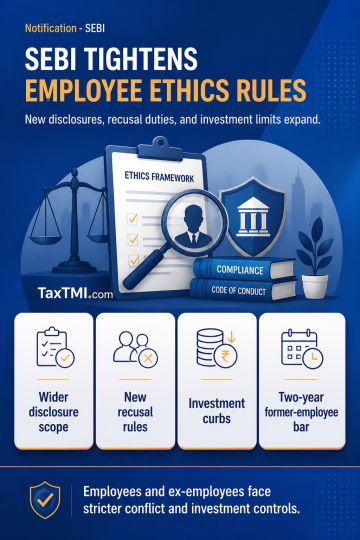
Employee conflict disclosures and investment restrictions expand with new recusal duties, post-employment limits, and compliance reporting requirement...
The appellate authority erred in deciding the appeal ex-parte in the absence of the appellant or their counsel. The statutory mandate requires the appellate authority to hear the appellant, conduct further inquiry if necessary, and pass a reasoned order confirming, modifying, or annulling the decision appealed against. Deciding the case ex-parte without giving a reasonable opportunity violates the principles of natural justice and audi alteram partem. The appellate authority should have dismissed the appeal in default instead of deciding it on merits. The impugned ex-parte order is illegal and arbitrary, necessitating remitting the matter back to the appellate authority to decide afresh after affording an opportunity of hearing to the parties within three months.
The appellate authority erred in deciding the appeal ex-parte in the absence of the appellant or their counsel. The statutory mandate requires the appellate authority to hear the appellant, conduct further inquiry if necessary, and pass a reasoned order confirming, modifying, or annulling the decision appealed against. Deciding the case ex-parte without giving a reasonable opportunity violates the principles of natural justice and audi alteram partem. The appellate authority should have dismissed the appeal in default instead of deciding it on merits. The impugned ex-parte order is illegal and arbitrary, necessitating remitting the matter back to the appellate authority to decide afresh after affording an opportunity of hearing to the parties within three months.
Note: It is a system-generated summary and is for quick reference only.
 TaxTMI
  TaxTMI
 of 4811




















 Join Channel


