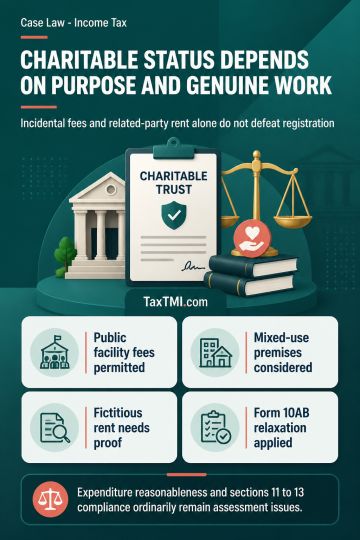
Charitable registration turns on predominant purpose and genuine activities, while incidental fees and related-party rent require supporting adverse m...
MAT book-profit adjustments exclude disallowances for exempt-income expenditure and demerger expenditure unless expressly listed under the statutory c...
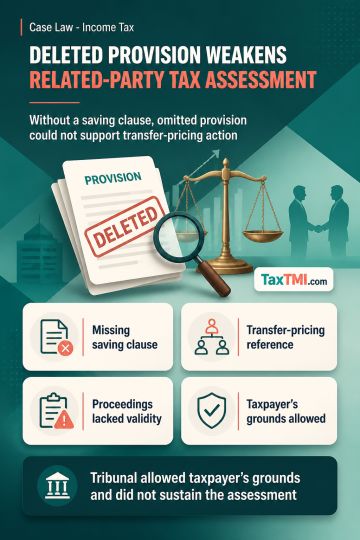
Omitted specified domestic transaction provision invalidates related-party expenditure transfer-pricing references and assessments based on consequent...
Page of 4803
Press 'Enter' after typing page number.
301 to 320 of 96047 Results
❮
❯
❯❯
0 / 200
Expand Note
Add to Folder
No Folders have been created
+
Are you sure you want to delete "My most important" ?
The appellate authority erred in deciding the appeal ex-parte in the absence of the appellant or their counsel. The statutory mandate requires the appellate authority to hear the appellant, conduct further inquiry if necessary, and pass a reasoned order confirming, modifying, or annulling the decision appealed against. Deciding the case ex-parte without giving a reasonable opportunity violates the principles of natural justice and audi alteram partem. The appellate authority should have dismissed the appeal in default instead of deciding it on merits. The impugned ex-parte order is illegal and arbitrary, necessitating remitting the matter back to the appellate authority to decide afresh after affording an opportunity of hearing to the parties within three months.
The appellate authority erred in deciding the appeal ex-parte in the absence of the appellant or their counsel. The statutory mandate requires the appellate authority to hear the appellant, conduct further inquiry if necessary, and pass a reasoned order confirming, modifying, or annulling the decision appealed against. Deciding the case ex-parte without giving a reasonable opportunity violates the principles of natural justice and audi alteram partem. The appellate authority should have dismissed the appeal in default instead of deciding it on merits. The impugned ex-parte order is illegal and arbitrary, necessitating remitting the matter back to the appellate authority to decide afresh after affording an opportunity of hearing to the parties within three months.
Note: It is a system-generated summary and is for quick reference only.
 TaxTMI
 of 4803











 Join Channel


 TaxTMI