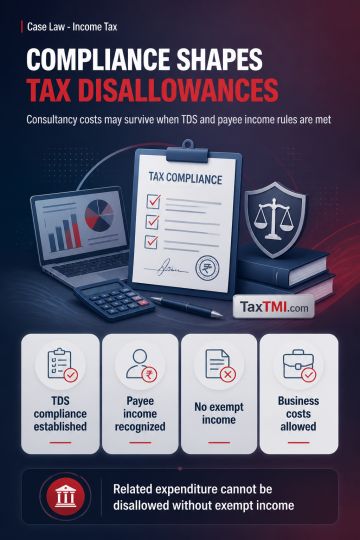
Tax deduction compliance and payee income recognition govern consultancy disallowance, while no exempt income prevents related expenditure disallowanc...
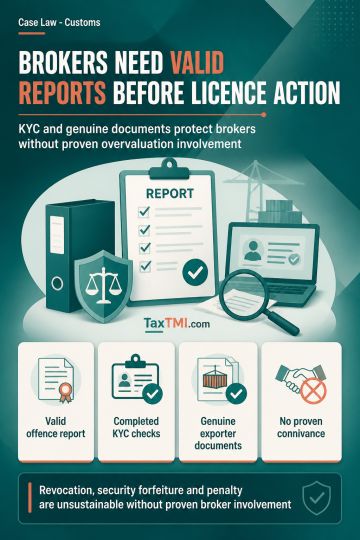
Derivative abetment liability fails when correctly declared imported components establish no underlying improper importation by the principal importer...
Page of 4805
Press 'Enter' after typing page number.
701 to 720 of 96100 Results
❮
❯
❯❯
0 / 200
Expand Note
Add to Folder
No Folders have been created
+
Are you sure you want to delete "My most important" ?
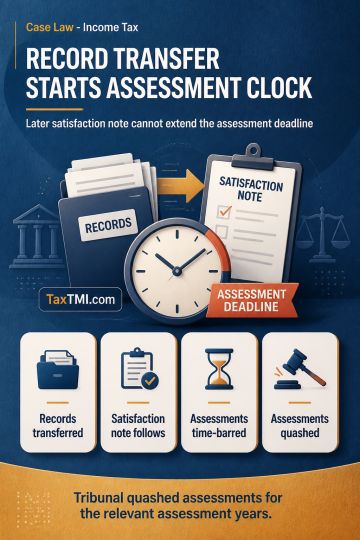
Assessment proceedings u/s 153C - The period of limitation and deemed date for possession of seized documents were discussed. It was held that the date of recording satisfaction would be the deemed date for possession of seized documents, which was 03-10-2022, and six years would be reckoned from this date. The submission made by the Authorized Representative was tenable, and the relevant assessment year for the previous year in which the search was conducted would be AY 2023-24, with six immediately preceding assessment years being AY 2018-19 to 2022-23. The assessment for AY 2021-22 should have been carried out by issuing notice u/s 153C and not Section 143(2). The case was covered by the Akanksha Gupta case, and the assessment order passed u/s 143(3) was held to be bad in law and liable to be quashed. The assessee's appeal was allowed.
Assessment proceedings u/s 153C - The period of limitation and deemed date for possession of seized documents were discussed. It was held that the date of recording satisfaction would be the deemed date for possession of seized documents, which was 03-10-2022, and six years would be reckoned from this date. The submission made by the Authorized Representative was tenable, and the relevant assessment year for the previous year in which the search was conducted would be AY 2023-24, with six immediately preceding assessment years being AY 2018-19 to 2022-23. The assessment for AY 2021-22 should have been carried out by issuing notice u/s 153C and not Section 143(2). The case was covered by the Akanksha Gupta case, and the assessment order passed u/s 143(3) was held to be bad in law and liable to be quashed. The assessee's appeal was allowed.
Note: It is a system-generated summary and is for quick reference only.
 TaxTMI
 of 4805







 Join Channel


 TaxTMI