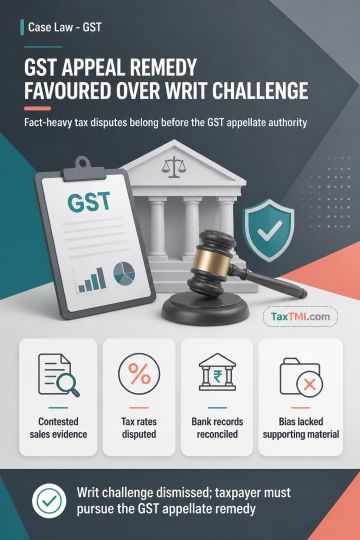
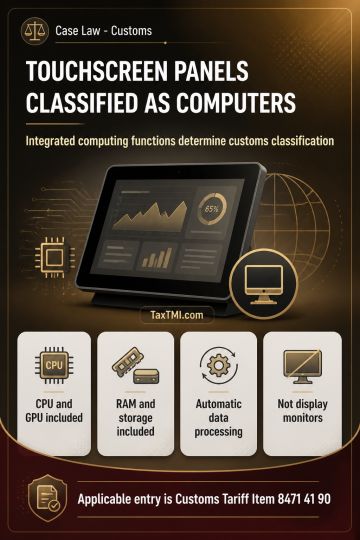
Interactive touchscreen panels with integrated computing functions fall under automatic data-processing machines rather than display monitors for cust...
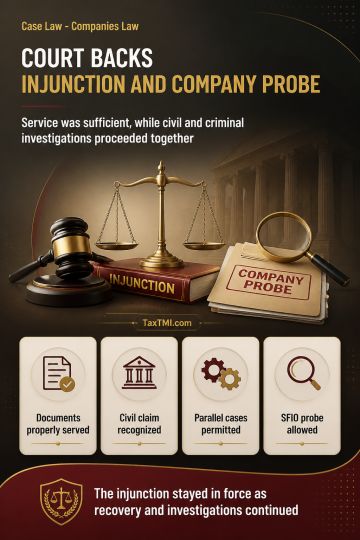
Ex parte injunction service requirements were substantially met, while civil recovery and SFIO investigation into provident fund defalcation continued...
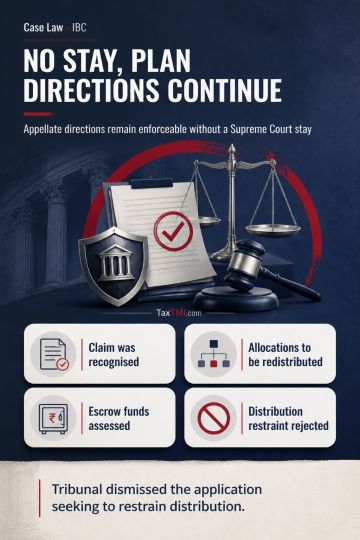
Enforcement of resolution-plan directions continues without a Supreme Court stay, preventing suspension of redistribution and escrowed-fund distributi...
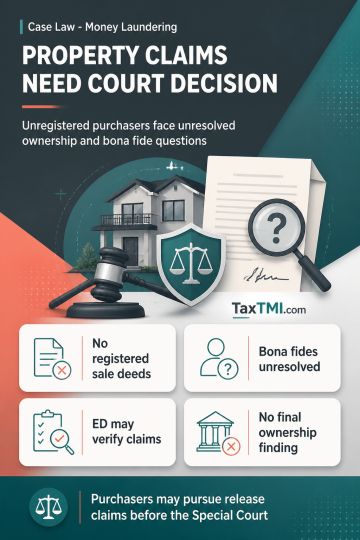
Third-party ownership claims over attached property require Special Court adjudication where purchasers lack registered sale deeds and bona fides rema...
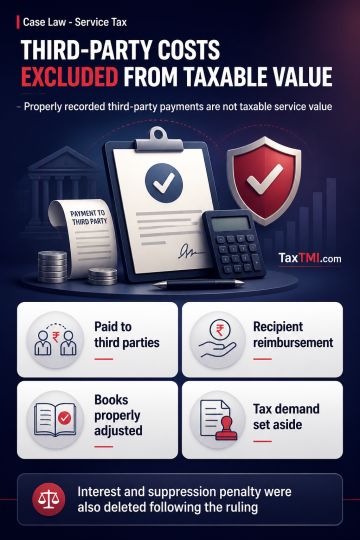
Pure-agent reimbursements in clearing and forwarding services are excluded from taxable value when qualifying third-party payments are properly record...
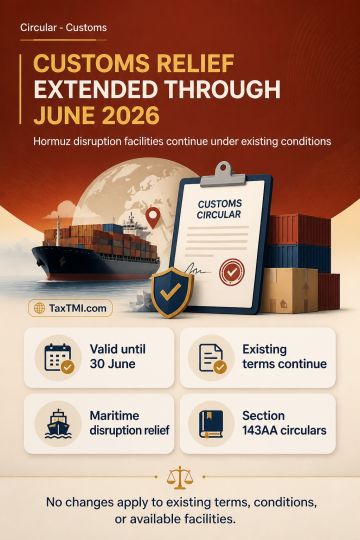
Customs relief for Strait of Hormuz maritime disruptions remains available, with existing conditions continuing unchanged through the extended validit...
The central issue revolved around whether the movement of goods from manufacturing units in Rajasthan to depots in Bihar and Jharkhand constituted inter-state supply of goods or inter-state stock transfers. The key points are: Transfer of goods from head office to branch cannot be treated as sale in interstate trade since a head office cannot trade with itself. A sale requires transfer of property in goods from seller to buyer for a price, while an agreement to sell involves future transfer subject to conditions. Inter-state sale attracting central sales tax occurs when sale/agreement to sell occasions movement of goods across states. Under the liquor policy, the Corporation is the wholesaler, and manufacturers submit documents like Master Agreement for supplying beer. The Corporation issues Order for Supply (OFS) based on stock requirements but has no obligation to procure minimum quantities. Delivery deviating from OFS is not acknowledged. The Master Agreement cannot be treated as an agreement to sell, being merely a standing order/tender. The movement of goods from Rajasthan to Bihar/Jharkhand was not occasioned by any sale agreement but was merely inter-state stock transfer by appellants to their own depots. Hence, central sales tax is not leviable on such movements.
The central issue revolved around whether the movement of goods from manufacturing units in Rajasthan to depots in Bihar and Jharkhand constituted inter-state supply of goods or inter-state stock transfers. The key points are: Transfer of goods from head office to branch cannot be treated as sale in interstate trade since a head office cannot trade with itself. A sale requires transfer of property in goods from seller to buyer for a price, while an agreement to sell involves future transfer subject to conditions. Inter-state sale attracting central sales tax occurs when sale/agreement to sell occasions movement of goods across states. Under the liquor policy, the Corporation is the wholesaler, and manufacturers submit documents like Master Agreement for supplying beer. The Corporation issues Order for Supply (OFS) based on stock requirements but has no obligation to procure minimum quantities. Delivery deviating from OFS is not acknowledged. The Master Agreement cannot be treated as an agreement to sell, being merely a standing order/tender. The movement of goods from Rajasthan to Bihar/Jharkhand was not occasioned by any sale agreement but was merely inter-state stock transfer by appellants to their own depots. Hence, central sales tax is not leviable on such movements.
Note: It is a system-generated summary and is for quick reference only.
 TaxTMI
 of 4803


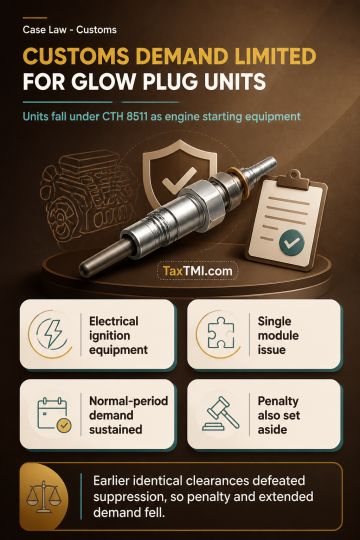
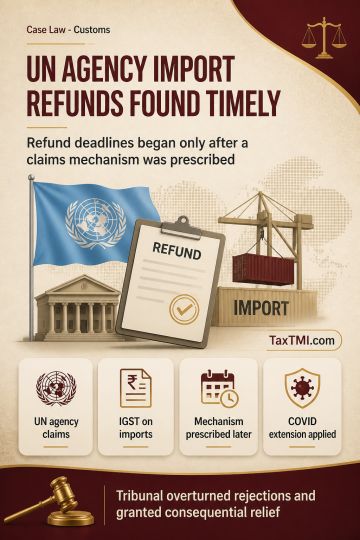
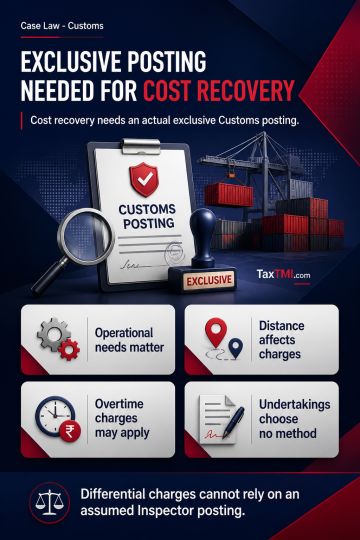


 Join Channel


 TaxTMI