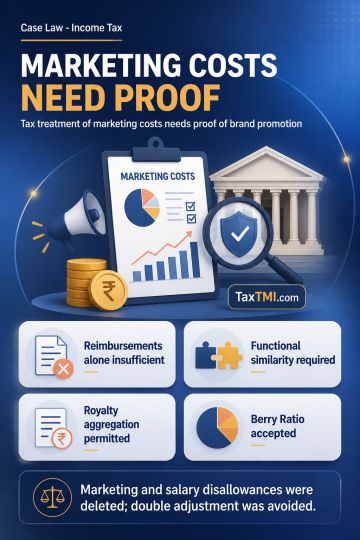
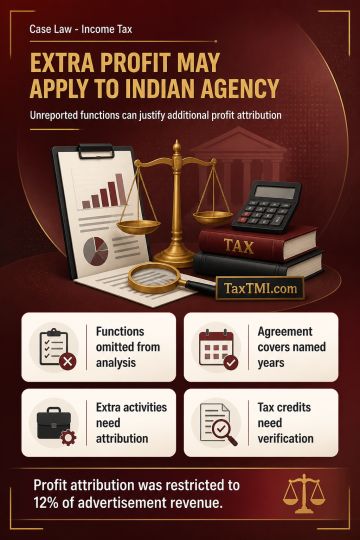
Transfer pricing requires evidence for AMP transactions, functionally reliable comparables, and appropriate aggregation or Berry Ratio benchmarking me...
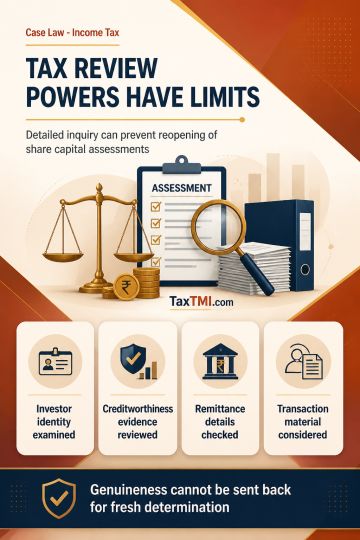
Revisionary jurisdiction cannot reopen share capital assessments where adequate inquiry supports a permissible view and no independent error is establ...
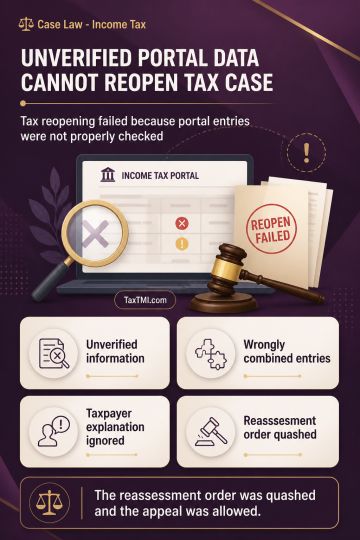
Reassessment jurisdiction fails where unverified portal information is aggregated without examining the taxpayer's explanation or relevance of entries...
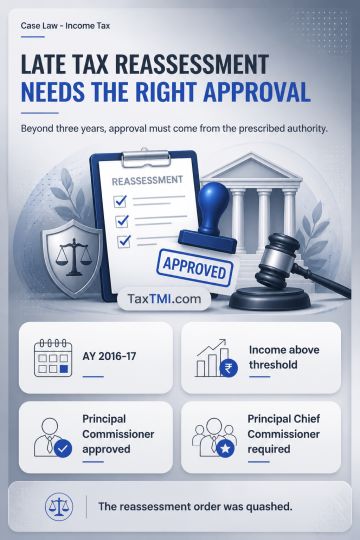
Statutory sanction for delayed reassessment requires approval from the prescribed authority; approval by an inferior authority invalidates jurisdictio...
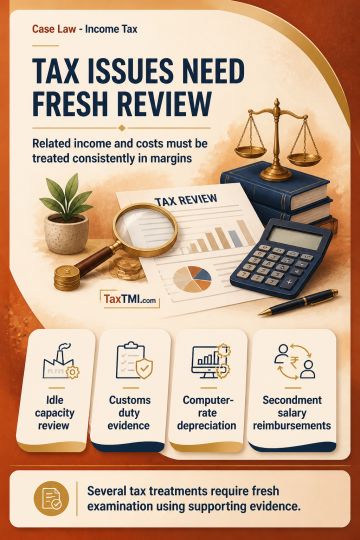
Transfer pricing margin adjustments require matching treatment of non-operating income and related costs, with comparability issues reconsidered on ev...
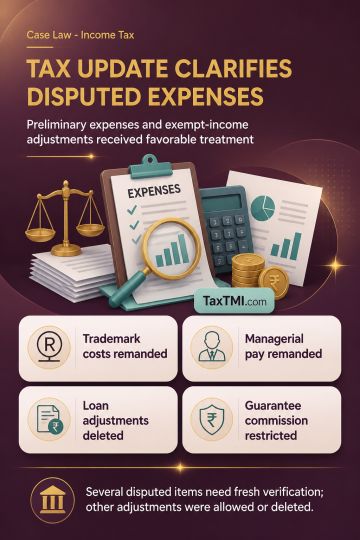
Preliminary-expense amortisation and MAT exempt-income adjustments prevailed, while trademark costs and managerial remuneration require fresh verifica...
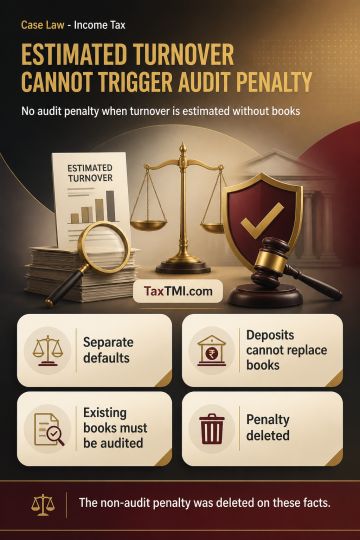
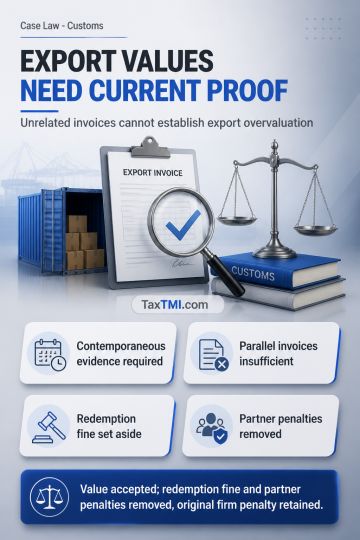
Export valuation requires contemporaneous evidence; unrelated invoices cannot prove overvaluation, and dual penalties on firm and partner are impermis...
The case revolves around determining whether an employee qualifies as a "workman" u/s 2(s) of the Industrial Disputes Act, 1947, which would entitle them to certain protections and benefits. The key points are: The Industrial Disputes Act aims to settle industrial disputes and ensure social justice for employers and employees. Section 2(s) defines a "workman" based on the nature of work performed, excluding supervisory or managerial roles above a certain wage threshold. The employee claimed not to be in an executive cadre, while the management asserted the employee supervised junior engineers. The determinative factor is the principal duties performed, not just the designation. Lacking concrete evidence of the employee's actual duties, the court relied on the employment orders designating the employee as an engineer on the administrative side, thus excluding them from the "workman" definition u/s 2(s). Consequently, the High Court's finding that the employee was a "workman" was set aside. Since the employee did not qualify as a "workman," the provisions of the Industrial Disputes Act, including reinstatement and compensation for back wages, did not apply. The Supreme Court upheld the High Court's decision to set aside the Labour Court's award of reinstatement and compensation, as there was no violation of procedure by the management in terminating the employee's services.
The case revolves around determining whether an employee qualifies as a "workman" u/s 2(s) of the Industrial Disputes Act, 1947, which would entitle them to certain protections and benefits. The key points are: The Industrial Disputes Act aims to settle industrial disputes and ensure social justice for employers and employees. Section 2(s) defines a "workman" based on the nature of work performed, excluding supervisory or managerial roles above a certain wage threshold. The employee claimed not to be in an executive cadre, while the management asserted the employee supervised junior engineers. The determinative factor is the principal duties performed, not just the designation. Lacking concrete evidence of the employee's actual duties, the court relied on the employment orders designating the employee as an engineer on the administrative side, thus excluding them from the "workman" definition u/s 2(s). Consequently, the High Court's finding that the employee was a "workman" was set aside. Since the employee did not qualify as a "workman," the provisions of the Industrial Disputes Act, including reinstatement and compensation for back wages, did not apply. The Supreme Court upheld the High Court's decision to set aside the Labour Court's award of reinstatement and compensation, as there was no violation of procedure by the management in terminating the employee's services.
Note: It is a system-generated summary and is for quick reference only.
 TaxTMI
 of 4801








 Join Channel


 TaxTMI
