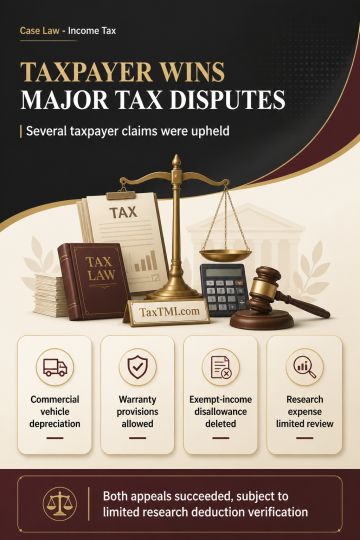
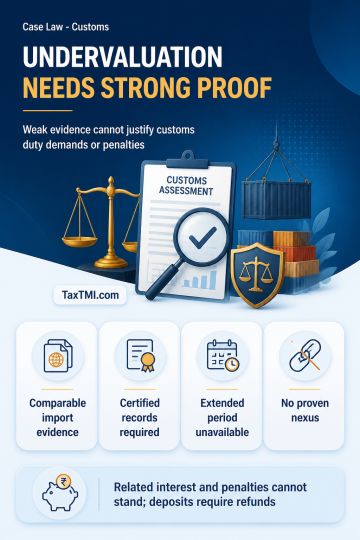
Commercial vehicle depreciation, scientifically determined warranty provisions and exempt-income disallowances were resolved in favour of the taxpayer...
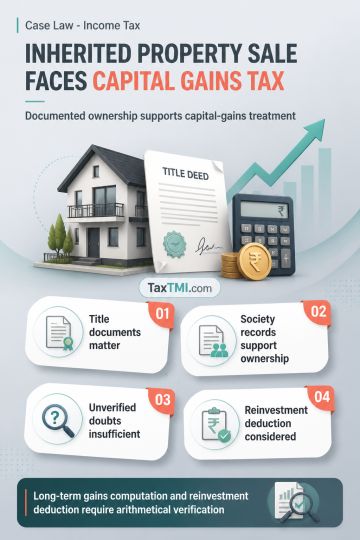
Inherited property sale proceeds require capital-gains treatment where ownership is supported by evidence, not suspicion or unverified signature doubt...
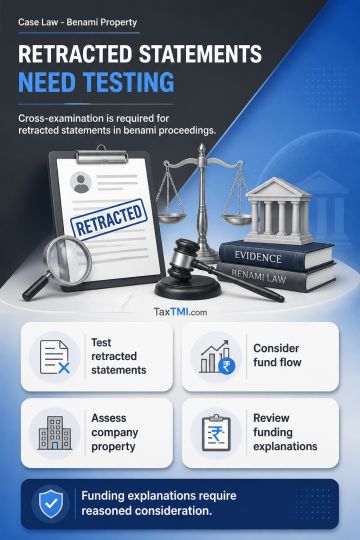
Cross-examination of retracted statements is essential where foundational evidence supports a benami allegation and documented funding explanations re...
The case revolves around determining whether an employee qualifies as a "workman" u/s 2(s) of the Industrial Disputes Act, 1947, which would entitle them to certain protections and benefits. The key points are: The Industrial Disputes Act aims to settle industrial disputes and ensure social justice for employers and employees. Section 2(s) defines a "workman" based on the nature of work performed, excluding supervisory or managerial roles above a certain wage threshold. The employee claimed not to be in an executive cadre, while the management asserted the employee supervised junior engineers. The determinative factor is the principal duties performed, not just the designation. Lacking concrete evidence of the employee's actual duties, the court relied on the employment orders designating the employee as an engineer on the administrative side, thus excluding them from the "workman" definition u/s 2(s). Consequently, the High Court's finding that the employee was a "workman" was set aside. Since the employee did not qualify as a "workman," the provisions of the Industrial Disputes Act, including reinstatement and compensation for back wages, did not apply. The Supreme Court upheld the High Court's decision to set aside the Labour Court's award of reinstatement and compensation, as there was no violation of procedure by the management in terminating the employee's services.
The case revolves around determining whether an employee qualifies as a "workman" u/s 2(s) of the Industrial Disputes Act, 1947, which would entitle them to certain protections and benefits. The key points are: The Industrial Disputes Act aims to settle industrial disputes and ensure social justice for employers and employees. Section 2(s) defines a "workman" based on the nature of work performed, excluding supervisory or managerial roles above a certain wage threshold. The employee claimed not to be in an executive cadre, while the management asserted the employee supervised junior engineers. The determinative factor is the principal duties performed, not just the designation. Lacking concrete evidence of the employee's actual duties, the court relied on the employment orders designating the employee as an engineer on the administrative side, thus excluding them from the "workman" definition u/s 2(s). Consequently, the High Court's finding that the employee was a "workman" was set aside. Since the employee did not qualify as a "workman," the provisions of the Industrial Disputes Act, including reinstatement and compensation for back wages, did not apply. The Supreme Court upheld the High Court's decision to set aside the Labour Court's award of reinstatement and compensation, as there was no violation of procedure by the management in terminating the employee's services.
Note: It is a system-generated summary and is for quick reference only.
 TaxTMI
 of 4803




 Join Channel


 TaxTMI