Clean slate principle extinguishes uncrystallised operational claims and bars continuation of pending recovery and arbitral proceedings after plan app...
Works contract classification governs composite layout-development contracts where VAT-paid goods are transferred alongside construction and infrastru...
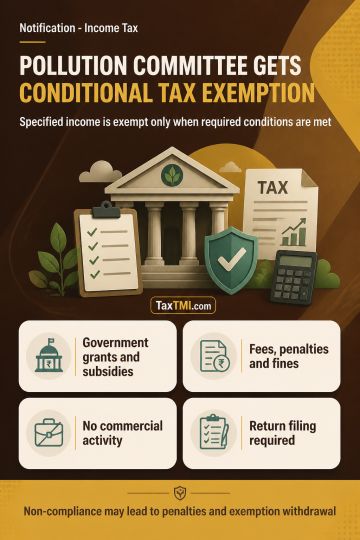
Specified income tax exemption for pollution control body remains conditional on non-commercial activity, unchanged income character, and return filin...
Jurisdictional facts in certificate-of-origin discrepancies can support customs show-cause proceedings, leaving factual explanations for departmental ...
Classification of imported goods, specifically di-methyl lauryl amine (DMLA), under the Customs Tariff Act, 1975. The key points are: The classification of DMLA as a 'surface active agent' under heading 3402 was disputed. The test reports submitted were questioned for their validity and bona fides. The adjudicating authority did not consider the test reports furnished by the importer. The Supreme Court's ruling in Hindustan Ferodo Ltd v. Collector of Central Excise emphasizes that the onus of establishing the classification lies with the Revenue, and if evidence is not led, the appeal should be allowed. The benchmark in note 3 of chapter 34 of the Customs Tariff Act, 1975, must be met through valid test results. The order was set aside for fresh adjudication after considering the test results. The penalties imposed on individuals were found unsustainable and set aside. The dispute was remanded back to the original authority for fresh adjudication.
Classification of imported goods, specifically di-methyl lauryl amine (DMLA), under the Customs Tariff Act, 1975. The key points are: The classification of DMLA as a 'surface active agent' under heading 3402 was disputed. The test reports submitted were questioned for their validity and bona fides. The adjudicating authority did not consider the test reports furnished by the importer. The Supreme Court's ruling in Hindustan Ferodo Ltd v. Collector of Central Excise emphasizes that the onus of establishing the classification lies with the Revenue, and if evidence is not led, the appeal should be allowed. The benchmark in note 3 of chapter 34 of the Customs Tariff Act, 1975, must be met through valid test results. The order was set aside for fresh adjudication after considering the test results. The penalties imposed on individuals were found unsustainable and set aside. The dispute was remanded back to the original authority for fresh adjudication.
Note: It is a system-generated summary and is for quick reference only.
 TaxTMI
 of 4798















 Join Channel


 TaxTMI