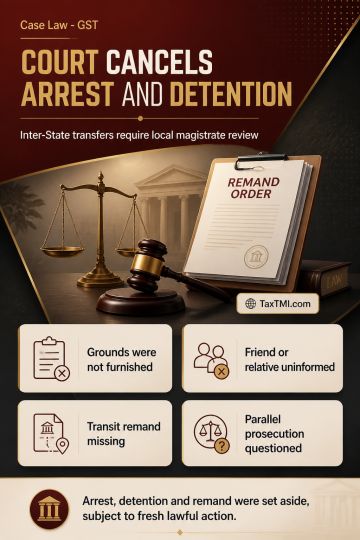
Arrest safeguards and transit remand requirements invalidated detention following inter-State transfer without communicated grounds or magistrate auth...
Arrest safeguards require disclosed grounds, relative intimation and transit remand, while duplicate prosecution under the CGST framework is unsustain...
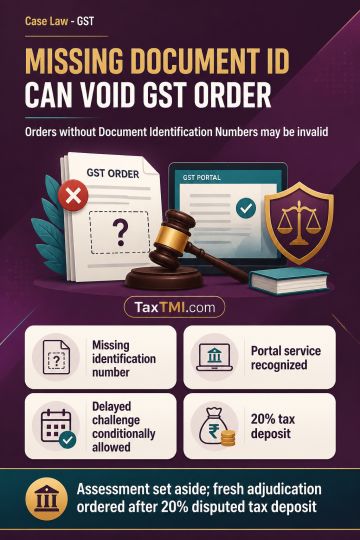
Document Identification Number defects can invalidate GST assessments, with delayed challenges entertained conditionally where patent irregularities e...
Windmill commissioning evidence supported higher depreciation where grid connection and electricity generation proved operational use before the relev...
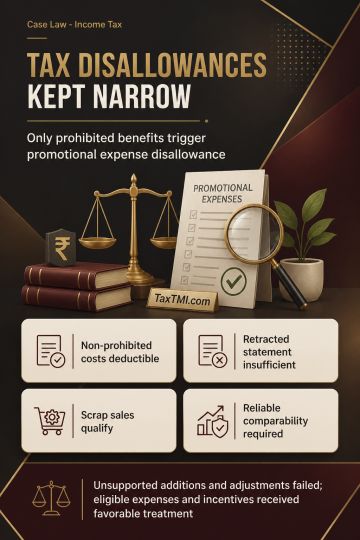
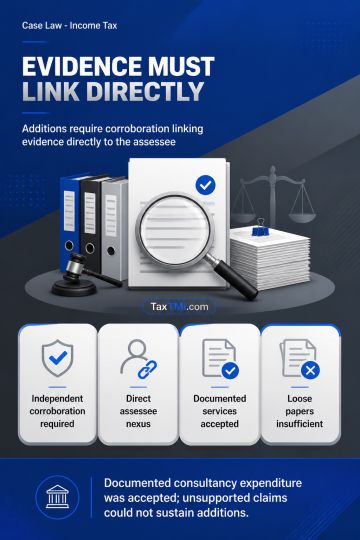
Pharmaceutical promotion and transfer-pricing comparability principles limited disallowances, while uncorroborated search allegations and unsupported ...
Business expenditure substantiation supports scrap credits, statutory payments and expense claims, while depreciation requires proof of actual busines...
Classification of imported goods, specifically di-methyl lauryl amine (DMLA), under the Customs Tariff Act, 1975. The key points are: The classification of DMLA as a 'surface active agent' under heading 3402 was disputed. The test reports submitted were questioned for their validity and bona fides. The adjudicating authority did not consider the test reports furnished by the importer. The Supreme Court's ruling in Hindustan Ferodo Ltd v. Collector of Central Excise emphasizes that the onus of establishing the classification lies with the Revenue, and if evidence is not led, the appeal should be allowed. The benchmark in note 3 of chapter 34 of the Customs Tariff Act, 1975, must be met through valid test results. The order was set aside for fresh adjudication after considering the test results. The penalties imposed on individuals were found unsustainable and set aside. The dispute was remanded back to the original authority for fresh adjudication.
Classification of imported goods, specifically di-methyl lauryl amine (DMLA), under the Customs Tariff Act, 1975. The key points are: The classification of DMLA as a 'surface active agent' under heading 3402 was disputed. The test reports submitted were questioned for their validity and bona fides. The adjudicating authority did not consider the test reports furnished by the importer. The Supreme Court's ruling in Hindustan Ferodo Ltd v. Collector of Central Excise emphasizes that the onus of establishing the classification lies with the Revenue, and if evidence is not led, the appeal should be allowed. The benchmark in note 3 of chapter 34 of the Customs Tariff Act, 1975, must be met through valid test results. The order was set aside for fresh adjudication after considering the test results. The penalties imposed on individuals were found unsustainable and set aside. The dispute was remanded back to the original authority for fresh adjudication.
Note: It is a system-generated summary and is for quick reference only.
 TaxTMI
 of 4792














 Join Channel


 TaxTMI