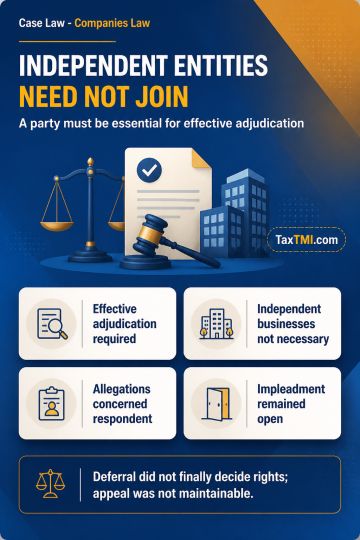
Necessary-party requirements limit impleadment of independent entities, while deferred consideration does not create an appealable adverse determinati...
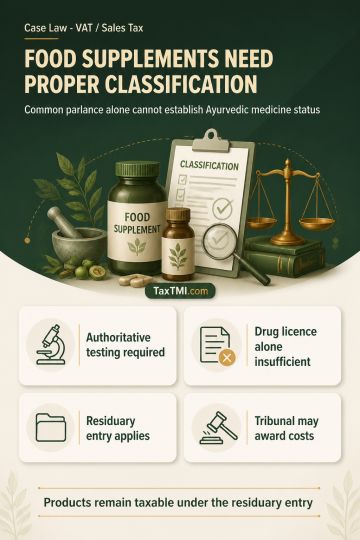
Food supplement classification requires common parlance and authoritative tests, preventing treatment as proprietary Ayurvedic medicines without suppo...
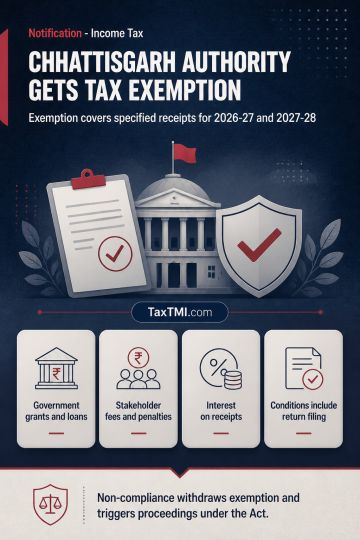
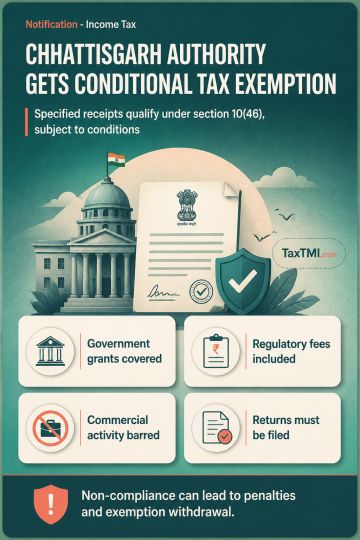
Specified regulatory authority income receives conditional tax exemption, subject to non-commercial activity, unchanged income character, and return f...
Tax exemption for regulatory authority income applies retrospectively, subject to non-commercial activity, unchanged income sources, and return-filing...
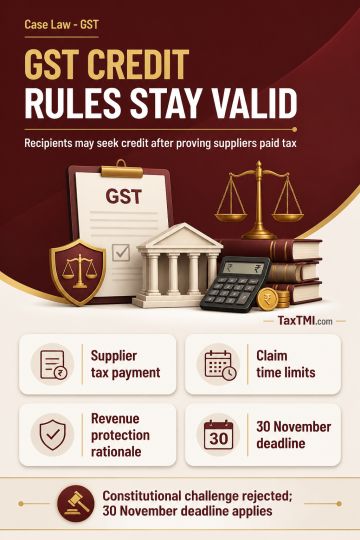
Input tax credit conditions remain constitutionally valid, with eligible recipient claims considered under GST circulars and retrospective filing dead...
Page of 4790
Press 'Enter' after typing page number.
481 to 500 of 95794 Results
❮
❯
❯❯
0 / 200
Expand Note
Add to Folder
No Folders have been created
+
Are you sure you want to delete "My most important" ?
The adjudicating authority's superficial view on classifying the impugned goods under the SCOMET regime of the Foreign Trade Policy (FTP) is incorrect. The FTP is designed by the DGFT under the Foreign Trade Act, with customs playing an enforcement role. In technical matters like SCOMET, customs should obtain the licensing authority's opinion before applying restrictions indiscriminately. The assumption that restrictions can be broadbanded in a restrictive regime reflects an incorrect perspective on licensing rules. The authority failed to discharge its responsibility of factual ascertainment for adjudication and imposing penalties, disregarding the defense. The order is set aside, and the matter remanded to the original authority to seek the licensing authority's opinion on SCOMET applicability, consider any defense, and dispose of the show cause notice accordingly. The appeals are allowed by remand.
The adjudicating authority's superficial view on classifying the impugned goods under the SCOMET regime of the Foreign Trade Policy (FTP) is incorrect. The FTP is designed by the DGFT under the Foreign Trade Act, with customs playing an enforcement role. In technical matters like SCOMET, customs should obtain the licensing authority's opinion before applying restrictions indiscriminately. The assumption that restrictions can be broadbanded in a restrictive regime reflects an incorrect perspective on licensing rules. The authority failed to discharge its responsibility of factual ascertainment for adjudication and imposing penalties, disregarding the defense. The order is set aside, and the matter remanded to the original authority to seek the licensing authority's opinion on SCOMET applicability, consider any defense, and dispose of the show cause notice accordingly. The appeals are allowed by remand.
Note: It is a system-generated summary and is for quick reference only.
 TaxTMI
 of 4790









 Join Channel


 TaxTMI