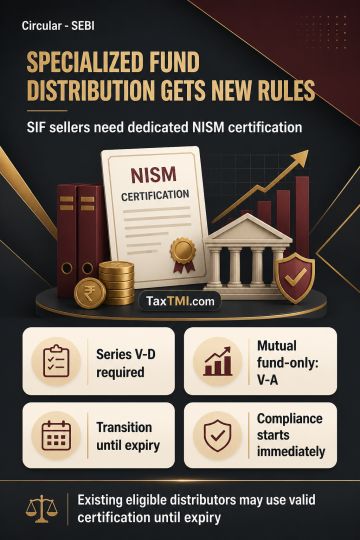
Specialized Investment Fund distribution now requires dedicated certification, while transitional recognition preserves existing qualified distributor...
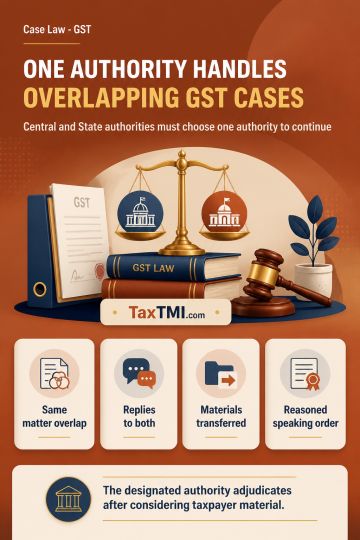
Overlapping GST proceedings require Central and State authorities to designate one competent authority for coordinated adjudication of the same matter...
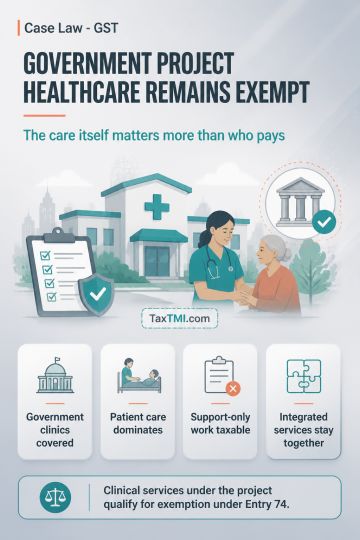
Composite healthcare supplies retain exemption when patient care is the contract's essential character, despite payment through an implementing agency...
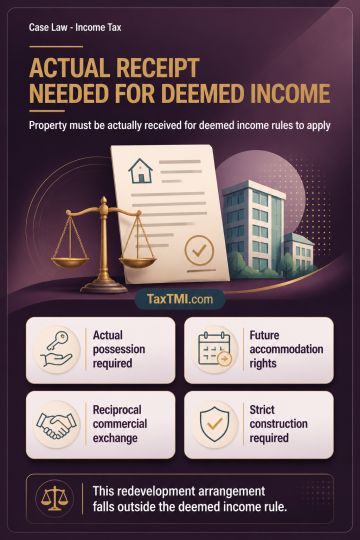
Receipt of immovable property requires actual possession or enjoyment; redevelopment allotments exchanged for tenancy rights fall outside deemed incom...
This instruction clarifies certain aspects of origin procedures under free trade agreements (FTAs), particularly regarding third-party invoicing. It emphasizes that the purpose of a certificate of origin (COO) is to serve as proof that goods qualify as originating under an FTA, irrespective of third-party invoicing. The seller's invoice, including a third-party invoice, is relevant for customs valuation. Where doubts arise about originating criteria, proper officers may seek information and supporting documents from importers, consistent with the FTA. If information is insufficient, verification with the issuing authority through the FTA Cell is triggered, following the Customs (Administration of Rules of Origin under Trade Agreements) Rules, 2020 (CAROTAR). The process must align with the FTA, without obligating importers to provide commercially confidential information or requiring specific currencies. Preferential duty claims can be denied without verification only if permitted by the FTA. Non-compliance must be established through due process, natural justice, and FTA obligations. Merely pointing out ineligible value addition elements may be insufficient to reject claims unless demonstrated that the prescribed value addition threshold is not met.
This instruction clarifies certain aspects of origin procedures under free trade agreements (FTAs), particularly regarding third-party invoicing. It emphasizes that the purpose of a certificate of origin (COO) is to serve as proof that goods qualify as originating under an FTA, irrespective of third-party invoicing. The seller's invoice, including a third-party invoice, is relevant for customs valuation. Where doubts arise about originating criteria, proper officers may seek information and supporting documents from importers, consistent with the FTA. If information is insufficient, verification with the issuing authority through the FTA Cell is triggered, following the Customs (Administration of Rules of Origin under Trade Agreements) Rules, 2020 (CAROTAR). The process must align with the FTA, without obligating importers to provide commercially confidential information or requiring specific currencies. Preferential duty claims can be denied without verification only if permitted by the FTA. Non-compliance must be established through due process, natural justice, and FTA obligations. Merely pointing out ineligible value addition elements may be insufficient to reject claims unless demonstrated that the prescribed value addition threshold is not met.
Note: It is a system-generated summary and is for quick reference only.
 TaxTMI
 of 4786





 Join Channel


 TaxTMI
