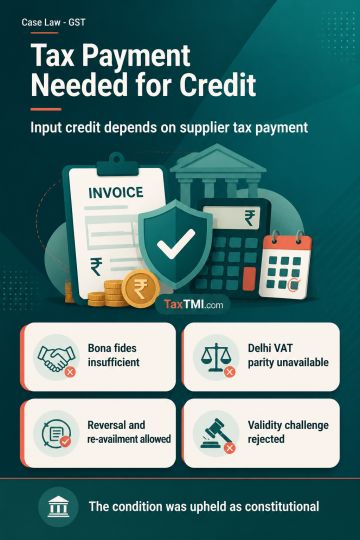
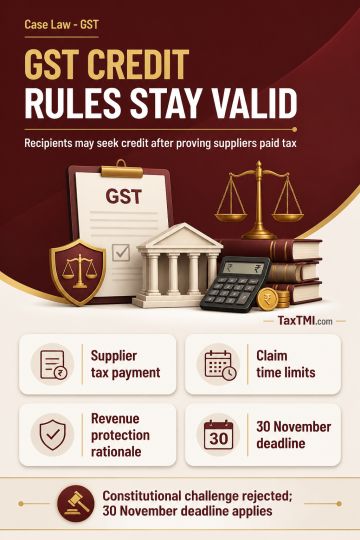
Input tax credit conditions remain constitutionally valid, with eligible recipient claims considered under GST circulars and retrospective filing dead...
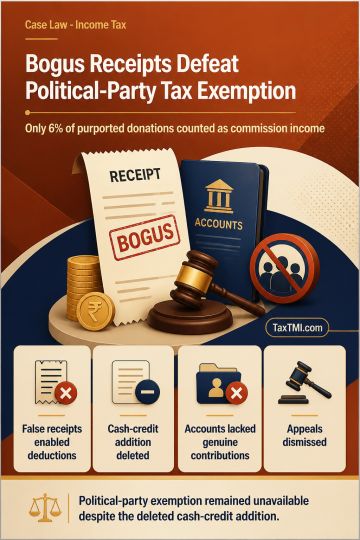
Bogus donation receipts justified commission income assessment and defeated political-party tax exemption for inaccurate accounts and reporting failur...
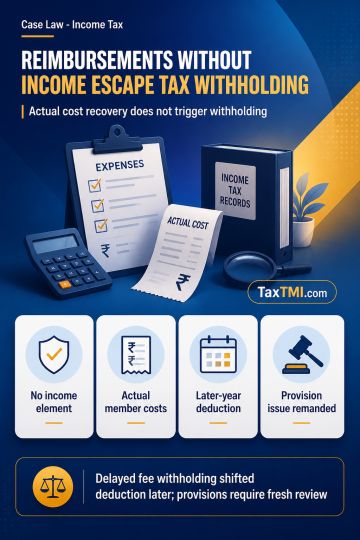
Pure reimbursement without income element escapes tax withholding, while delayed withholding and unsupported provisions face deferred or renewed scrut...
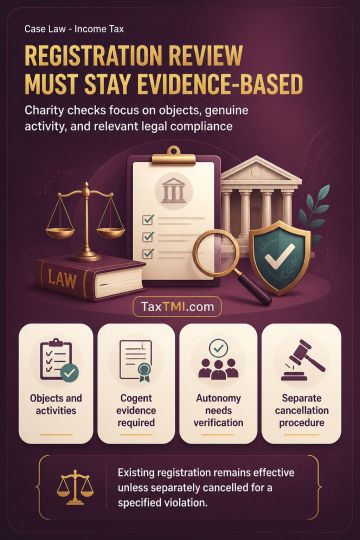
Public benefit requirement defeats charitable registration where residents' association services are reciprocal, member-only facilities governed by mu...
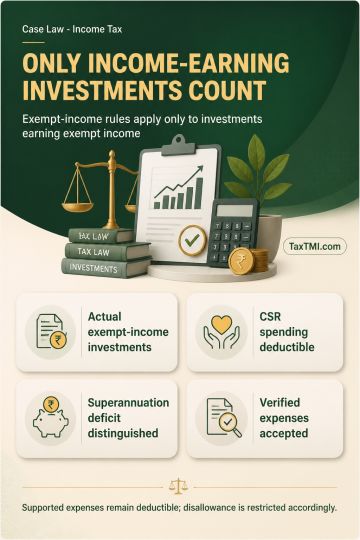
Exempt-income expenditure disallowance is confined to investments that actually generated exempt income, while supported business expenses remain dedu...
This instruction clarifies certain aspects of origin procedures under free trade agreements (FTAs), particularly regarding third-party invoicing. It emphasizes that the purpose of a certificate of origin (COO) is to serve as proof that goods qualify as originating under an FTA, irrespective of third-party invoicing. The seller's invoice, including a third-party invoice, is relevant for customs valuation. Where doubts arise about originating criteria, proper officers may seek information and supporting documents from importers, consistent with the FTA. If information is insufficient, verification with the issuing authority through the FTA Cell is triggered, following the Customs (Administration of Rules of Origin under Trade Agreements) Rules, 2020 (CAROTAR). The process must align with the FTA, without obligating importers to provide commercially confidential information or requiring specific currencies. Preferential duty claims can be denied without verification only if permitted by the FTA. Non-compliance must be established through due process, natural justice, and FTA obligations. Merely pointing out ineligible value addition elements may be insufficient to reject claims unless demonstrated that the prescribed value addition threshold is not met.
This instruction clarifies certain aspects of origin procedures under free trade agreements (FTAs), particularly regarding third-party invoicing. It emphasizes that the purpose of a certificate of origin (COO) is to serve as proof that goods qualify as originating under an FTA, irrespective of third-party invoicing. The seller's invoice, including a third-party invoice, is relevant for customs valuation. Where doubts arise about originating criteria, proper officers may seek information and supporting documents from importers, consistent with the FTA. If information is insufficient, verification with the issuing authority through the FTA Cell is triggered, following the Customs (Administration of Rules of Origin under Trade Agreements) Rules, 2020 (CAROTAR). The process must align with the FTA, without obligating importers to provide commercially confidential information or requiring specific currencies. Preferential duty claims can be denied without verification only if permitted by the FTA. Non-compliance must be established through due process, natural justice, and FTA obligations. Merely pointing out ineligible value addition elements may be insufficient to reject claims unless demonstrated that the prescribed value addition threshold is not met.
Note: It is a system-generated summary and is for quick reference only.
 TaxTMI
 of 4782







 Join Channel


 TaxTMI