Prolonged sterilisation of development rights supports capital-gains treatment, while business-income disallowances cannot govern capital-gains comput...
Additional evidence in transfer pricing dispute leads to fresh examination, while tax deductions, TDS credit, fee and refund interest require verifica...
Category II AIF pass-through taxation preserves non-business income character; investment receipts cannot be reclassified without applying recognised ...
Mutual fund maturity rules require proper rollover, redemption, disclosure, and due diligence; investor gains cannot excuse regulatory breaches or pen...
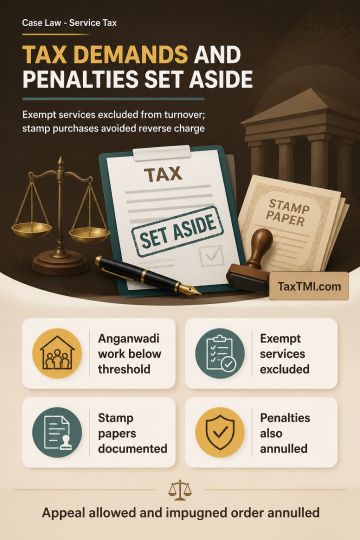
Threshold exemption excludes exempt services, while stamp-paper purchases avoid reverse charge; consequential service tax penalties were also set asid...
The court observed that the show cause notice did not specifically allege wrongful availment or short payment of tax due to fraud, willful misstatement, or suppression of facts to evade tax. Advance ruling authorities in Karnataka, West Bengal, and Chhattisgarh have held that printing books by publishers, where content is provided by educational boards like NCERT, amounts to supply of goods, and the payment of royalty makes the publishers copyright holders as well as printers. While the respondents argued that the writ petition challenging the show cause notice is not maintainable, the court noted that the Supreme Court has stated that interference at the show cause notice stage should be avoided in fiscal statutes, except in cases of violation of statutory provisions, principles of natural justice, or repealed provisions. The petitioner established a prima facie case, and the balance of convenience lies in favor of granting an injunction. The matter is listed for further hearing on December 17, 2024.
The court observed that the show cause notice did not specifically allege wrongful availment or short payment of tax due to fraud, willful misstatement, or suppression of facts to evade tax. Advance ruling authorities in Karnataka, West Bengal, and Chhattisgarh have held that printing books by publishers, where content is provided by educational boards like NCERT, amounts to supply of goods, and the payment of royalty makes the publishers copyright holders as well as printers. While the respondents argued that the writ petition challenging the show cause notice is not maintainable, the court noted that the Supreme Court has stated that interference at the show cause notice stage should be avoided in fiscal statutes, except in cases of violation of statutory provisions, principles of natural justice, or repealed provisions. The petitioner established a prima facie case, and the balance of convenience lies in favor of granting an injunction. The matter is listed for further hearing on December 17, 2024.
Note: It is a system-generated summary and is for quick reference only.
 TaxTMI
 of 4792


















 Join Channel


 TaxTMI
