Transfer pricing and tax deductions upheld on established principles, while employee contributions and warranty provisions returned for fresh examinat...
Captive transfer pricing relies on industrial consumer tariffs, while genuine quotations can benchmark effluent treatment transfers under the Other Me...
Specific tariff classification for ophthalmic instruments and extended limitation principles determine the treatment of duty demands, confiscation, an...
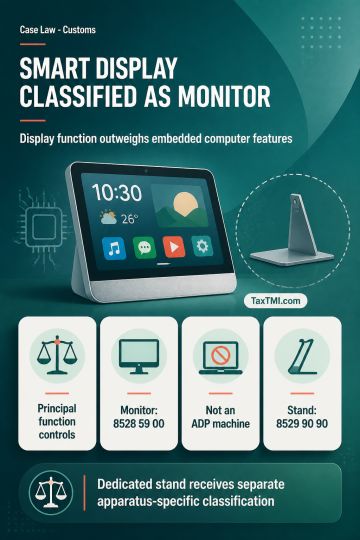
Integrated golf function determines classification, placing launch monitors and simulators under other golf equipment rather than measuring instrument...
Public servant status under anti-corruption law extends to recognised stock exchange leadership; constitutional and sanction challenges do not succeed...
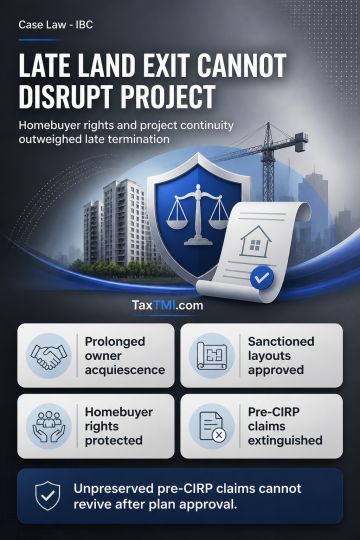
Acquiescence, homebuyer protection and clean-slate resolution principles prevent landowners from disrupting an integrated project through late termina...
Page of 4792
Press 'Enter' after typing page number.
1001 to 1020 of 95833 Results
❮
❯
❯❯
0 / 200
Expand Note
Add to Folder
No Folders have been created
+
Are you sure you want to delete "My most important" ?
The court observed that the show cause notice did not specifically allege wrongful availment or short payment of tax due to fraud, willful misstatement, or suppression of facts to evade tax. Advance ruling authorities in Karnataka, West Bengal, and Chhattisgarh have held that printing books by publishers, where content is provided by educational boards like NCERT, amounts to supply of goods, and the payment of royalty makes the publishers copyright holders as well as printers. While the respondents argued that the writ petition challenging the show cause notice is not maintainable, the court noted that the Supreme Court has stated that interference at the show cause notice stage should be avoided in fiscal statutes, except in cases of violation of statutory provisions, principles of natural justice, or repealed provisions. The petitioner established a prima facie case, and the balance of convenience lies in favor of granting an injunction. The matter is listed for further hearing on December 17, 2024.
The court observed that the show cause notice did not specifically allege wrongful availment or short payment of tax due to fraud, willful misstatement, or suppression of facts to evade tax. Advance ruling authorities in Karnataka, West Bengal, and Chhattisgarh have held that printing books by publishers, where content is provided by educational boards like NCERT, amounts to supply of goods, and the payment of royalty makes the publishers copyright holders as well as printers. While the respondents argued that the writ petition challenging the show cause notice is not maintainable, the court noted that the Supreme Court has stated that interference at the show cause notice stage should be avoided in fiscal statutes, except in cases of violation of statutory provisions, principles of natural justice, or repealed provisions. The petitioner established a prima facie case, and the balance of convenience lies in favor of granting an injunction. The matter is listed for further hearing on December 17, 2024.
Note: It is a system-generated summary and is for quick reference only.
 TaxTMI
 of 4792



















 Join Channel


 TaxTMI