Transaction value cannot be rejected solely on non-statutory valuation guidelines without corroborative evidence supporting reassessment of final cust...
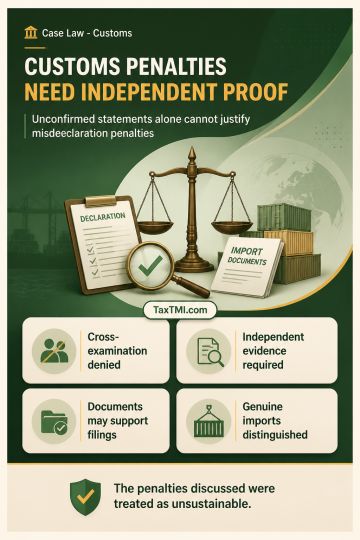
Cross-examination rights and corroborated evidence limit customs penalties for misdeclaration in genuine import transactions involving documented clea...
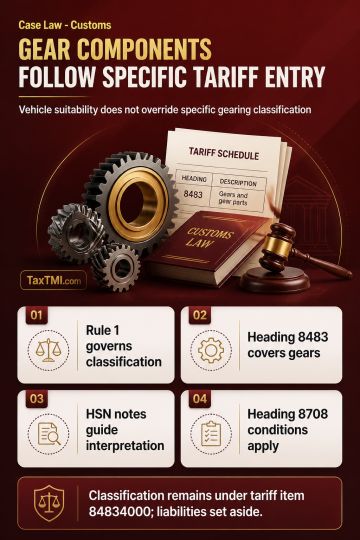
Tariff classification of vehicle gear components follows the specific gearing entry, displacing motor-vehicle parts classification and related liabili...
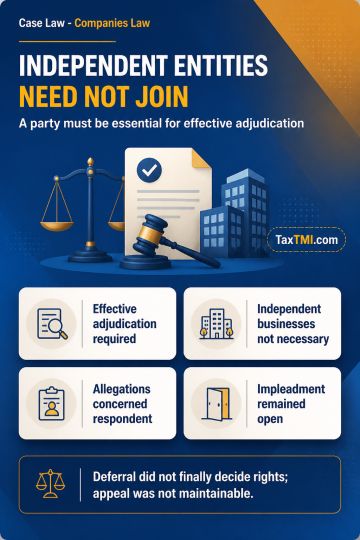
Necessary-party requirements limit impleadment of independent entities, while deferred consideration does not create an appealable adverse determinati...
Food supplement classification requires common parlance and authoritative tests, preventing treatment as proprietary Ayurvedic medicines without suppo...
Unexplained cash credits u/s 68 and the applicability of Section 115BBE for taxing such additions. The key points are: The Assessing Officer (AO) issued notices u/s 133(6) to verify the cash advances received from customers, with 69% of the notices duly served. While some parties confirmed the advances, the AO relied on a few negative replies to reject the entire amount as unexplained money. The Tribunal held that the assessee had provided all relevant details, supported by audited books of accounts, invoices for purchases and sales. The sales were accepted, and the source of funds for those sales cannot be treated as unexplained u/s 68 when the details were furnished. Applying the principle of preponderance of probabilities, the Tribunal ruled that once the assessee supports the contention with evidence, the department cannot unreasonably reject the explanation without contrary evidence. The fact that notices were issued and parties confirmed the advances is prima facie evidence supporting the assessee's claim. Therefore, the cash advances received from customers before the stock receipts, where identity and sales were not disputed, cannot be added as unexplained money when all details were provided. The Tribunal decided in favor of the assessee.
Unexplained cash credits u/s 68 and the applicability of Section 115BBE for taxing such additions. The key points are: The Assessing Officer (AO) issued notices u/s 133(6) to verify the cash advances received from customers, with 69% of the notices duly served. While some parties confirmed the advances, the AO relied on a few negative replies to reject the entire amount as unexplained money. The Tribunal held that the assessee had provided all relevant details, supported by audited books of accounts, invoices for purchases and sales. The sales were accepted, and the source of funds for those sales cannot be treated as unexplained u/s 68 when the details were furnished. Applying the principle of preponderance of probabilities, the Tribunal ruled that once the assessee supports the contention with evidence, the department cannot unreasonably reject the explanation without contrary evidence. The fact that notices were issued and parties confirmed the advances is prima facie evidence supporting the assessee's claim. Therefore, the cash advances received from customers before the stock receipts, where identity and sales were not disputed, cannot be added as unexplained money when all details were provided. The Tribunal decided in favor of the assessee.
Note: It is a system-generated summary and is for quick reference only.
 TaxTMI
 of 4805














 Join Channel


 TaxTMI
