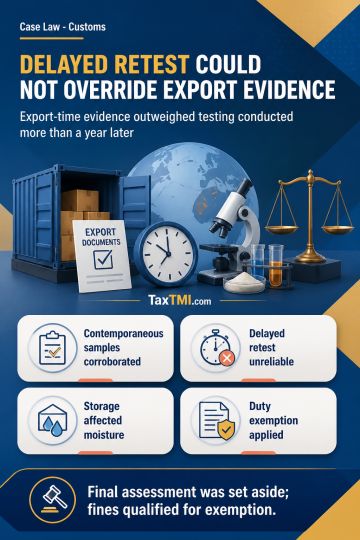
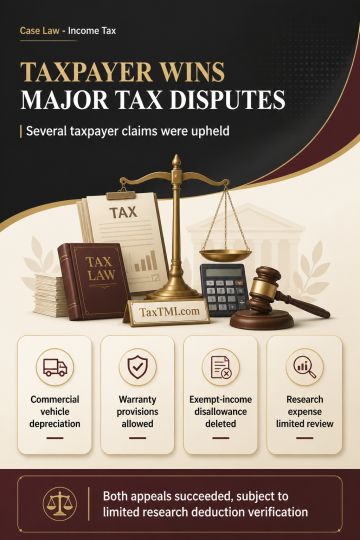
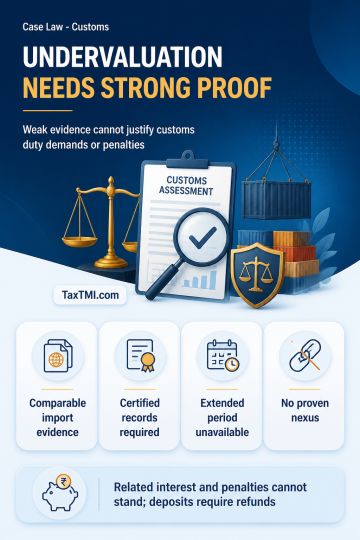
Commercial vehicle depreciation, scientifically determined warranty provisions and exempt-income disallowances were resolved in favour of the taxpayer...
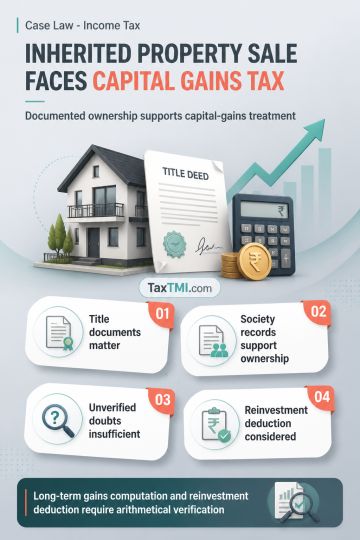
Inherited property sale proceeds require capital-gains treatment where ownership is supported by evidence, not suspicion or unverified signature doubt...
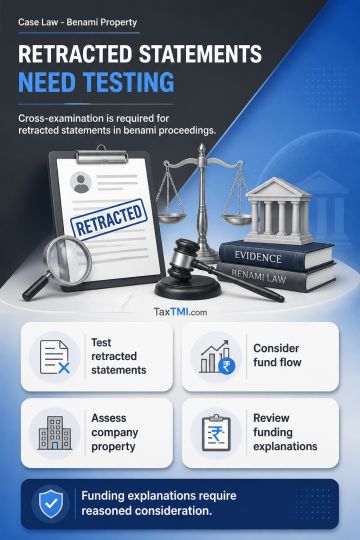
Cross-examination of retracted statements is essential where foundational evidence supports a benami allegation and documented funding explanations re...
Unexplained cash credits u/s 68 and the applicability of Section 115BBE for taxing such additions. The key points are: The Assessing Officer (AO) issued notices u/s 133(6) to verify the cash advances received from customers, with 69% of the notices duly served. While some parties confirmed the advances, the AO relied on a few negative replies to reject the entire amount as unexplained money. The Tribunal held that the assessee had provided all relevant details, supported by audited books of accounts, invoices for purchases and sales. The sales were accepted, and the source of funds for those sales cannot be treated as unexplained u/s 68 when the details were furnished. Applying the principle of preponderance of probabilities, the Tribunal ruled that once the assessee supports the contention with evidence, the department cannot unreasonably reject the explanation without contrary evidence. The fact that notices were issued and parties confirmed the advances is prima facie evidence supporting the assessee's claim. Therefore, the cash advances received from customers before the stock receipts, where identity and sales were not disputed, cannot be added as unexplained money when all details were provided. The Tribunal decided in favor of the assessee.
Unexplained cash credits u/s 68 and the applicability of Section 115BBE for taxing such additions. The key points are: The Assessing Officer (AO) issued notices u/s 133(6) to verify the cash advances received from customers, with 69% of the notices duly served. While some parties confirmed the advances, the AO relied on a few negative replies to reject the entire amount as unexplained money. The Tribunal held that the assessee had provided all relevant details, supported by audited books of accounts, invoices for purchases and sales. The sales were accepted, and the source of funds for those sales cannot be treated as unexplained u/s 68 when the details were furnished. Applying the principle of preponderance of probabilities, the Tribunal ruled that once the assessee supports the contention with evidence, the department cannot unreasonably reject the explanation without contrary evidence. The fact that notices were issued and parties confirmed the advances is prima facie evidence supporting the assessee's claim. Therefore, the cash advances received from customers before the stock receipts, where identity and sales were not disputed, cannot be added as unexplained money when all details were provided. The Tribunal decided in favor of the assessee.
Note: It is a system-generated summary and is for quick reference only.
 TaxTMI
 of 4803








 Join Channel


 TaxTMI