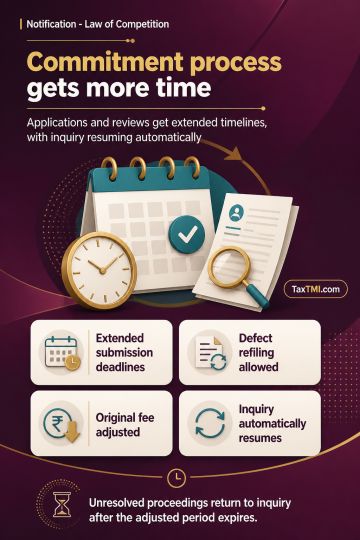
Commitment proceedings gain extended timelines, structured defect refiling, and automatic resumption of inquiry after the adjusted completion period e...
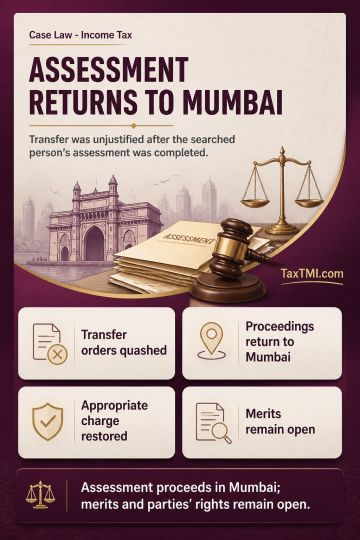
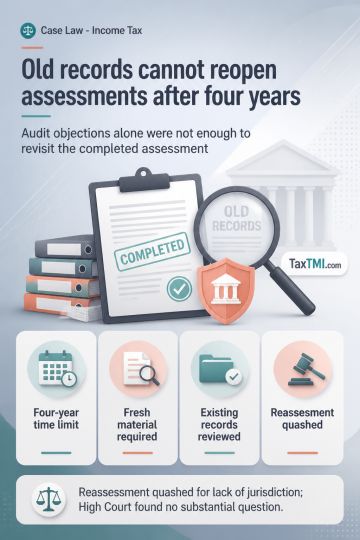
Centralised assessment transfer becomes unwarranted once the searched person's assessment is complete, requiring restoration to the appropriate charge...
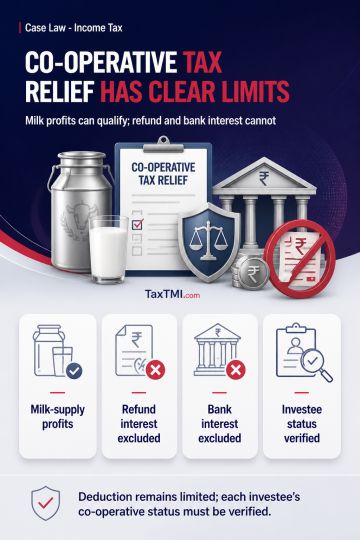
Co-operative deduction eligibility excludes refund and commercial-bank interest, while qualifying co-operative investments require entity-wise verific...
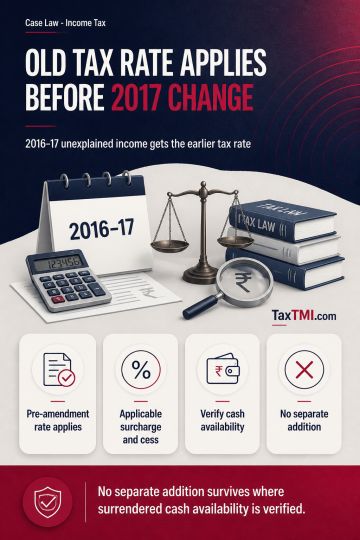
Enhanced tax rate on surrendered unexplained income applies prospectively, while cash-deposit telescoping requires verification of available surrender...
Page of 4800
Press 'Enter' after typing page number.
1 to 20 of 96000 Results
❮
❯
❯❯
0 / 200
Expand Note
Add to Folder
No Folders have been created
+
Are you sure you want to delete "My most important" ?
Unexplained cash credits u/s 68 and the applicability of Section 115BBE for taxing such additions. The key points are: The Assessing Officer (AO) issued notices u/s 133(6) to verify the cash advances received from customers, with 69% of the notices duly served. While some parties confirmed the advances, the AO relied on a few negative replies to reject the entire amount as unexplained money. The Tribunal held that the assessee had provided all relevant details, supported by audited books of accounts, invoices for purchases and sales. The sales were accepted, and the source of funds for those sales cannot be treated as unexplained u/s 68 when the details were furnished. Applying the principle of preponderance of probabilities, the Tribunal ruled that once the assessee supports the contention with evidence, the department cannot unreasonably reject the explanation without contrary evidence. The fact that notices were issued and parties confirmed the advances is prima facie evidence supporting the assessee's claim. Therefore, the cash advances received from customers before the stock receipts, where identity and sales were not disputed, cannot be added as unexplained money when all details were provided. The Tribunal decided in favor of the assessee.
Unexplained cash credits u/s 68 and the applicability of Section 115BBE for taxing such additions. The key points are: The Assessing Officer (AO) issued notices u/s 133(6) to verify the cash advances received from customers, with 69% of the notices duly served. While some parties confirmed the advances, the AO relied on a few negative replies to reject the entire amount as unexplained money. The Tribunal held that the assessee had provided all relevant details, supported by audited books of accounts, invoices for purchases and sales. The sales were accepted, and the source of funds for those sales cannot be treated as unexplained u/s 68 when the details were furnished. Applying the principle of preponderance of probabilities, the Tribunal ruled that once the assessee supports the contention with evidence, the department cannot unreasonably reject the explanation without contrary evidence. The fact that notices were issued and parties confirmed the advances is prima facie evidence supporting the assessee's claim. Therefore, the cash advances received from customers before the stock receipts, where identity and sales were not disputed, cannot be added as unexplained money when all details were provided. The Tribunal decided in favor of the assessee.
Note: It is a system-generated summary and is for quick reference only.
 TaxTMI










 Join Channel


 TaxTMI