Retention of seized property survives where recorded reasons support proceeds of crime, while stayed investigation periods are excluded from limitatio...
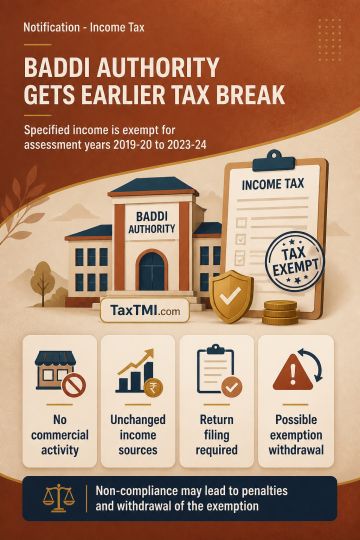
Specified income of Baddi Barotiwala Nalagarh Development Authority receives conditional tax exemption, retrospectively covering its designated assess...
Specified development authority income receives retrospective tax exemption, subject to non-commercial activity, unchanged income sources, and return-...
Unified Brand India framework introduces voluntary Trust Mark certification and funding support for export branding, packaging and global promotional ...
Origin Declaration authentication governs preferential tariff claims under India-UK CETA, requiring a validated reference number before import clearan...
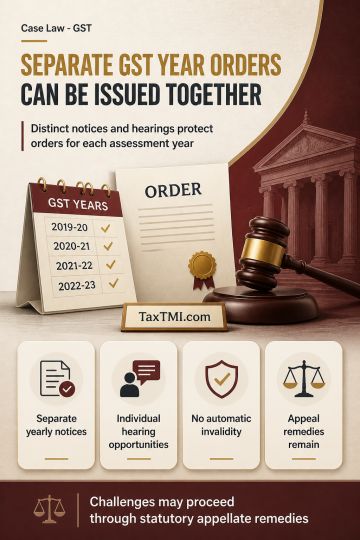
Separate assessment orders for different years remain valid when distinct notices and hearing opportunities prevent prejudice from combined proceeding...
The judgment addresses the applicability of Section 31 of the Insolvency and Bankruptcy Code (IBC) concerning the recovery of tax dues from the successful resolution applicant who acquired the assets of the corporate debtor. The court held that once the petitioner acquired the assets through the auction process under IBC, any claims not raised earlier stand extinguished. The respondent cannot recover dues pertaining to the period prior to the petitioner's acquisition. Section 31 mandates that the approved resolution plan binds all stakeholders, including government authorities. The retrospective applicability of the 2019 amendment to Section 31, upheld by the Supreme Court, reinforces this position. The IBC aims to revive the corporate debtor, and the approved resolution plan must provide for payment of insolvency costs. Consequently, the demand notice issued by the respondent seeking pre-acquisition dues is arbitrary, violating Article 14, and the petitioner is not liable for outstanding tax dues prior to asset acquisition under IBC.
The judgment addresses the applicability of Section 31 of the Insolvency and Bankruptcy Code (IBC) concerning the recovery of tax dues from the successful resolution applicant who acquired the assets of the corporate debtor. The court held that once the petitioner acquired the assets through the auction process under IBC, any claims not raised earlier stand extinguished. The respondent cannot recover dues pertaining to the period prior to the petitioner's acquisition. Section 31 mandates that the approved resolution plan binds all stakeholders, including government authorities. The retrospective applicability of the 2019 amendment to Section 31, upheld by the Supreme Court, reinforces this position. The IBC aims to revive the corporate debtor, and the approved resolution plan must provide for payment of insolvency costs. Consequently, the demand notice issued by the respondent seeking pre-acquisition dues is arbitrary, violating Article 14, and the petitioner is not liable for outstanding tax dues prior to asset acquisition under IBC.
Note: It is a system-generated summary and is for quick reference only.
 TaxTMI
 of 4801












 Join Channel


 TaxTMI