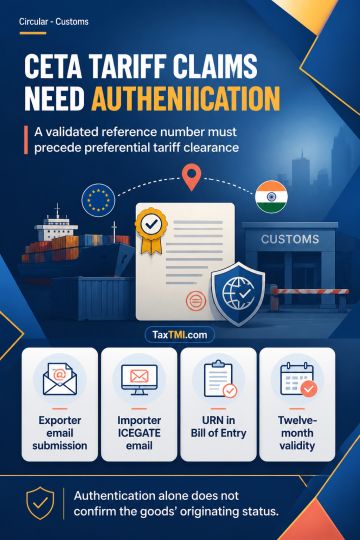
Origin Declaration authentication governs preferential tariff claims under India-UK CETA, requiring a validated reference number before import clearan...
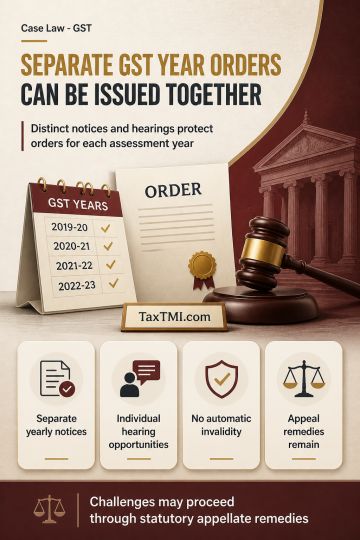
Separate assessment orders for different years remain valid when distinct notices and hearing opportunities prevent prejudice from combined proceeding...
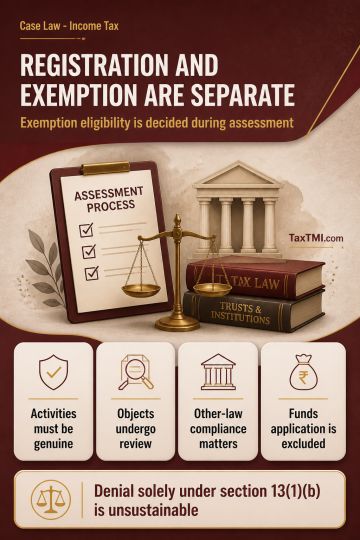
Defined public benefit can retain charitable character; registration renewal requires examining genuine activities and legal compliance, not surplus a...
Capital reduction is distinct from share buy-back, preventing buy-back tax; restructuring interest and related business deductions also survive scruti...
The dispute pertained to the excise duty payable on certain goods, with the petitioner and the excise department adopting different classifications. The key issues were whether the disputes were arbitrable, whether the claims arose from a "change" in taxes under the NIT clause or revision in purchase orders, and the petitioner's entitlement to recover the price along with excise duty mentioned in invoices. The court held that the respondent had anticipated and notified the petitioner about the possibility of additional excise duty, and the evidence supported the conclusion that revenue authorities had recovered excise duty at 12.36% for the goods. The arbitrator's assessment of evidence and conclusions were reasonable. While the underlying legal argument was contested, the cited judgments elaborated on the analyzed argument but did not go to the root of the award. An award can only be interfered with if it contains errors going to the root of the matter, subject to disclosure of factual material and the parties' ability to challenge reliance on authorities within the statutory parameters. The court found no merit in the petition and dismissed it.
The dispute pertained to the excise duty payable on certain goods, with the petitioner and the excise department adopting different classifications. The key issues were whether the disputes were arbitrable, whether the claims arose from a "change" in taxes under the NIT clause or revision in purchase orders, and the petitioner's entitlement to recover the price along with excise duty mentioned in invoices. The court held that the respondent had anticipated and notified the petitioner about the possibility of additional excise duty, and the evidence supported the conclusion that revenue authorities had recovered excise duty at 12.36% for the goods. The arbitrator's assessment of evidence and conclusions were reasonable. While the underlying legal argument was contested, the cited judgments elaborated on the analyzed argument but did not go to the root of the award. An award can only be interfered with if it contains errors going to the root of the matter, subject to disclosure of factual material and the parties' ability to challenge reliance on authorities within the statutory parameters. The court found no merit in the petition and dismissed it.
Note: It is a system-generated summary and is for quick reference only.
 TaxTMI
 of 4803













 Join Channel


 TaxTMI
