Tax exemption for regulatory authority income applies retrospectively, subject to non-commercial activity, unchanged income sources, and return filing...
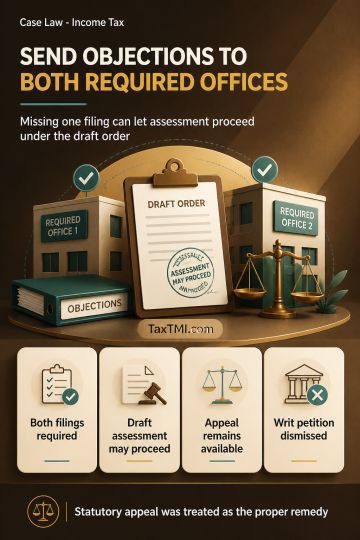
Dispute Resolution Panel objections must reach both prescribed forums; otherwise assessment may proceed and statutory appeal remains the proper remedy...
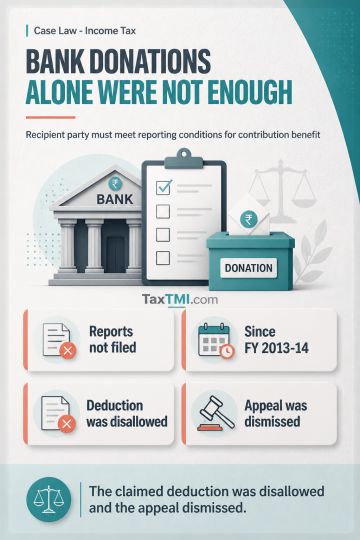
Political contribution deductions require recipient party compliance with contribution-reporting conditions; banking-channel donations alone do not qu...
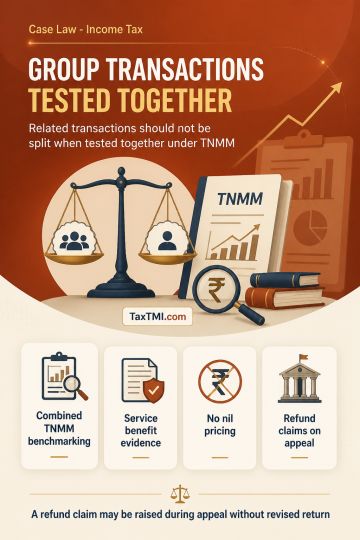
Aggregation under TNMM prevents selective testing of intra-group services without comparable uncontrolled transactions, while appellate additional cla...
Protective assessment cannot duplicate identical receipts under competing characterisations; remote services did not establish a taxable permanent est...
Page of 4792
Press 'Enter' after typing page number.
461 to 480 of 95833 Results
❮
❯
❯❯
0 / 200
Expand Note
Add to Folder
No Folders have been created
+
Are you sure you want to delete "My most important" ?
The dispute pertained to the excise duty payable on certain goods, with the petitioner and the excise department adopting different classifications. The key issues were whether the disputes were arbitrable, whether the claims arose from a "change" in taxes under the NIT clause or revision in purchase orders, and the petitioner's entitlement to recover the price along with excise duty mentioned in invoices. The court held that the respondent had anticipated and notified the petitioner about the possibility of additional excise duty, and the evidence supported the conclusion that revenue authorities had recovered excise duty at 12.36% for the goods. The arbitrator's assessment of evidence and conclusions were reasonable. While the underlying legal argument was contested, the cited judgments elaborated on the analyzed argument but did not go to the root of the award. An award can only be interfered with if it contains errors going to the root of the matter, subject to disclosure of factual material and the parties' ability to challenge reliance on authorities within the statutory parameters. The court found no merit in the petition and dismissed it.
The dispute pertained to the excise duty payable on certain goods, with the petitioner and the excise department adopting different classifications. The key issues were whether the disputes were arbitrable, whether the claims arose from a "change" in taxes under the NIT clause or revision in purchase orders, and the petitioner's entitlement to recover the price along with excise duty mentioned in invoices. The court held that the respondent had anticipated and notified the petitioner about the possibility of additional excise duty, and the evidence supported the conclusion that revenue authorities had recovered excise duty at 12.36% for the goods. The arbitrator's assessment of evidence and conclusions were reasonable. While the underlying legal argument was contested, the cited judgments elaborated on the analyzed argument but did not go to the root of the award. An award can only be interfered with if it contains errors going to the root of the matter, subject to disclosure of factual material and the parties' ability to challenge reliance on authorities within the statutory parameters. The court found no merit in the petition and dismissed it.
Note: It is a system-generated summary and is for quick reference only.
 TaxTMI
 of 4792









 Join Channel


 TaxTMI