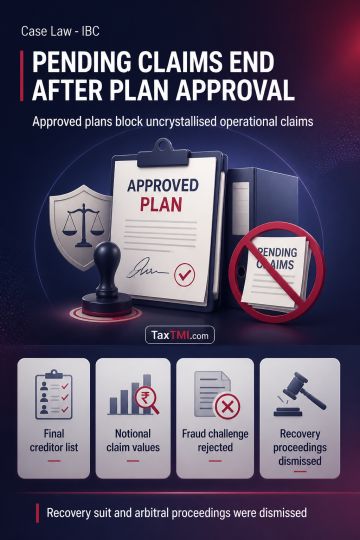
Clean slate principle extinguishes uncrystallised operational claims and bars continuation of pending recovery and arbitral proceedings after plan app...
Works contract classification governs composite layout-development contracts where VAT-paid goods are transferred alongside construction and infrastru...
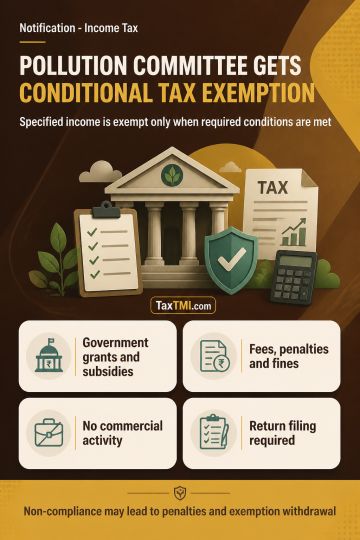
Specified income tax exemption for pollution control body remains conditional on non-commercial activity, unchanged income character, and return filin...
Jurisdictional facts in certificate-of-origin discrepancies can support customs show-cause proceedings, leaving factual explanations for departmental ...
Gross violation of CBEC instructions and the precedential value of CESTAT decisions. The Revenue filed an appeal before the first Appellate Authority without specifying grounds or reasons for departing from the Tribunal's order followed by the Adjudicating Authority. Section 35R(4) is applicable only to the Commissioner (Appeals) and Appellate Tribunal, requiring them to consider circumstances under which an earlier order was accepted and not challenged. This section does not set aside the principle of judicial precedents and the binding nature of higher Appellate Authority orders. Authorities below the Tribunal are bound by its earlier orders. The impugned order set aside the original authority's order solely because the Tribunal's order was accepted due to monetary limits, without stating grounds contrary to the Tribunal's observations. The original authority kept demand notices awaiting the Tribunal's decision and adjudicated accordingly after it set aside the order. The impugned order lacked merits for differing from the available higher Appellate Authority order without specifying grounds, leading to the appeal being allowed.
Gross violation of CBEC instructions and the precedential value of CESTAT decisions. The Revenue filed an appeal before the first Appellate Authority without specifying grounds or reasons for departing from the Tribunal's order followed by the Adjudicating Authority. Section 35R(4) is applicable only to the Commissioner (Appeals) and Appellate Tribunal, requiring them to consider circumstances under which an earlier order was accepted and not challenged. This section does not set aside the principle of judicial precedents and the binding nature of higher Appellate Authority orders. Authorities below the Tribunal are bound by its earlier orders. The impugned order set aside the original authority's order solely because the Tribunal's order was accepted due to monetary limits, without stating grounds contrary to the Tribunal's observations. The original authority kept demand notices awaiting the Tribunal's decision and adjudicated accordingly after it set aside the order. The impugned order lacked merits for differing from the available higher Appellate Authority order without specifying grounds, leading to the appeal being allowed.
Note: It is a system-generated summary and is for quick reference only.
 TaxTMI
 of 4798










 Join Channel


 TaxTMI