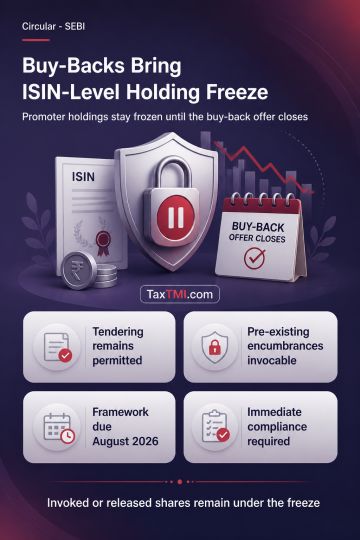
Specialized Investment Fund distribution now requires dedicated certification, while transitional recognition preserves existing qualified distributor...
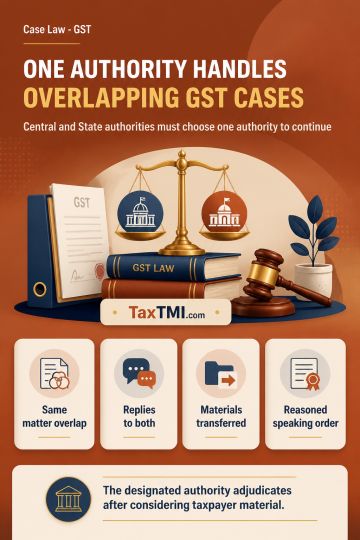
Overlapping GST proceedings require Central and State authorities to designate one competent authority for coordinated adjudication of the same matter...
Composite healthcare supplies retain exemption when patient care is the contract's essential character, despite payment through an implementing agency...
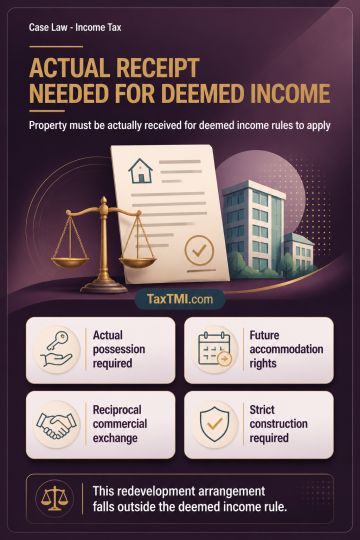
Receipt of immovable property requires actual possession or enjoyment; redevelopment allotments exchanged for tenancy rights fall outside deemed incom...
Page of 4796
Press 'Enter' after typing page number.
841 to 860 of 95916 Results
❮
❯
❯❯
0 / 200
Expand Note
Add to Folder
No Folders have been created
+
Are you sure you want to delete "My most important" ?
Gross violation of CBEC instructions and the precedential value of CESTAT decisions. The Revenue filed an appeal before the first Appellate Authority without specifying grounds or reasons for departing from the Tribunal's order followed by the Adjudicating Authority. Section 35R(4) is applicable only to the Commissioner (Appeals) and Appellate Tribunal, requiring them to consider circumstances under which an earlier order was accepted and not challenged. This section does not set aside the principle of judicial precedents and the binding nature of higher Appellate Authority orders. Authorities below the Tribunal are bound by its earlier orders. The impugned order set aside the original authority's order solely because the Tribunal's order was accepted due to monetary limits, without stating grounds contrary to the Tribunal's observations. The original authority kept demand notices awaiting the Tribunal's decision and adjudicated accordingly after it set aside the order. The impugned order lacked merits for differing from the available higher Appellate Authority order without specifying grounds, leading to the appeal being allowed.
Gross violation of CBEC instructions and the precedential value of CESTAT decisions. The Revenue filed an appeal before the first Appellate Authority without specifying grounds or reasons for departing from the Tribunal's order followed by the Adjudicating Authority. Section 35R(4) is applicable only to the Commissioner (Appeals) and Appellate Tribunal, requiring them to consider circumstances under which an earlier order was accepted and not challenged. This section does not set aside the principle of judicial precedents and the binding nature of higher Appellate Authority orders. Authorities below the Tribunal are bound by its earlier orders. The impugned order set aside the original authority's order solely because the Tribunal's order was accepted due to monetary limits, without stating grounds contrary to the Tribunal's observations. The original authority kept demand notices awaiting the Tribunal's decision and adjudicated accordingly after it set aside the order. The impugned order lacked merits for differing from the available higher Appellate Authority order without specifying grounds, leading to the appeal being allowed.
Note: It is a system-generated summary and is for quick reference only.
 TaxTMI
 of 4796









 Join Channel


 TaxTMI