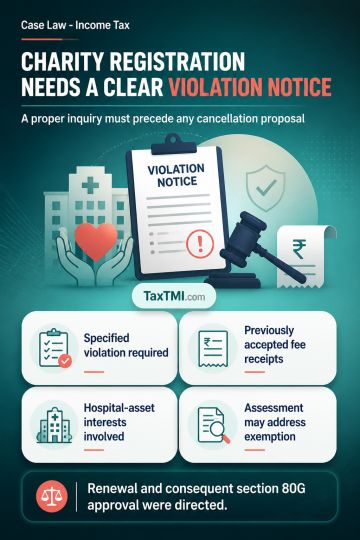
Charitable trust registration requires a specified-violation notice; settled cash deposits and related-party payments did not justify cancellation or ...
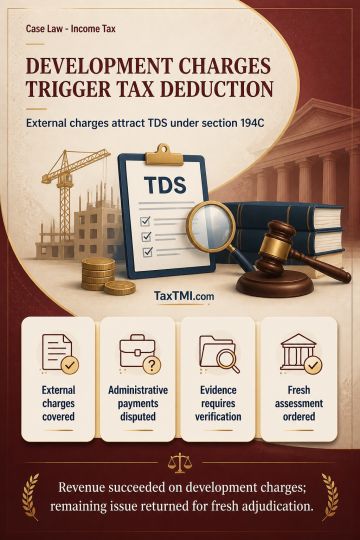
External development charges trigger TDS under section 194C, while disputed administrative payments require factual verification and fresh adjudicatio...
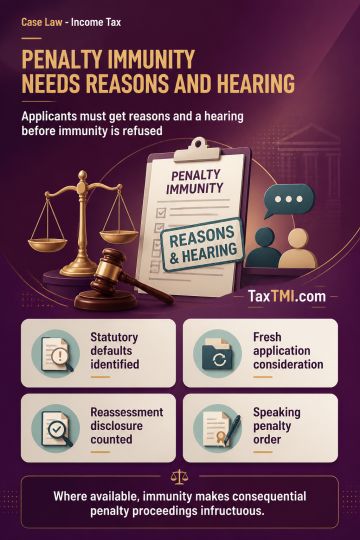
Section 270AA penalty immunity requires identified statutory defaults and a hearing before rejection; reassessment disclosure may constitute under-rep...
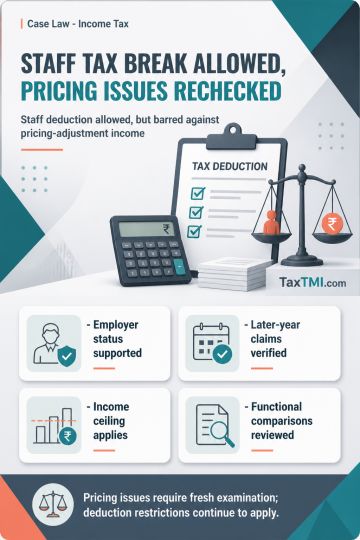
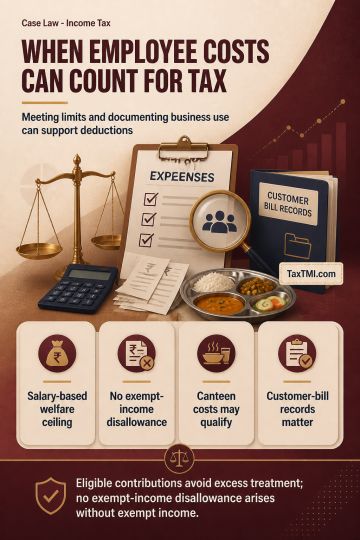
Section 80JJAA employee-cost deduction allowed for deployed staff but barred against transfer-pricing income enhancement, with pricing issues remanded...
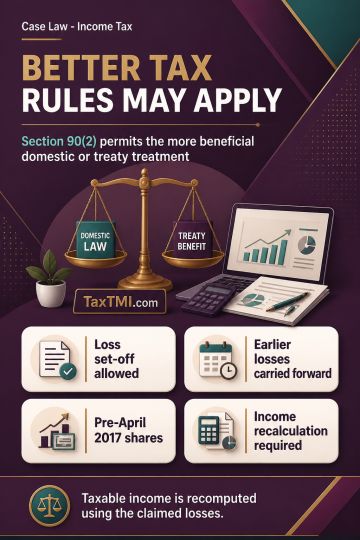
Transfer-pricing methodology protects commercially genuine associated-enterprise payments, while pre-2016 secondary adjustments and related notional i...
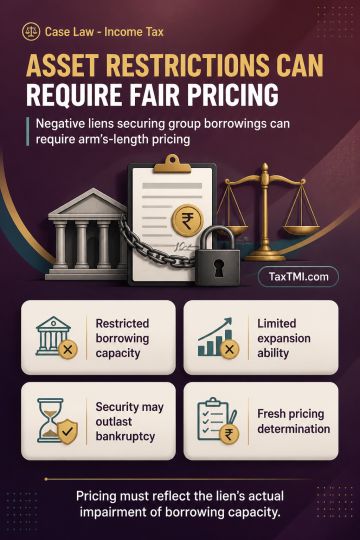
Negative liens over operating assets can constitute international transactions requiring arm's-length pricing reflecting restricted borrowing and expa...
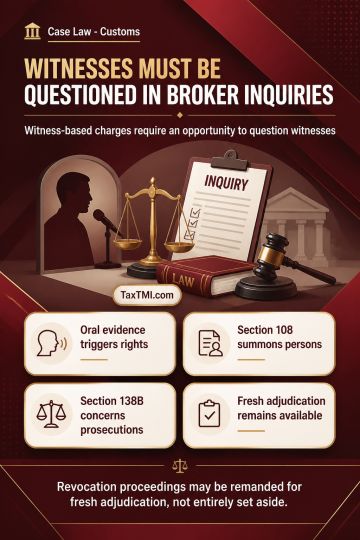
Cross-examination rights in Customs Broker revocation inquiries require witness examination; procedural denial may be cured through fresh adjudication...
The guidelines provide a comprehensive framework for compounding offenses under the Income Tax Act, 1961. The key points are: 1. Compounding is permissible for specified offenses, subject to certain exclusions like anti-national/terrorist activities, offenses related to black money, benami transactions, and repeat offenders. 2. The jurisdictional Pr. CCIT/CCIT/Pr. DGIT/DGIT is the competent authority for compounding. Detailed procedures and timelines are prescribed for processing applications. 3. Compounding charges are computed based on the tax amount involved and whether it is a first or subsequent application for the same offense type. Higher charges apply for delayed applications. 4. Co-accused persons in company/HUF offenses can file separate or joint applications. The order compounds offenses for all upon payment by any one party. 5. The compounding order does not constitute admission of the offense by the applicant. 6. Detailed formats are provided for the application affidavit, checklist for processing, and orders accepting or rejecting compounding. 7. Procedures for payment of compounding charges, withdrawal of prosecution complaints/appeals, and recovery of pending demands are outlined. The guidelines aim to streamline and encourage compounding while excluding grave offenses, ensuring effective prosecution for non-compoundable cases.
The guidelines provide a comprehensive framework for compounding offenses under the Income Tax Act, 1961. The key points are: 1. Compounding is permissible for specified offenses, subject to certain exclusions like anti-national/terrorist activities, offenses related to black money, benami transactions, and repeat offenders. 2. The jurisdictional Pr. CCIT/CCIT/Pr. DGIT/DGIT is the competent authority for compounding. Detailed procedures and timelines are prescribed for processing applications. 3. Compounding charges are computed based on the tax amount involved and whether it is a first or subsequent application for the same offense type. Higher charges apply for delayed applications. 4. Co-accused persons in company/HUF offenses can file separate or joint applications. The order compounds offenses for all upon payment by any one party. 5. The compounding order does not constitute admission of the offense by the applicant. 6. Detailed formats are provided for the application affidavit, checklist for processing, and orders accepting or rejecting compounding. 7. Procedures for payment of compounding charges, withdrawal of prosecution complaints/appeals, and recovery of pending demands are outlined. The guidelines aim to streamline and encourage compounding while excluding grave offenses, ensuring effective prosecution for non-compoundable cases.
Note: It is a system-generated summary and is for quick reference only.
 TaxTMI
  TaxTMI
 of 4828











 Join Channel


