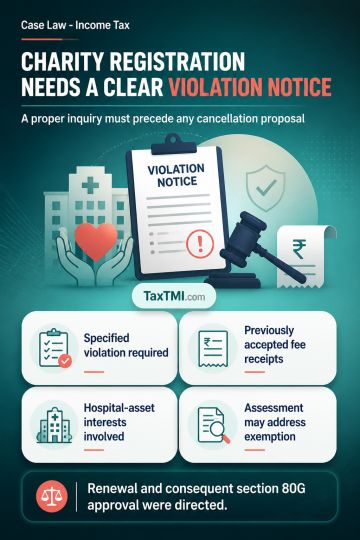
Charitable trust registration requires a specified-violation notice; settled cash deposits and related-party payments did not justify cancellation or ...
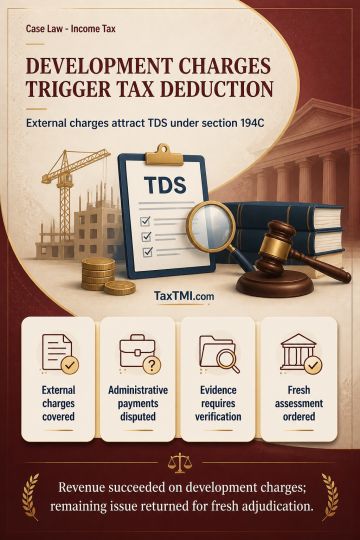
External development charges trigger TDS under section 194C, while disputed administrative payments require factual verification and fresh adjudicatio...
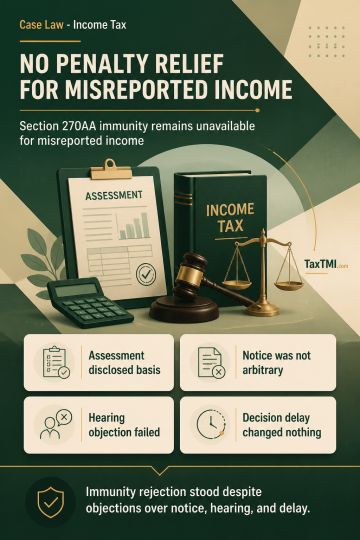
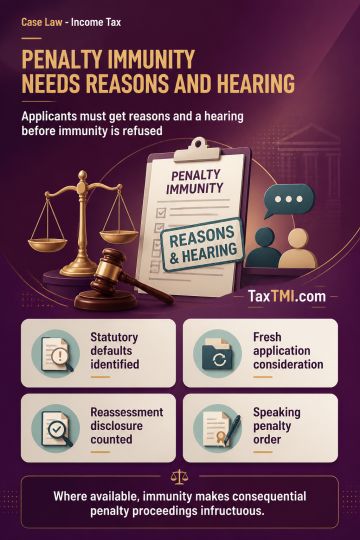
Section 270AA penalty immunity requires identified statutory defaults and a hearing before rejection; reassessment disclosure may constitute under-rep...
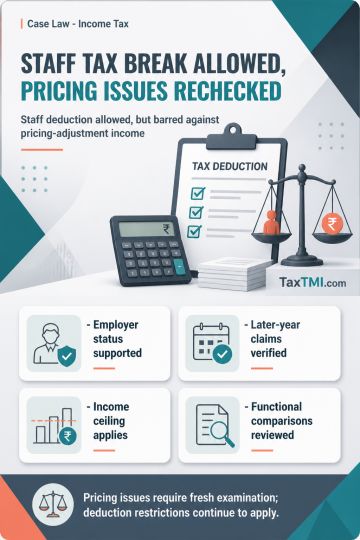
Section 80JJAA employee-cost deduction allowed for deployed staff but barred against transfer-pricing income enhancement, with pricing issues remanded...
Page of 4830
Press 'Enter' after typing page number.
141 to 160 of 96587 Results
❮
❯
❯❯
0 / 200
Expand Note
Add to Folder
No Folders have been created
+
Are you sure you want to delete "My most important" ?
This summary concerns an appeal before the Income Tax Appellate Tribunal regarding violations of Sections 11 to 13 of the Income Tax Act by a trust. The key points are: The trust advanced funds to another trust with common objects and trustees, which did not violate provisions. If a violation of Section 13 occurred by giving a loan, only notional interest at 12% per annum on the loan amount could be taxed, not the entire loan amount at maximum marginal rate. Regarding a large security deposit paid by the trust, the matter was remanded to the Assessing Officer to determine if it conferred any benefit on the trustees by comparing with similar instances. If benefit accrued, tax at maximum marginal rate would apply on the deposit amount. The issue of advances given to trustees was restored to the AO to consider if it violated Section 13(1)(c) and taxable at maximum marginal rate based on peak loan amounts each year after examining ledgers. The ITAT held that the AO erred in not allowing deduction for capital expenditure utilized for the trust's objects.
This summary concerns an appeal before the Income Tax Appellate Tribunal regarding violations of Sections 11 to 13 of the Income Tax Act by a trust. The key points are: The trust advanced funds to another trust with common objects and trustees, which did not violate provisions. If a violation of Section 13 occurred by giving a loan, only notional interest at 12% per annum on the loan amount could be taxed, not the entire loan amount at maximum marginal rate. Regarding a large security deposit paid by the trust, the matter was remanded to the Assessing Officer to determine if it conferred any benefit on the trustees by comparing with similar instances. If benefit accrued, tax at maximum marginal rate would apply on the deposit amount. The issue of advances given to trustees was restored to the AO to consider if it violated Section 13(1)(c) and taxable at maximum marginal rate based on peak loan amounts each year after examining ledgers. The ITAT held that the AO erred in not allowing deduction for capital expenditure utilized for the trust's objects.
Note: It is a system-generated summary and is for quick reference only.
 TaxTMI
  TaxTMI
 of 4830











 Join Channel


