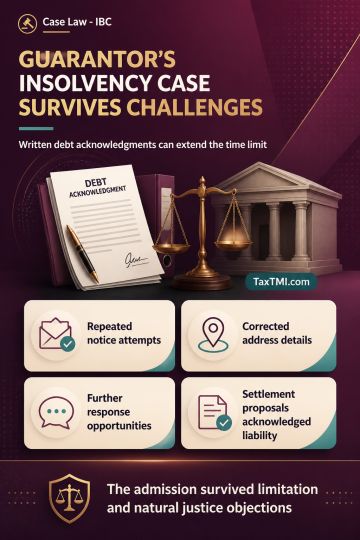
Service of notice and contractual debt acknowledgment preserved insolvency admission against a corporate guarantor despite limitation and natural just...
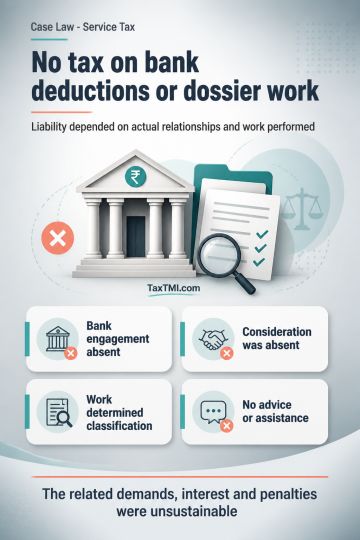
Original works exemption excludes standalone boulder transportation, leaving subcontracted railway-project transport services subject to service tax l...
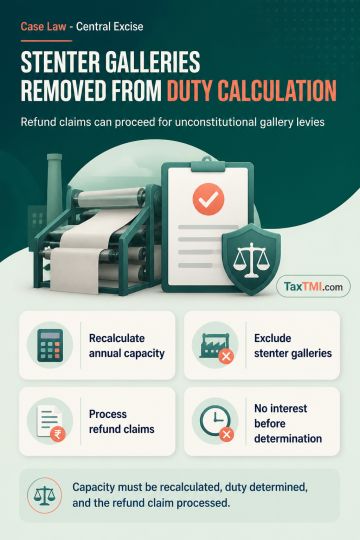
Annual production capacity determinations excluding stenter galleries support refunds for unconstitutional excise levies without an unjust-enrichment ...
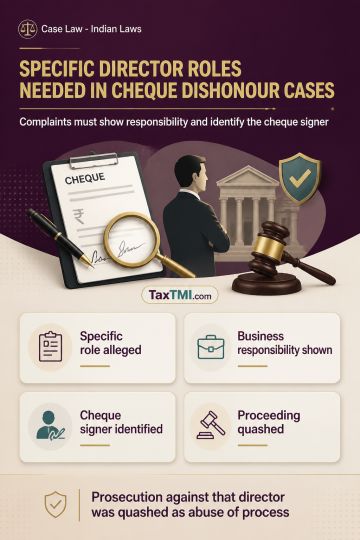
Vicarious liability for cheque dishonour requires specific allegations of responsibility and cheque signatory; generic director allegations cannot sus...
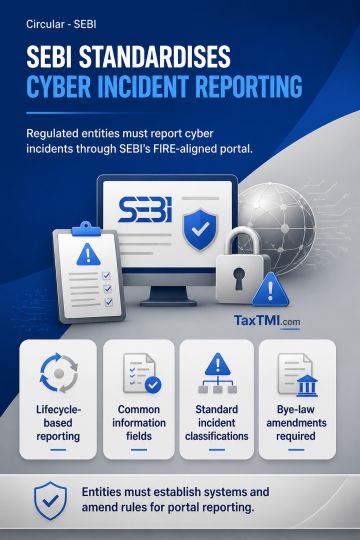
IT Resilience Index requires market infrastructure institutions to automate resilience scoring, early warnings, and continuous service-delivery monito...
The petitioner was neither the signatory nor the proprietor of the firm that issued the cheques in question. Before summoning an individual to face criminal trial, the Magistrate must find prima facie legally admissible evidence attributing a role that constitutes a penal offense. In this case, the complainant did not provide evidence pointing to the petitioner's criminal liability regarding the cheque. As per the Supreme Court's ruling in Anil Hada v. Indian Acrylic Ltd., if the offense was committed by a company, it can be punished only if the company is prosecuted. If the payee opts to prosecute individuals, they can succeed only by showing the company committed the offense. Continuation of criminal proceedings would amount to an abuse of the process of law. The High Court invoked its inherent jurisdiction u/s 482 CrPC to quash the summons against the petitioner and all subsequent proceedings. The summoning orders against all petitioners were quashed and set aside, and the petition was allowed.
The petitioner was neither the signatory nor the proprietor of the firm that issued the cheques in question. Before summoning an individual to face criminal trial, the Magistrate must find prima facie legally admissible evidence attributing a role that constitutes a penal offense. In this case, the complainant did not provide evidence pointing to the petitioner's criminal liability regarding the cheque. As per the Supreme Court's ruling in Anil Hada v. Indian Acrylic Ltd., if the offense was committed by a company, it can be punished only if the company is prosecuted. If the payee opts to prosecute individuals, they can succeed only by showing the company committed the offense. Continuation of criminal proceedings would amount to an abuse of the process of law. The High Court invoked its inherent jurisdiction u/s 482 CrPC to quash the summons against the petitioner and all subsequent proceedings. The summoning orders against all petitioners were quashed and set aside, and the petition was allowed.
Note: It is a system-generated summary and is for quick reference only.
 TaxTMI
  TaxTMI
 of 4828












 Join Channel