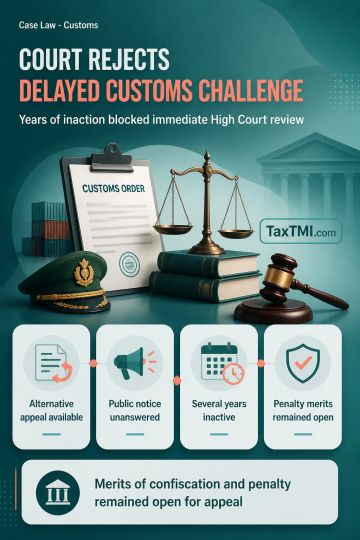
Alternative statutory remedy and unexplained delay barred writ review of customs confiscation adjudication, leaving merits for appellate consideration...
Authorised courier due diligence protects against penalties where declared exports conceal prohibited goods despite proper documentation and customs p...
Customs-controlled container movement now extends to DP World facilities, subject to segregation, inspections, reconciliation, and EXIM cargo priority...
Banks are required to maintain a Statutory Liquidity Ratio (SLR) by purchasing government securities. RBI guidelines categorize securities as Held-to-Maturity (HTM), Available-for-Sale (AFS), and Held-for-Trading (HFT). For AFS and HFT securities, the broken period interest paid during acquisition is allowed as a deduction, as these are treated as stock-in-trade. However, for HTM securities, the treatment depends on whether they are held as investments or stock-in-trade, based on the facts of each case. If held as investments, the broken period interest is capitalized; if held as stock-in-trade, it is allowed as a deduction. The Supreme Court upheld the Tribunal's decision that when securities are treated as stock-in-trade, the broken period interest cannot be considered capital expenditure and must be allowed as a deduction. The court clarified that the benefit of deduction is available for securities held as trading assets but not for those held as investments.
Banks are required to maintain a Statutory Liquidity Ratio (SLR) by purchasing government securities. RBI guidelines categorize securities as Held-to-Maturity (HTM), Available-for-Sale (AFS), and Held-for-Trading (HFT). For AFS and HFT securities, the broken period interest paid during acquisition is allowed as a deduction, as these are treated as stock-in-trade. However, for HTM securities, the treatment depends on whether they are held as investments or stock-in-trade, based on the facts of each case. If held as investments, the broken period interest is capitalized; if held as stock-in-trade, it is allowed as a deduction. The Supreme Court upheld the Tribunal's decision that when securities are treated as stock-in-trade, the broken period interest cannot be considered capital expenditure and must be allowed as a deduction. The court clarified that the benefit of deduction is available for securities held as trading assets but not for those held as investments.
Note: It is a system-generated summary and is for quick reference only.
 TaxTMI
  TaxTMI
 of 4828









 Join Channel


