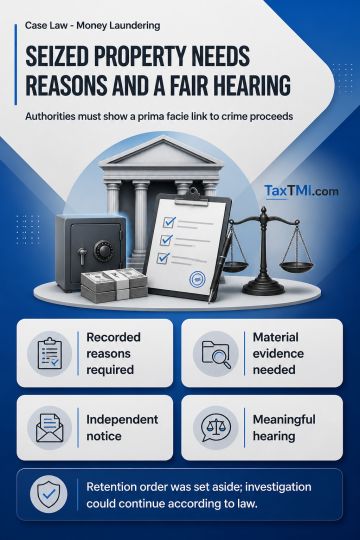
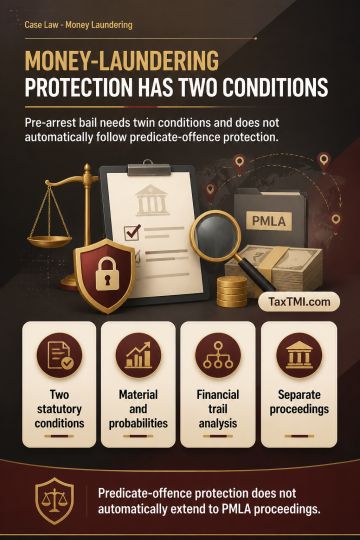
PMLA anticipatory bail requires satisfaction of twin conditions, while predicate-offence protection does not extend to independent money-laundering pr...
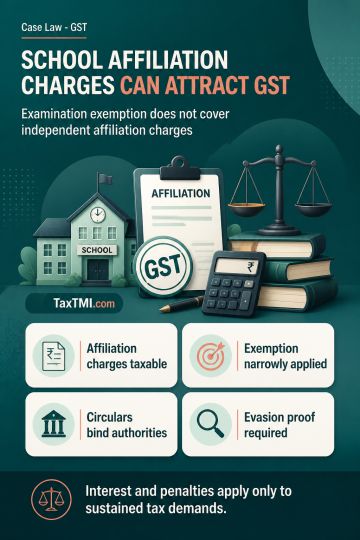
School-affiliation charges remain taxable where not directly connected with examinations, while extended limitation requires proof of deliberate tax e...
The High Court held that the reopening of assessment u/s 147 was not justified. The mere existence of an outstanding unsecured loan in the assessee's balance sheet did not provide a 'reason to believe' that the income had escaped assessment. There was no material to indicate that the Assessing Officer had any ground to believe that the loan availed by the assessee was chargeable to tax under the Act. The assessee had explained the source of the unsecured loan from its then director, which was duly disclosed in the notes to accounts. The Assessing Officer erroneously proceeded on the premise that the unsecured loan was unexplained and chargeable to tax u/s 68, without any basis. As per the Supreme Court's ruling in Lakhmani Mewal Das, reassessment can be initiated only on 'reason to believe' and not merely 'reason to suspect'. In the present case, there was no reason even to suspect that the balance sheet did not correctly reflect the assessee's state of affairs. The necessary condition for initiating reassessment u/s 147 was not satisfied, and therefore, the assessee's appeal was allowed.
The High Court held that the reopening of assessment u/s 147 was not justified. The mere existence of an outstanding unsecured loan in the assessee's balance sheet did not provide a 'reason to believe' that the income had escaped assessment. There was no material to indicate that the Assessing Officer had any ground to believe that the loan availed by the assessee was chargeable to tax under the Act. The assessee had explained the source of the unsecured loan from its then director, which was duly disclosed in the notes to accounts. The Assessing Officer erroneously proceeded on the premise that the unsecured loan was unexplained and chargeable to tax u/s 68, without any basis. As per the Supreme Court's ruling in Lakhmani Mewal Das, reassessment can be initiated only on 'reason to believe' and not merely 'reason to suspect'. In the present case, there was no reason even to suspect that the balance sheet did not correctly reflect the assessee's state of affairs. The necessary condition for initiating reassessment u/s 147 was not satisfied, and therefore, the assessee's appeal was allowed.
Note: It is a system-generated summary and is for quick reference only.
 TaxTMI
  TaxTMI
 of 4827








 Join Channel


